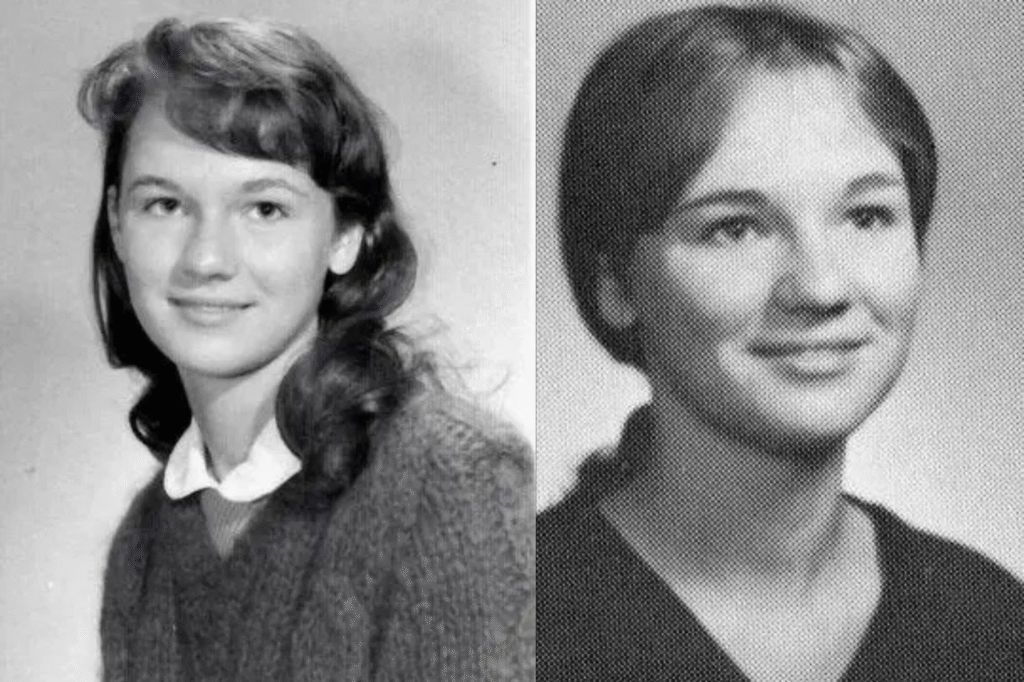
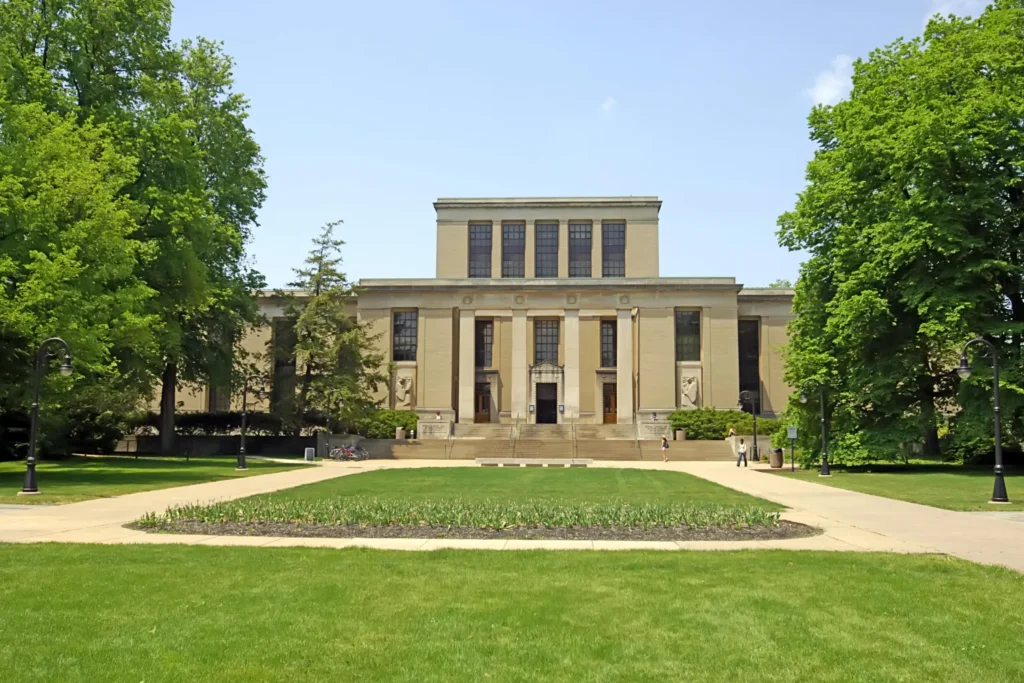
On November 28, 1969, 22-year-old graduate student Betsy Aardsma was fatally stabbed inside Pattee Library at Penn State University. More than fifty years later, her death remains officially unsolved.
Returning to Campus During the Holiday Break
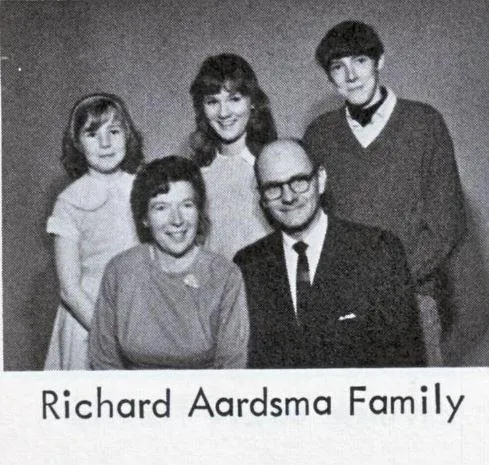
Betsy Aardsma was a graduate student in the English department at Pennsylvania State University in the fall of 1969. That year, Thanksgiving break fell during a stretch when most students left campus for several days.
Aardsma’s family lived in Michigan, and her boyfriend, David Wright, was studying medicine at Penn State’s Hershey campus.
With a major project due for her English 501 course before the end of the semester, she chose to spend the holiday with Wright and then return to State College rather than take the extra days off. She boarded a bus back to campus on the night of Thanksgiving and arrived later that evening.
By 3:30 p.m. on Friday, November 28, Aardsma was back at Atherton Hall, the dormitory she shared with her roommate, Sharon Brandt. The two left their room together and walked toward the commons area in front of Pattee Library, agreeing to meet again that evening to see a movie.
Once they reached the commons, they went their separate ways to attend to individual responsibilities on campus, each expecting an otherwise ordinary afternoon.
A Day of Meetings and Errands
Aardsma’s first stop was the office of Professor Nicholas Joukovsky, who taught English and European literature in the Burrowes Hall. The meeting was brief, and shortly before 4 p.m., classmates Linda Marsa and Rob Steinberg saw her entering Pattee Library.
From there, she went down to the basement to meet with Professor Harrison Meserole, who taught early American literature. Both meetings were believed to concern the final project she owed for her English 501 course, since the semester was drawing to a close.
Afterward, Aardsma went up to the graduate study carrels, where she left her jacket, her purse, and a book about Africa.
During her earlier conversation with Joukovsky, the professor had asked her to track down a book she had cited in a previous assignment. Aardsma walked to the card catalog near the library’s main entrance, where she ran into classmate Marilee Erdely at approximately 4:30 p.m.
After locating the card for the book she needed, she found that it was shelved in a section of the stacks between the library’s basement and its main floor.
She headed downstairs, and a few minutes later, stack supervisor Dean Brungart saw her while making his usual rounds through that level.
Brungart later told investigators that he also heard two men speaking quietly in a nearby aisle, though nothing about the scene had struck him as unusual at the time.
The stacks on that level were built differently than an ordinary library floor. A central section housing the main staircases was flanked on each side by an east wing and a west wing, connected by short, narrow hallways.
Several other people were working in those wings that afternoon without any awareness of one another’s presence, separated only by rows of shelving.
An Attack in the Stacks
Around 4:45 p.m., classmate Shirley Brooks walked down to that same level to ask Aardsma if she could borrow a pen. As she came down the stairs, she passed a man with a tan complexion and a mustache, wearing an overcoat.
Brooks found Aardsma among the shelves, borrowed the pen, and returned it a few minutes later, believing the two of them were alone on that level of the stacks.
In reality, several other people were nearby. In the east wing, Marilee Erdely sat at a desk near the hallway connecting the two sections, and a graduate student studying geography worked several aisles beyond her.
Farther along, another student was asleep in a study carrel. In the west wing, a visiting historian named Richard Allen was using a copy machine.
Just before 5 p.m., Allen heard what sounded like a calm conversation between a man and a woman, followed by a metallic crash, as though something had struck the bookshelves.
A young man then emerged from one of the aisles, turned toward the geography student and Erdely, and shouted that a girl needed help before rushing toward the stairwell. Erdely hurried into the aisle and found Aardsma lying unconscious on the floor, surrounded by fallen books.
The geography student gave chase, following the man up the stairs, across the library’s main floor, and out the front entrance, losing sight of him as he turned toward Rec Hall and disappeared into the evening darkness.
A library employee stationed near the exit also caught a brief glimpse of his face as he left the building.
Confusion, Discovery, and a Delayed Response
Erdely’s screams drew the attention of library staff, who called for an ambulance from the nearby health center. Paramedics arrived to find another student already performing chest compressions and took over her care as they prepared her for transport.
Because no visible wound had been noticed, everyone who responded believed at first that Aardsma had suffered a medical episode rather than an attack.
At the health center, the on-duty physician, Dr. Elmer Reed, noticed a small amount of blood emerging from her chest after each compression. Checking for a pulse and finding none, medical staff cut away her dress and the turtleneck beneath it, revealing a single downward-angled stab wound on the upper left side of her chest.
Dr. Reed pronounced Aardsma dead, and the Pennsylvania State Police were notified. An autopsy performed later that night by Dr. Thomas Magnani determined that a blade, likely a knife, had passed through her breastbone, pierced her heart, and nicked a nearby artery, causing her to bleed internally into her chest cavity rather than through the wound itself.
The dark red color of her dress had further concealed the limited blood that did reach the surface, which is why no one at the scene had recognized what had happened.
Because the injury went unnoticed at first, library staff had already cleaned the area, replaced the disturbed books, and reopened the section to students before anyone realized a crime had taken place. Penn State did not operate its own police force at the time.
Campus safety was instead handled by a patrol unit that escorted students between buildings and a security unit that functioned much like security guards.
Serious criminal matters were referred to the Pennsylvania State Police, whose nearest barracks sat about fifteen minutes from campus. The first investigator to reach the scene, Mike Simmers, a part-time student who also worked as an undercover narcotics investigator, arrived around 6 p.m., more than an hour after Aardsma was found.
By then, the area had already been restored to its normal condition, leaving investigators with little physical evidence to examine.
Simmers had campus security seal the building for the remainder of the night while campus patrol worked through the stacks to identify everyone still inside, a process slowed considerably by the building’s narrow, maze-like layout.
Investigators would eventually need to account for more than four hundred students, faculty members, staff, and visitors who had passed through the library in the half hour surrounding the attack.
Dean Brungart, working one floor above where the attack occurred, was not informed of what had happened until police reached his office around 8 p.m. Word of the killing spread slowly across campus, since many students and faculty did not learn of it until the local newspaper published the story two days later.
The case would later become one of the reasons Penn State established its own university police department in the years that followed, replacing the patchwork of campus patrol and campus security units that had responded that evening.
Witnesses and Early Theories
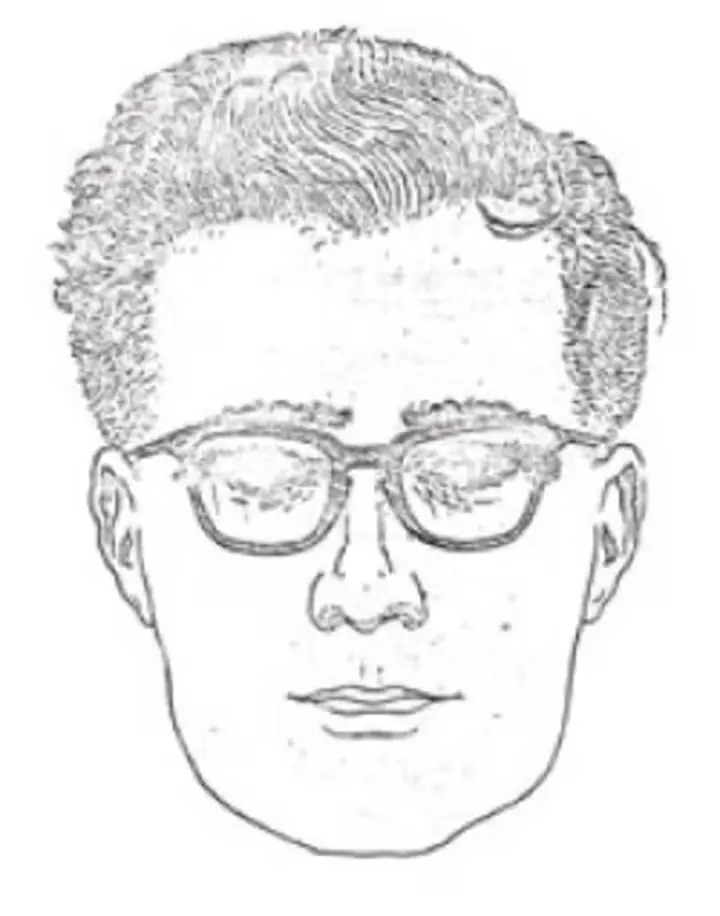
The three people close enough to see the man as he fled each gave investigators a description. Marilee Erdely described him as wearing khaki slacks and a sport jacket, with well-kept brown hair, standing about six feet tall and weighing roughly 185 pounds, and possibly wearing glasses.
The geography student who chased him through the library described a well-built man dressed in khaki pants, a plaid shirt, a tan sport coat, and boat-style sneakers, and was certain he wore glasses.
The library employee who glimpsed his face near the exit confirmed that he wore horn-rimmed glasses and appeared to be wearing a tie.
Investigators believed the attacker was male, based partly on these accounts and partly on a blood stain found on a nearby staircase that matched Aardsma’s blood type.
The nature of the wound suggested she had been facing her attacker directly when she was stabbed, and the absence of defensive injuries or any sign of a struggle indicated she had not perceived him as a threat beforehand.
Taken together, these details led investigators to conclude that Aardsma likely knew her attacker, at least well enough to let him approach her closely without alarm. As a result, early questioning centered on the students in her English 501 course, several of whom had been in the library that afternoon.
Investigators worked through this group methodically over the following weeks, comparing each student’s account against the physical descriptions provided by witnesses and against the movements Aardsma was known to have made that day.
In the weeks that followed, rumors began to spread that competed with the investigators’ more grounded theories. One centered on Professor Robert Durgy, who had recently transferred to Penn State from Michigan and had shown signs of distress in the weeks before the murder, including telling a colleague he could no longer face his own students.
Durgy returned to Michigan around Thanksgiving and died several weeks later in a car accident. Investigators found no mention of him in Aardsma’s diaries or letters, and records confirmed he had already left Pennsylvania and was with his family in Michigan both the night before and the morning after the murder.
A separate rumor held that Aardsma had taken up nude modeling for extra income, which led investigators to briefly examine a local sculptor known for erratic behavior.
The sculptor eventually contacted police himself to claim he had solved the case, but investigators dismissed the claim after finding no evidence linking him to Aardsma and noting that his age and appearance did not match the descriptions given by witnesses.
A Fellow Student Under Scrutiny
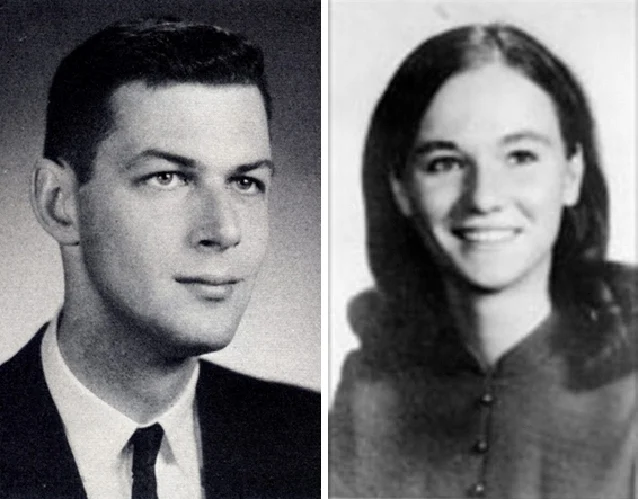
Investigators also questioned a male classmate from Aardsma’s English 501 course after learning that a knife-carved phrase, “here sits death in the guise of a man,” had recently appeared on his dormitory desk chair, and that he carried a small hunting knife, which he said he used only to cut cheese.
A professor also recalled that the student had once taken Aardsma out for coffee and had later asked her to a movie, an invitation she declined. Troopers Tom Sheller and Lee Fisher, who were questioning the English 501 students as a group, found the young man unusually composed during his interview.
Despite these details, he passed a polygraph examination, and his height and coloring did not match the descriptions given by witnesses, leading investigators to look elsewhere.
That search led to Rick Haefner, a 25-year-old geology graduate student slated to finish his master’s degree at the end of the semester. Two years earlier, while assisting a professor with fieldwork in California, Haefner had met a young woman named Susan Sorrel during a Thanksgiving dinner arranged by the research team.
He later traveled several hundred miles to her college campus and appeared at her dormitory unannounced to tell her he had feelings for her, an encounter she found unsettling enough to ask him to leave and to contact her mother, who in turn contacted the supervising professor.
That professor kept a closer watch on Haefner afterward but did not otherwise restrict his fieldwork assignments.
Haefner had briefly dated Aardsma earlier in the fall semester of 1969, after the two met as neighbors in Atherton Hall in September. Haefner told police he had taken her for ice cream at the campus creamery, bowling in nearby Bellefonte, and dinner at the Nittany Lion Inn during October.
He said the relationship ended after a planned outing was canceled due to a sudden illness, and Aardsma grew more distant afterward.
Haefner explained that he rarely visited Pattee Library because, as a geology student, he typically used the earth sciences library instead, and that he learned of Aardsma’s death only the following day, while eating dinner on campus.
He answered questions calmly and in detail, and investigators, seeing no sign of hostility toward her, released him without further action. Haefner stood about six feet, one inch tall, kept his brown hair neatly groomed, and wore horn-rimmed glasses.
Years later, a professor who had supervised Haefner’s fieldwork came forward with an account that had never reached investigators at the time of the murder.
According to this professor, Haefner arrived at his home visibly shaken around 6 p.m. on the night of November 28, asking whether there was any news about a girl he knew being killed in the library.
No newspaper had yet reported the killing, and word had not yet spread across campus. The professor did not go to police with the account, instead raising it privately with university administrators years afterward, and the matter was not pursued further.
No arrest was ever made in connection with Aardsma’s death, and the Pennsylvania State Police continue to list the case as open.
Remembering Betsy Aardsma
Betsy Aardsma came to Penn State as a graduate student in the English department, drawn to literature at a time when she was also weighing a very different path. She had once considered joining the Peace Corps, following an interest in international service, but set the idea aside as her relationship with David Wright grew more serious.
The two remained together even as his medical studies kept him at Penn State’s Hershey campus, a distance that required regular travel between the two of them throughout the fall semester.
Her decision to return to campus early after Thanksgiving reflected her commitment to her coursework. Rather than take the extra days of break that most of her classmates enjoyed, she chose to come back and continue meeting with her professors so that she would stay on track with the major project due at the end of the semester.
She shared a dormitory room with Sharon Brandt at Atherton Hall and was part of a close-knit cohort of students in her English 501 course, many of whom crossed paths with her regularly in the library and in class.
Aardsma’s life was cut short at the age of twenty-two, in the final weeks of a semester she had worked hard to complete. The events of that November afternoon drew national attention to Penn State and left a lasting mark on the university she called home for graduate school.
More than fifty years later, Betsy Aardsma is remembered as a promising young scholar whose ambitions extended well beyond the classroom, and whose murder has never been resolved. This is the case of Betsy Aardsma.
When Women Earn More, Money Matters Less in Partner Choice

Women who earn more money and hold more economic power become less concerned with the income of their future partner when choosing a romantic partner — though only when their own income actually surpasses men’s, not simply as it rises in general.
Researchers came to this conclusion through a preregistered experiment conducted with hundreds of participants from several countries.
The study, published in the Proceedings of the National Academy of Sciences, showed how factors such as financial status and gender pay gaps influence people’s romantic choices and challenged some common assumptions about gender and partner preferences.
The Experiment
Researchers built a hypothetical online scenario called “Stamola,” in which participants imagined living and working under different economic conditions — an imagined society, not an actual virtual-reality simulation.
The study recruited 807 English-speaking participants aged 18 to 45 from the United Kingdom, Canada, the United States, Australia, and New Zealand; after removing those who failed attention checks, 602 people remained in the final sample, with an average age of 32.
Participants were placed into one of 45 unique variants of Stamola in which the pay ratio between women and men ranged from women earning twice as much as men to men earning twice as much as women, with full equality in between.
Each participant was also assigned a personal income somewhere between the 10th and 90th percentile for their gender — a graded position, not simply the “top” or “bottom” of the hierarchy.
Participants were told their own virtual income, their position in the income distribution, and the average wage of men and women in this virtual world. Afterward, they were asked what kind of partner they would choose in the Stamola world.
Researchers used three metrics to analyze the data: the degree to which participants prioritized a partner who earned more than them; the desirability of traits such as “good job” or “financially stable”; and how money-related traits ranked against qualities like physical attractiveness or personality.
Research Findings
Researchers identified clear trends showing how participants’ income, and the relative pay gap between genders in the experiment, shaped their priorities regarding partners. Those who were personally poorer within the simulation were more likely to say that a partner with good financial prospects was desirable and important to them, regardless of gender.
Women were, on average, more concerned than men with a partner’s financial status — but only in the scenarios that mirrored most real-world economies, where men earned more than women.
When women earned more than men in the virtual world, that difference between men’s and women’s preferences largely disappeared, and both genders became about equally interested in a wealthier partner.
Study author Macken Murphy told PsyPost that he expected some movement in preferences but was surprised that such a brief manipulation of economic conditions could erase a gender difference built up over a lifetime of unequal pay in the real world.
The study also showed that the more money people earned personally, the less they prioritized a partner’s financial status, as participants who could comfortably support themselves did not feel as much need to seek a partner who could also support them financially.
Not every preference shifted, however. Preferences for physical attractiveness stayed essentially stable across every income and inequality condition, and so did the well-known age gap in attraction: women continued to prefer slightly older partners and men slightly younger ones, regardless of who earned more in a given scenario.
Murphy noted that this surprised the research team, since real-world survey data usually show age gaps narrowing as women’s earnings rise.
Significance of Findings
This study speaks to a debate that has run for well over three decades among sociologists and psychologists over why women, more than men, tend to weigh a partner’s income so heavily.
One side has traced the pattern to evolutionary pressures tied to pregnancy and child-rearing, while the other has argued such preferences are largely a product of cultural conditioning that historically left women financially dependent on men.
The study does not settle this argument outright — the authors are explicit that it does not show men and women would completely swap preferences if pay gaps reversed nationally. Instead, it tests a third possibility: that partner preferences for resources adapt strategically, growing stronger for whichever gender, and whichever individual, currently needs financial support more — a framework that borrows from both older theories rather than proving either one wrong.
These findings matter because they show how women’s growing financial independence could reshape the dynamics of romantic relationships. As more women become economically independent, they may rely less on a partner’s income to maintain a comfortable life.
This lines up with broader commentary on financial independence: career and mindset writers have similarly argued that financial independence shifts what people prioritize in a partner, away from earning potential and toward compatibility and emotional connection — an observation this experiment now gives some causal backing to.
Once basic financial security is no longer a pressing concern, people appear to have more freedom to choose partners based on personal fit rather than necessity.
The authors also point to a real-world pattern consistent with their results: in Haredi Jewish communities, where women are often the primary breadwinners, men on average care more about a potential partner’s finances than women do — the reverse of the typical pattern seen elsewhere. Other research supports the broader idea that income shapes relationships in concrete ways.
A separate PNAS study on income inequality has linked unequal economies to heightened status competition among women, and a master’s thesis from Old Dominion University found that which partner in a couple earns more, not just the size of the gap, affects relationship satisfaction.
A smaller qualitative study of financially independent women in Brazil likewise found that earning their own income shaped how these women chose and stayed with partners.
Finally, this research could ease a common worry: that as women become more successful, they will struggle to find partners who meet their traditional preferences.
Because women adjust their preferences as their own financial independence grows, the researchers suggest that concern may be less pressing than commonly assumed — though because Stamola is a hypothetical scenario rather than a real dating pool, the authors caution that stated preferences may not perfectly predict real-world dating behavior, a question they hope to test next.
Sources
Partner preferences for resources adapt to income and gender economic inequality
Women’s desire for wealthy partners drops when they have more economic power