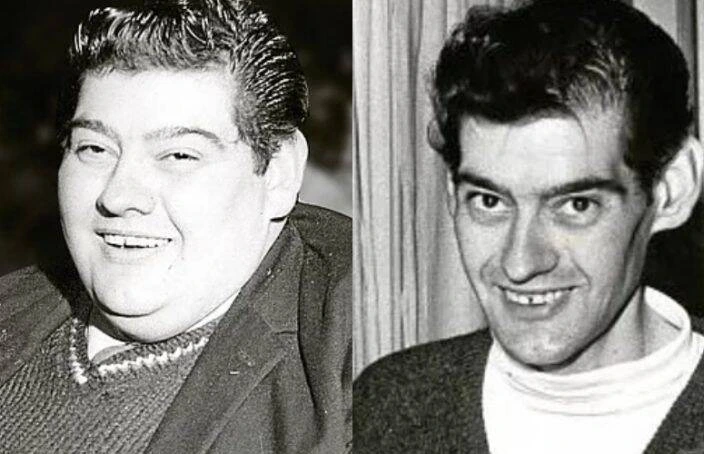
In 1965, a 27-year-old man from Scotland named Angus Barbieri decided to stop eating and didn’t touch food again for more than a year. He drank only water, tea, coffee and took vitamins. By the end, he had lost 276 pounds and made history for completing the world’s longest fast.
A Drastic Decision
Angus Barbieri weighed 456 pounds and worked at his father’s fish-and-chips shop. Tired of being overweight and struggling with food addiction, he went to the Royal Infirmary of Dundee and told doctors he wanted to fast. At first, they only planned for him to go without food for about 40 days which was considered the longest safe limit.
But something surprising happened, Angus felt fine and wanted to keep going. His doctors agreed as long as they could check on him often to make sure he was safe, they gave him vitamins and minerals like potassium, sodium and yeast to help keep his body healthy while he wasn’t eating any food.
During his fast, Angus mostly stayed at home but visited the hospital often for checkups. He lived on black coffee, tea and sparkling water. According to the doctors, his blood levels stayed stable and he didn’t show any signs of being sick.
He did have low glucose levels but even that didn’t seem to bother him. Because he wasn’t eating solid food, he reportedly only needed to use the bathroom once every 40 to 50 days. Something that amazed everyone.
The End Of The Fast
After 382 days, Angus finally reached his goal weight of 180 pounds in July 1966. He had lost nearly three-quarters of a pound per day. When it was time to eat again, he broke his fast with a boiled egg and a slice of bread with butter.
He told reporters that he had forgotten what food tasted like. “I thoroly [sic] enjoyed my egg and I feel very full,” he said, according to Business Insider.
His transformation shocked everyone. Angus looked like a different person. He could even fit two people beside him in his old clothes. Even more surprising, he managed to keep the weight off. When he passed away in 1990, he weighed around 196 pounds, just 16 pounds more than his post-fast weight.
In 1971, he was added to the Guinness Book of World Records for completing the longest fast ever. But Guinness later removed the category, not wanting people to risk their lives trying to beat it. “If you beat the ‘record’ and then die is it a successful attempt?” said Guinness spokesperson Stewart Newport, according to CNN.
What Happened To His Body
Doctors said Angus survived by burning his body’s fat for energy. When people fast, the body switches from using food for fuel to using stored fat. This process helped keep him alive. He also took supplements to replace the nutrients he wasn’t getting from food.
Some experts say fasting can trigger something called autophagy which means “self-eating.” According to Medical News Today, it’s when cells “clean out” damaged or useless parts. During a fast the body is under stress, so it works harder and becomes more efficient.
For Angus, this might have helped his body stay healthy despite not eating for so long. But scientists also warn that autophagy can have risks. It may harm heart or brain cells or cause other health issues. Many people who tried long fasts around that time suffered from heart failure or even starvation.
Fasting Through History
Fasting isn’t new. People have been doing it for thousands of years. It’s part of almost every major religion. Christians fast during Lent, Muslims during Ramadan, and Buddhists and Jews also follow fasting traditions.
The Bible says that Jesus fasted for 40 days in the desert and many people follow his example. In Ancient Greece, the famous doctor Hippocrates also believed fasting helped people recover from illness. Another early doctor, Philip Paracelsus, once wrote, “Fasting is the greatest remedy — the physician within.”
Today, fasting is sometimes used for health reasons, like lowering blood sugar or helping with weight loss. But experts strongly warn against long-term fasting. Most doctors say fasting more than 40 days without food can be extremely dangerous.
A One-Of-A-Kind Story
Angus Barbieri’s story still amazes people today. He managed to go 382 days without eating solid food, under medical supervision and lived to tell about it. His fast remains one of the most unusual experiments in medical history.
Even though his experience ended well, doctors say it’s something no one should ever try. What happened to Angus was rare and possibly never will be repeated again.
Because as the Guinness Book of World Records said, fasting for too long isn’t a record worth breaking.
Sources
https://www.sciencealert.com/the-true-story-of-a-man-who-survived-without-any-food-for-382-days
https://en.wikipedia.org/wiki/Angus_Barbieri%27s_fast
https://www.diabetes.co.uk/blog/2018/02/story-angus-barbieri-went-382-days-without-eating