

Bread feels like a basic part of human life, but its history is older than many experts once thought.
In 2018, researchers announced the oldest direct evidence of bread yet found: tiny charred crumbs from Jordan that are about 14,400 years old. That means people were making bread-like food long before farming began.
Bread Came Before Farming
For a long time, many researchers linked bread to agriculture. The common idea was simple: first people farmed grain, then they made bread. The Jordan discovery changed that timeline in a big way.
The 2018 study in Proceedings of the National Academy of Sciences said the remains “represent the oldest empirical evidence for the production of bread-like products.”
This matters because the people at the site were not farmers. They were Natufian hunter-gatherers living in the Levant, a region that includes parts of today’s Jordan, Israel, Palestine, Lebanon, and Syria. They collected wild plants instead of planting fields of wheat or barley.
Even so, they were already processing grains and making a food that looked a lot like flatbread. This does not prove they invented every kind of bread, but it is the oldest direct proof found so far.
The Jordan Find
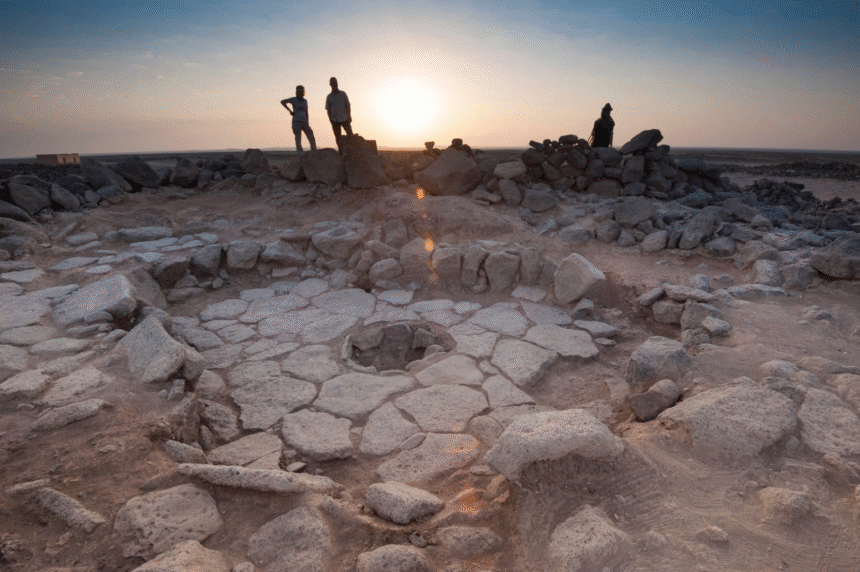
The site is called Shubayqa 1, in the Black Desert of northeastern Jordan. Researchers found 24 charred food remains in old fireplaces. These were not full loaves. They were tiny blackened pieces, but they held a lot of information.
By studying their structure under microscopes and comparing them with known plant remains, the team could tell what they were made from.
The bread-like pieces were made from wild cereal grains and other plants, including tubers from club-rush, a wetland plant.
In simple terms, this food was probably closer to a thin flatbread than to a soft, risen loaf from a modern bakery. Making it still took work. People had to gather wild grains, clean them, grind them into flour, mix them, and bake them. That is a serious process for a hunter-gatherer group.
UCL News quoted lead author Amaia Arranz Otaegui saying, “The presence of hundreds of charred food remains in the fireplaces from Shubayqa 1 is an exceptional find, which has given us the chance to characterise 14,400-year-old food practices.”
That sentence explains why the discovery is so important. Ancient food usually does not survive. Fire, time, and weather destroy it. In this case, burning actually helped preserve the crumbs.
The find also gives clues about how often bread was eaten. Researchers do not think this was everyday food for everyone all the time. Bread-making was too labor intensive for that, especially without farming.
Arranz Otaegui said, “Our findings support the idea that the production of bread was a precursor to agriculture and that, because it was labour intensive to make, it was probably considered a special treat.” That does not mean bread was rare in every case, but it does suggest it may have been made for important meals, gatherings, or feasts.
Why Bread Matters So Much
This discovery changed more than the history of one food. It changed how experts think about the path to farming. If hunter-gatherers already loved bread-like food, they may have wanted a steadier supply of grain.
That idea is important. It suggests that farming was not only about survival. Taste, effort, and food preference may have played a role too.
Bread also shows that early people were skilled cooks, not just gatherers of raw food. They knew how to combine ingredients, use heat, and turn plants into something new. That takes planning. It also takes knowledge passed between people. In other words, food history is also human history.
At the same time, researchers stay careful. This Jordan find is the oldest direct evidence we have now, but it may not be the first bread ever made.
Older examples may still be waiting underground. Archaeology works with what has survived, not with everything that once existed. Even so, Shubayqa 1 is a major discovery because it gives solid proof, not just guesses.
So where did bread begin? The best answer today is this: bread-like food began before agriculture, among hunter-gatherers who used wild grains thousands of years earlier than expected.
That makes bread more than a farm product. It is one of the oldest signs that humans were experimenting, improving food, and shaping the future of civilization long before the first fields were planted.