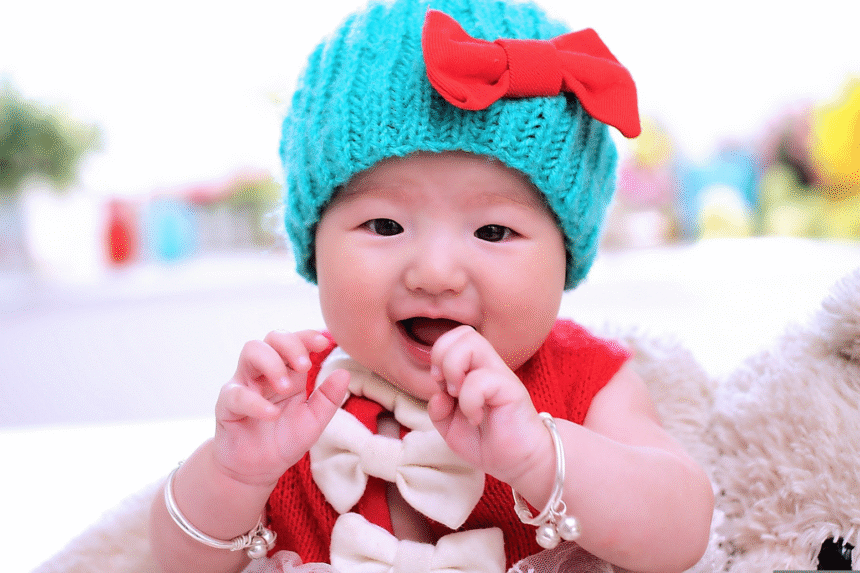
A toddler’s mood can change fast: a new snack arrives, a toy falls, a familiar face walks in. Researchers have long wondered whether one trigger reliably lifts that mood—helping someone else.
A paper in the journal Developmental Science reports that even before kids can explain their choices, many seem to enjoy sharing more than keeping a treat.
The question behind the cute setup
The research team—Enda Tan, Julia Van de Vondervoort, Jeneesha Dhaliwal, Lara B. Aknin, and Jane Kiley Hamlin—wanted to separate real enjoyment from simple compliance.
Toddlers are famous for reacting to adult attention, and they also pick up on others’ feelings quickly. So if a child smiles during sharing, is it because giving feels good, because an adult said “do it,” or because the recipient looks delighted?
This is not just a parenting curiosity.
In adult studies, prosocial spending and volunteering often correlate with higher well-being (for example, Aknin and colleagues in PNAS, 2013).
Developmental psychologists have also shown that young children help with simple tasks early on (Warneken & Tomasello, 2006), but the emotional “payoff” is harder to pin down.
How the experiment was run
The study recruited 134 healthy toddlers between about 16 and 24 months old. Caregivers stayed in the room, but wore headphones and kept their eyes closed so they could not steer the child with hints or facial cues.
Then the main character arrived: a stuffed monkey puppet with an obvious preference for snack crackers.
To make sure treats were appealing, each toddler first received eight snacks, creating a baseline “reward” moment for comparison. After that, the child went through four short situations in a random order.
In one, the toddler handed over one of their own snacks to the monkey, which cost them something. In another, the experimenter provided a fresh snack and the toddler delivered it.
A third time, the toddler simply watched the experimenter give the snack. Finally, the child was told to keep a snack for themselves.
All sessions were video recorded.
Later, independent coders who did not know the researchers’ predictions rated each child’s happiness on a 1–7 scale, from no visible joy to clear excitement and laughter.
The puppet’s own “enthusiasm” was scored too, a clever check against the possibility that kids were just mirroring the monkey’s mood.
What toddlers’ reactions showed
Across the board, giving was the happiest moment.
Toddlers looked more pleased when they transferred a treat to the monkey than when they received snacks earlier in the visit. That pattern held even when giving was “costly,” meaning the child gave up one of their own items.
Not all giving was equal.
When toddlers surrendered a treat that was already “theirs,” coders tended to see the biggest jump in positive affect. Handing over a newly offered snack still boosted mood, but less.
This ranking—costly giving first, then non-costly giving—suggests the good feeling was not just about handling food or following a routine in that moment for attention.
Keeping a treat did not create the same spark.
When toddlers were instructed to hold on to the snack, their happiness ratings dipped compared with both giving conditions. That matters, because it argues against a simple “they’re just doing what the adult asked” explanation.
Action also seemed to matter.
Toddlers were not as happy when they only watched the experimenter donate the snack, even though the monkey still got the treat.
In other words, the emotional lift was tied to doing the sharing, not merely witnessing it.
The emotional contagion idea did not get much support. The puppet’s expressive moments did not predict the child’s smiles, suggesting the “warm glow” came from the toddler’s own behavior.
Taken together, the findings point to an early-emerging emotional reward for prosocial action.
That does not mean toddlers are always generous; anyone around young kids knows preferences can be strong. But it implies that the capacity for joy in helping is present alongside the tug to keep a snack within reach.
Why the findings matter beyond snack time
This study fits into a big question people argue about: are humans naturally the kind of people who want to help and work together, or do we only learn to do that because adults reward us, praise us, or make rules about it?
If toddlers experience a positive emotion when they give, that feeling could act like an internal reinforcement system. Giving once becomes a nudge to give again.
The results also fit with what economists call “warm-glow giving,” the idea that generosity can be rewarding even without external praise.
In the toddler version, there is no tax receipt, no social media post, just a small transfer of crackers and a grin. That simple scene is useful evidence because it strips away many adult motivations, like reputation management or long-term planning.
Researchers are careful about big evolutionary claims, but they do note a practical point: across societies, people share food and resources in ways that sometimes involve real costs.
Seeing the emotional roots of that impulse in the second year of life helps explain why cooperation is so durable.
It also suggests that early childhood settings—homes, childcare rooms, play groups—may be prime places to support sharing habits without turning them into chores.
Limits and next steps
Like any single experiment, this one has boundaries.
The toddlers came from North American families, and cultural norms around sharing can vary widely, so the pattern should be tested in more places.
The study relied on facial and body cues to rate happiness; it did not include biological measures such as heart rate or pupil changes that could add another layer of confidence.
Even with those caveats, the design was unusually thoughtful for work with very young children: caregivers were prevented from coaching, coders were kept unaware of the hypothesis, and the puppet’s reactions were tracked to reduce the chance of simple mimicry.
Future studies could repeat the task with different “recipients,” like another child, and see whether the same happiness bump appears when sharing is less playful and more everyday.
For readers who care about what this means in plain language, the takeaway is straightforward: a lot of toddlers don’t just share because they are told to; sharing itself seems to feel good.
That is a hopeful data point in a world where cooperation often gets described as fragile.