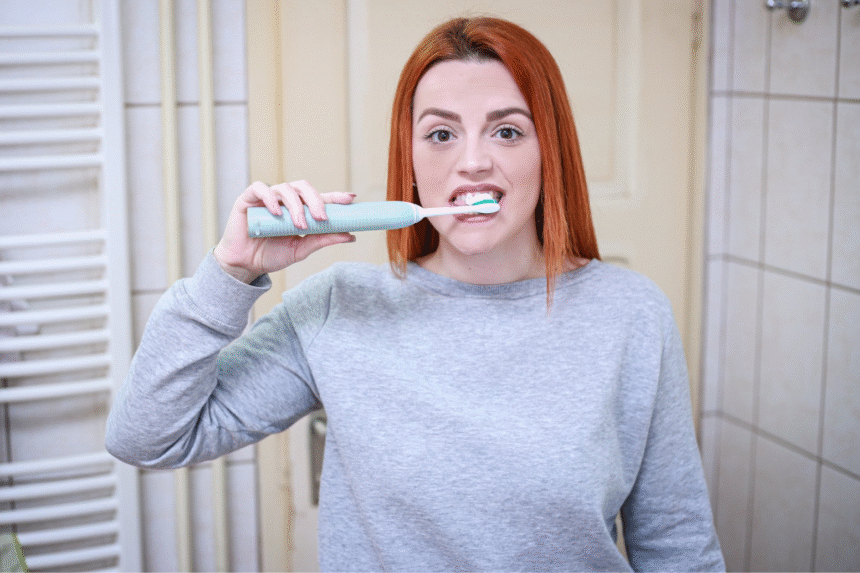
Most toothbrushes still follow the same blueprint: nylon bristles, plastic handle, quick trip to the trash.
A review published in PLOS Global Public Health suggests silicone bristles deserve a closer look, because early research indicates they can loosen plaque while being gentler on gums.
Why silicone is showing up in the conversation
Oral disease is not a niche issue. The World Health Organization reports that around 3.5 billion people are affected worldwide.
Plaque is a common starting point: it feeds bacteria that produce acids and can inflame gums. Brushing helps, but the everyday brush has drawbacks that are easy to overlook until they hurt.
Nylon bristles change with use.
They can fray, then feel rougher, and that can lead to scraping at the gumline, especially for people who press hard.
Many dental recommendations say to replace a brush every three to four months. That schedule makes sense for performance and hygiene, yet it can create barriers when money is tight, stores are far away, or replacement simply falls off the to do list.
Silicone feels different from the start.
It is flexible and rubbery, so the bristles bend instead of dragging stiff tips along soft tissue.
In theory, that reduces minor gum injuries and can make brushing more comfortable, which matters because comfort often drives consistency.
Sustainability is part of the pitch as well.
In the United States, about one billion toothbrushes are discarded each year. A life cycle assessment that compared six manual toothbrush types found a silicone bristle brush with a plastic handle performed better across all 18 environmental categories measured, with an overall impact about 14% lower.
Reusable handles helped by avoiding full replacements; one estimate in that analysis was about 0.16 ounces fewer emissions per brush.
What the research says, and where it is thin
The review was led by Aoife Cummins at McMaster University and drew on 10 studies published in English.
It is not a single trial with a neat verdict, but a set of small studies that approach the question from different angles: human testing, laboratory experiments, and one animal study involving dogs.
Across that mix, the main signal is encouraging.
Several studies found silicone brushes can disrupt plaque while applying less pressure to gums than stiffer nylon bristles.
People often describe brushing as “too harsh,” and silicone is being tested as a way to solve that problem today.
Design, however, is doing a lot of the work. Laboratory tests showed cleaning success depends on the shape and layout of the brush head, not just the material.
A silicone mouth swab style tool with a longer head and threaded bristles outperformed shorter silicone brushes in one comparison. That points to a practical limitation: very soft, very short bristles may fail to reach into grooves or along the gumline, leaving plaque behind even if they feel gentle.
Some experiments also looked at wet versus dry brushing and found both could work under controlled conditions.
Bathrooms are not controlled conditions.
People rush, miss spots, and vary wildly in technique. A brush that performs well in the lab may do less in real life if it is awkward to hold, hard to aim, or easy to under use.
The review also highlights gaps in evidence quality.
The studies do not use one standard method to judge reliability, and they measure outcomes in different ways.
In plain terms, that makes results harder to compare and easier to overinterpret.
Right now, silicone brushes look promising, but they are not proven to be universally better than nylon.
Researchers have a clear to do list.
More human clinical trials are needed, with longer follow up and consistent measures of plaque removal and gum irritation. Durability should be tested carefully, because longer lasting bristles could change the cost and access equation.
Comfort, handling, and real world use should be measured directly, not assumed.
Trials should include children, older adults, and people with disabilities, and should report costs in real settings, including low resource communities where access to replacements is unpredictable and where habits vary across seasons.
Who might benefit, and what could shape adoption
If silicone brushes earn a firm place in dentistry, they may help people who need extra forgiveness from a brush.
The review flags children, older adults, and people with limited motor control as groups that could benefit from bristles that spread pressure more evenly.
A gentler feel may also support better routine, especially when a caregiver is brushing someone else’s teeth.
Acceptance is not guaranteed, though.
One study involving visually impaired children reported higher anxiety when electric silicone brushes were used, linked to noise and unfamiliar controls. That does not condemn silicone, but it does underline an important point: product design includes sound, vibration, and interface, not only bristles.
Culture matters just as much as engineering.
In some rural areas of India, oral cleaning may rely on fingers, powders or plant tools instead of mass produced toothbrushes.
A standard brush can be effective and still fail to spread if it clashes with daily habits. Silicone finger brushes have been suggested as a more compatible option, because they fit finger based practices while offering a consistent surface that may disrupt plaque.
The environmental case also depends on how products are sold and used.
A silicone head that lasts longer helps only if people actually keep and reuse it, and if replacement parts are easy to find and affordable.
If silicone brushes stay priced as premium items, their global health impact could remain limited even with good performance.
For now, the fairest summary is cautious optimism.
The PLOS Global Public Health review shows silicone bristles may clean effectively with less risk of gum damage, and some designs appear to reduce environmental impact.
But the evidence is still uneven, and real world testing, across different communities, will decide whether silicone becomes a mainstream upgrade or a niche alternative.
Sources
https://www.ada.org/resources/ada-library/oral-health-topics/toothbrushes
https://www.nature.com/articles/s41598-025-88978-2
https://link.springer.com/article/10.1007/s44274-024-00119-0