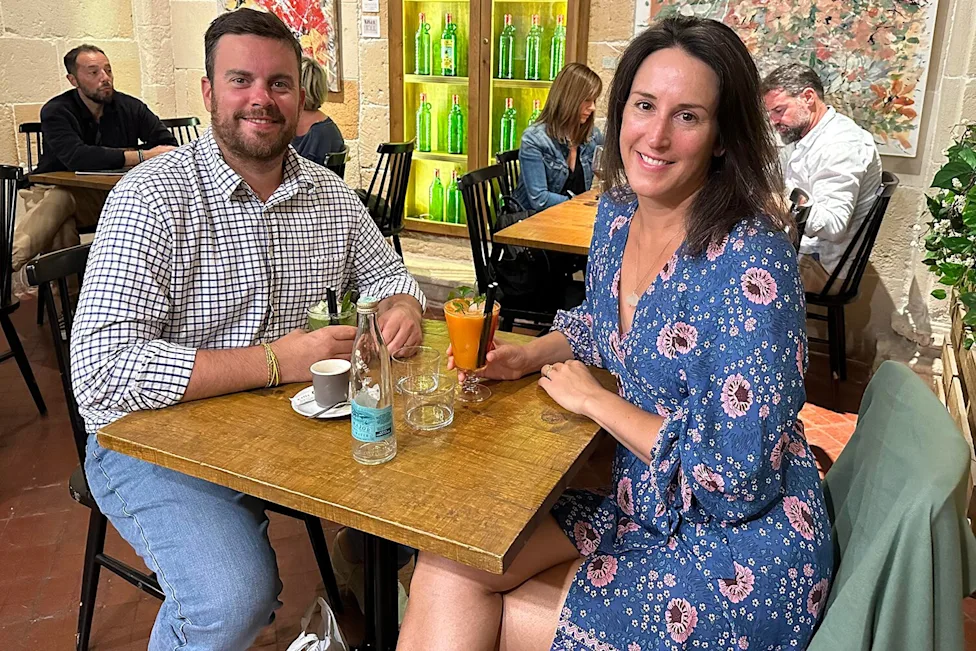
A honeymoon in Barcelona turned into an unplanned rescue mission for one Rhode Island couple.
A Delayed Trip to Barcelona
Doran Smith and David Squillante, of Bristol, R.I., were on their honeymoon when they came upon a fire in progress. Squillante works in food sales, and Smith is a software engineer. Both were 38 at the time.
Like many recently married couples, they had to wait over two years before going on their honeymoon due to the ongoing COVID-19 pandemic.
Delayed honeymoons like theirs became common during that stretch, as travel restrictions across the world kept newlyweds close to home far longer than planned, and reunions with family overseas often had to wait just as long.
That wait finally ended on September 28, when they traveled to Spain to celebrate their belated honeymoon.
Their trip did not stop at just one city, either. They also spent time on the island of Menorca to enjoy the beach. Barcelona itself was meant to be the part of the trip built around architecture, good food, and sightseeing.
On the day everything changed, the couple was out for a walk. They were heading to tour a park, phone in hand, taking videos, when they noticed a group of women panicking. Neither of them expected the walk to turn into anything more than a nice afternoon outside.
A Quiet Walk Interrupted
That is when they saw something that stopped them in their tracks: a group of women running out of a nearby building, clearly panicked. Smith noticed a flame near the doorway the women had just come from and realized right away there was a fire.
Squillante did not stop to think it over. He ran straight into the building. “Instinct took over,” he said. Most people’s first instinct in a fire is to run away from it. His instead was to run toward it, and that instinct might run in the family.
His father and grandfather had both been Bristol firefighters. Squillante himself works in food sales, not fire safety, but years of hearing family stories about emergencies may have shaped how quickly he reacted.
At that point, he had no idea what he was about to find inside, or how many people would need his help in the next few minutes. He saw people who needed him and moved.
Rolling Cribs to Safety

Inside, Squillante found a room with 15 to 20 sleeping babies. A nursery, in this case, was a room set up for infant child care, similar to an infant classroom at a daycare center in the United States.
Smoke was starting to fill the space from what appeared to be an electrical fire, though the room itself was not actively on fire. Nobody inside spoke English, which made communication harder in the moment, especially with smoke already thickening the air.
Squillante had to rely on gestures and quick movements to get his point across to the nursery workers who were still inside, and they relied on the same kind of body language right back.
One little boy had gotten scared and climbed into a playhouse in the room. Squillante grabbed him and pulled him out through the window, then handed him off to Smith.
Unlike other children in the room who were wailing, this boy stayed quiet and simply squeezed her finger.
From there, the couple worked fast. Many daycare cribs are built with wheels for exactly this kind of situation, which made it possible to move several babies at once instead of carrying them one by one.
They lined up cribs, placed babies inside them, and began moving them out of the building, “rolling them across the street to the high school lobby,” Smith said.
That lobby across the road became a temporary safe spot while the fire was dealt with, giving the babies a quiet, smoke-free place to wait things out. Additional bystanders stepped in to help as time passed.
Despite the language gap, everyone seemed to know exactly what needed to get done. “We couldn’t speak the language, but there was a universal language — we were all just trying to help,” Smith said.
The whole ordeal lasted around ten minutes, though it seemed like an instant. “It felt like we watched it in a movie,” Squillante said.
Between the smoke, the crying babies, and total strangers working side by side, it is easy to see why the minutes seemed to stretch on longer than they actually did.
Finishing the Tour, and a New Calling
Once Barcelona fire crews arrived and had the situation fully under control, Smith and Squillante did something that surprised even themselves: they continued walking to their tour like it was a normal day.
No injuries were reported among the babies, the nursery staff, or the bystanders who had helped, which made the whole episode feel even more remarkable in hindsight.
Looking back on it, Smith described the whole thing as wild, laughing about it alongside her husband. By the time they told their story to local reporters, both had come down with COVID-19, an unexpected ending to a trip that was already full of surprises.
The story first surfaced through a local Rhode Island news station, and within days it had been picked up by several national outlets, turning two honeymooners into a small piece of national news.
The experience left a mark on Squillante in a bigger way, too. He started looking into becoming a volunteer firefighter back in Bristol, following in his father’s and grandfather’s footsteps.
It was a small but meaningful shift, one that turned a single dramatic morning into something closer to a calling. What began as a delayed honeymoon turned into a story the couple will likely be telling for the rest of their lives.
Birds in Cities Take Off Earlier When Women Approach Than Men, Study Finds
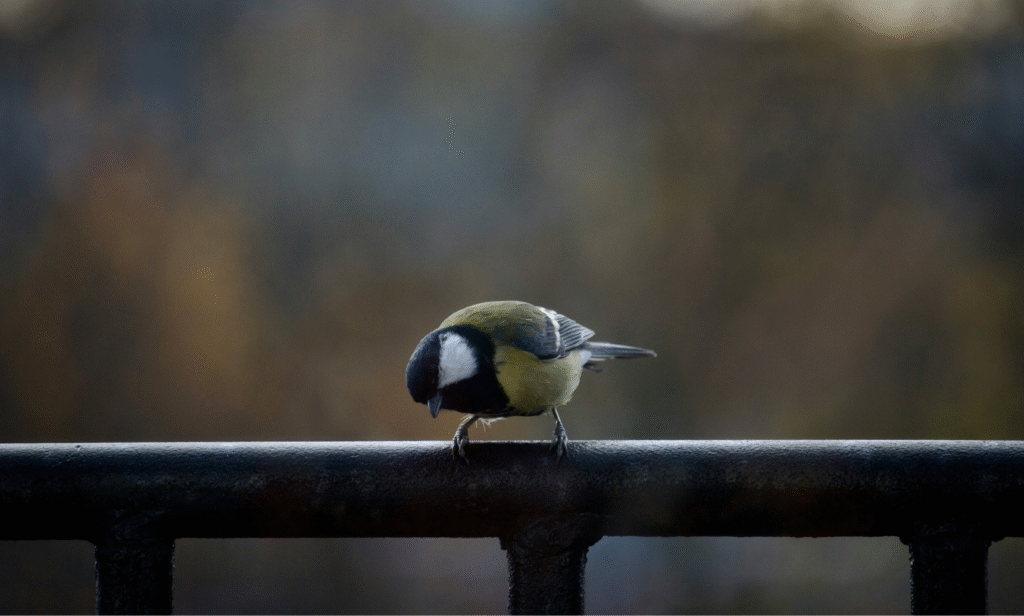
City birds responded consistently to a test involving human gender, a finding that may inspire future studies about the relationship between urban wildlife and their human neighbors.
Birds fled sooner, and from farther away, when approached by women than when they were approached by men, according to a study conducted across five European countries and published in the journal People and Nature.
The Study
A total of 2,701 observations regarding 37 species of common birds that regularly frequent urban habitats were made during the spring breeding season of 2023 in Czechia, France, Germany, Poland, and Spain — all of which have rich avian biodiversity. Fieldwork was carried out mostly within the first four hours after sunrise, under calm, dry conditions, to limit outside sources of variation.
One male and one female participant, both professionally trained to conduct ornithological surveys, engaged in the test by walking at a leisurely, steady pace along a straight path toward the target bird until the moment it decided to take flight, recording the so-called flight initiation distance, or FID.
Both participants were matched for height and build, dressed comparably, and tied back their hair where applicable, so that clothing, height, and hairstyle would not explain any difference in the birds’ reactions.
After excluding species with fewer than ten recorded encounters, the researchers analyzed 2,581 observations across 37 species, among them frequently encountered urban species such as the Eurasian blackbird, common wood pigeon, Eurasian magpie, great tit, and house sparrow.
The results showed that birds reacted differently depending on the gender of the observer: on average, the mean flight initiation distance was about 8.5 meters for women and roughly 7.5 meters for men — meaning men were able to get about one meter, or roughly three feet, closer to birds before they took off, and birds gave women an estimated 11 percent more space overall.
The pattern was consistent both across the five surveyed countries and across bird species, holding for skittish species like magpies as well as bolder, more human-tolerant species like pigeons.
“This is maybe the most interesting part of our study,” said Federico Morelli, an associate professor at the University of Turin and a co-author of the study. “We have identified a phenomenon, but we really don’t know why. However, what our results do highlight is the birds’ sophisticated ability to evaluate their environment.”
Yanina Benedetti, a researcher at the Czech University of Life Sciences Prague and a co-author of the study, commented on what the finding meant to her personally as a woman working in the field: “As a woman in the field, I was surprised that birds reacted to us differently,” she said, adding that the results show how animals see us in an urban context, and that this is worth understanding and considering.
Daniel Blumstein, a professor of ecology and evolutionary biology at the University of California, Los Angeles, and one of the study’s co-authors, said he stands behind the findings even though he cannot yet explain them.
He noted that the results suggest the gender of the person conducting an experiment could itself be a source of bias in studies of wildlife behavior — something researchers may want to control for going forward.
Explanation of Results
It remains unclear what accounts for the observed differences, though the researchers have proposed a handful of possible explanations, none of which has yet been tested individually.
The team has floated subtle differences in gait, posture, body shape, and scent or pheromones as candidate cues that birds might be detecting, even when clothing, height, and hairstyle are deliberately kept the same between observers.
Blumstein has gone so far as to half-jokingly suggest that properly isolating gait as a variable might require an experiment resembling the exaggerated walking styles of the British comedy sketch “The Ministry of Silly Walks,” a nod to how deliberately different two people’s movements would need to be to test the idea in isolation.
Benedetti has said the logical next step is to test these factors separately rather than grouping them together under observer gender.
Implications for Science, Society, and Everyday Life
The study’s implications touch several areas at once. First, the findings add to a growing body of evidence that animals respond differently depending on the gender of the humans they encounter.
It has previously been established that laboratory rats and mice show more signs of behavioral reactivity when handled by men than by women, and separate research on monkeys and pet dogs has found that these animals, too, can show preferences tied to a person’s gender. This study, however, marks the first time such a pattern has been documented and confirmed in wild birds living in cities.
Second, in terms of practical application, the study serves as a caution to field researchers investigating how wildlife responds to human disturbance. Because many behavioral studies assume that a human observer is a neutral presence, relying solely on observers of one gender risks missing part of the picture.
Third, for everyday life, the implications are mostly gentle ones. The study is not a claim that women are inherently more disruptive to urban wildlife, nor is it a reason to discourage women from spending time outdoors or working in the field. In practice, this mainly encourages people to be mindful of the subtle cues that city wildlife may be picking up on — and to move calmly and give animals a bit of extra space regardless of who is doing the approaching.
The study’s authors have also been careful not to overstate their findings. Although the pattern was strong and consistent across countries and species, the team has stressed that more research is needed to confirm how widespread the effect is and to identify what is actually driving it.
Ultimately, the study serves as a fascinating reminder that city animals are paying much closer attention to the people around them than most of us realize.
Sources
Morelli, F., Benedetti, Y., Mikula, P., Blumstein, D. T., et al. (2026)