In March 2020, as Palm Beach County entered a pandemic shutdown, Jupiter resident Gretchen Anthony vanished after sending a series of unusual text messages, launching an investigation that would stretch across six states.
A Relationship That Began at the Gym

Gretchen Stoughton Anthony, 51, lived in Jupiter, Florida, a community in Palm Beach County. After going through an earlier divorce, she was raising her 12-year-old daughter and sharing custody with her ex-husband.
Gretchen trained regularly at a local gym, where she met David Anthony, a personal trainer known for his outgoing personality and strong presence on the gym floor.
The gym’s owner, Tabitha Hopkins, said David was intelligent, well-spoken, and popular with clients, and that he brought in a steady stream of new members. Gretchen and David developed a relationship, and in 2015 they married at a wedding chapel in Las Vegas.
Friends described the couple as appearing genuinely happy together. David became a close figure in the life of Gretchen’s daughter, who referred to him as her “bonus dad.”
For several years, the marriage appeared stable, but by late 2019, the relationship began to break down. The couple separated, and David moved out of the home they had shared in Abacoa, a village within Jupiter.
Warning Signs Before the Disappearance

In February 2020, Gretchen filed for divorce, and David moved in with his mother. Around this time, Hopkins noticed a shift in David’s behavior at the gym, describing mood swings that ranged from charming to difficult to manage.
She eventually fired him for a second time, having done so once before in 2017. Following the second dismissal, Hopkins witnessed an angry outburst from David that she found unsettling enough to reach out to Gretchen directly, warning her to stay away from him.
It was the last conversation the two friends would have. Concerned about her safety after the separation, Gretchen had installed security cameras throughout her home and garage following an earlier occasion when David returned to the property uninvited.
On March 15, 2020, in nearby Riviera Beach, police stopped David after an officer reported seeing him approaching teenage girls while pacing and sweating heavily near a shopping area.
He resisted arrest during the encounter and was charged with resisting an officer with violence. After spending several days in jail, he posted bail and was released three days before Gretchen went missing.
Gretchen’s Sudden Silence and Alarming Text Messages
By March 2020, the coronavirus pandemic had prompted local officials in Palm Beach County to declare a state of emergency, close schools and businesses, and order residents to stay home except when necessary.
On the morning of March 21, a neighbor near Gretchen’s home on Sunshine Drive in Abacoa reported hearing a woman scream, followed by cries suggesting she was in pain. The neighbor did not call police at the time.
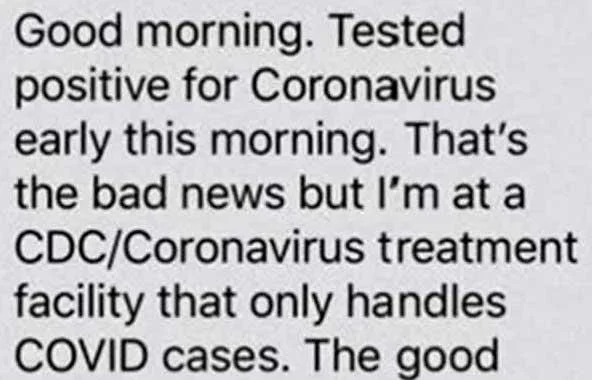
Two days later, on March 23, friends and family began receiving text messages from Gretchen’s phone stating that she had tested positive for the coronavirus.
Over the following days, additional messages described a worsening condition, including claims that she had consulted a virus screening hotline, been admitted to Jupiter Medical Center, and later transferred to a facility in Belle Glade operated by the Centers for Disease Control and Prevention.
No such CDC facility existed in Belle Glade. Despite the volume of messages, no one, including Gretchen’s daughter, ever spoke with her by phone during this period; calls to her number went straight to voicemail.
The inconsistencies troubled her family and friends enough that they contacted Jupiter police on March 26 and asked for a welfare check.
Police Investigate a Disturbing Scene

Jupiter police detective Jared Kenerson took on the case and quickly learned that Jupiter Medical Center had no record of Gretchen as a patient. A search of the hospital’s parking lot located her Mini Cooper, with her purse still inside the vehicle.
Days later, as officers canvassed the neighborhood wearing body cameras, a resident reported noticing a soapy substance seeping out from beneath Gretchen’s garage door. Investigators found that the side door connecting her patio to the garage was locked, with a key broken off inside the deadbolt.
After forcing their way in, they found no sign of Gretchen but detected a strong odor of cleaning products inside the garage, along with moisture on the floor and apparent bleach stains leading toward the driveway.
A further search of the home revealed a broken picture frame, glass shards on the bed, and a towel stained with what was identified as a blood-like substance, indicating a violent struggle had taken place.
A cadaver dog later detected traces of blood on the garage floor on March 27. Neighbors had also photographed a black Nissan pickup truck parked near the home around the time of the disturbance; investigators traced the vehicle to David.
They further learned that Gretchen had filed for divorce the previous month and that David had moved in with his mother after the separation. Investigators also discovered that the security cameras Gretchen had installed were missing from the walls of her home.
Although the physical devices were gone, the footage they had recorded remained stored with the manufacturer’s cloud service, and detectives obtained a search warrant to retrieve it.
A Cross-Country Pursuit Leads to an Arrest
While waiting for the camera footage, detectives went to speak with David’s mother. She told them she had also received a text from Gretchen’s phone referencing the CDC facility and showed investigators the message.
When asked about her son’s whereabouts, she said David had packed his truck, taken his dog, Kobe, and left on Tuesday, March 24, telling her he was headed to Costa Rica. His attempt to leave the country made him a clear suspect.
Investigators then reviewed surveillance video from the hospital parking lot, which showed a tall figure walking away from Gretchen’s Mini Cooper, consistent with David’s height of six feet seven inches.
Cell phone data placed Gretchen’s phone near Pensacola, roughly 600 miles from Jupiter, and showed it continuing to move. Video from several Florida jewelry stores captured David selling pieces belonging to Gretchen; at one store, he told the owner the jewelry had been left to him by a relative who died of COVID-19.
During the investigation, detectives learned that David had been born David Anthony Deutsch before legally changing his name to David Ethan Anthony. Records showed he had a prior arrest for robbing a Blockbuster Video store with a squirt gun and assaulting a police officer, offenses for which he had reached a plea deal and served a brief jail sentence.
Cell tower records showed Gretchen’s and David’s phones traveling together westward across Texas, and investigators issued an alert listing David’s truck as connected to a felony.
His phone pinged near Pecos, Texas, roughly 1,600 miles from Jupiter, and the following day in Las Cruces, New Mexico. Local police located David’s truck and pulled him over.
When asked about Gretchen, he told officers she had COVID-19 and was being treated at a CDC facility. Officers seized his truck along with both phones but released him, citing insufficient evidence to hold him at that time.
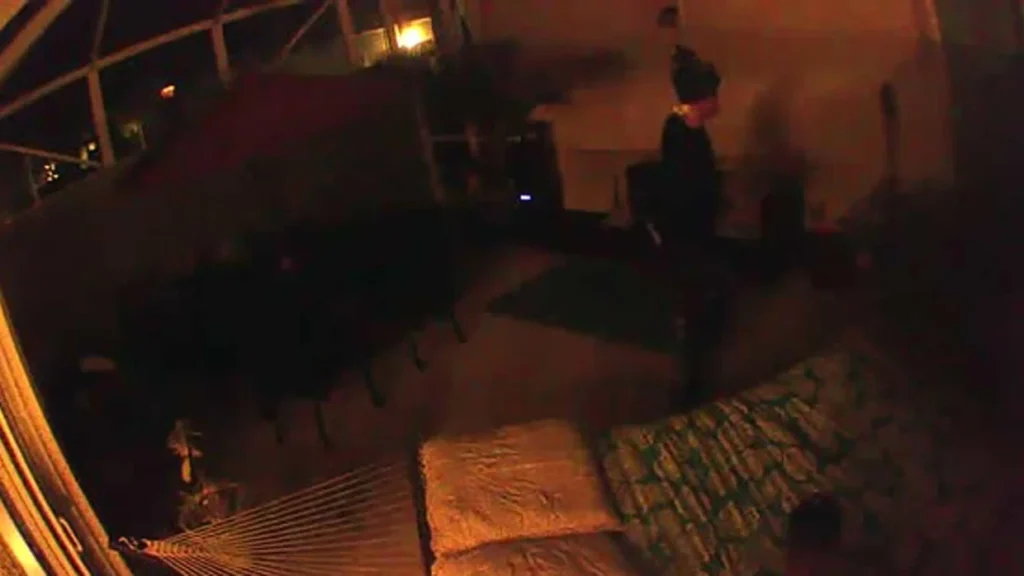
Shortly afterward, Jupiter police received the footage retrieved from Gretchen’s home security system. The recordings showed a figure waiting in the shadows on the patio before forcing Gretchen into the garage.
Audio captured by her Alexa device recorded her calling out for the device to contact 911, a command it was not programmed to carry out automatically. Additional footage showed the assailant looking directly into one of the cameras before pulling it down from the wall.
Investigators matched the figure to David. With this evidence in hand, Kenerson traveled to Las Cruces and searched hotels and areas where people were known to gather outdoors.
On March 31, 2020, roughly 2,000 miles from Jupiter, he spotted David walking Kobe on a nearby street and took him into custody.
David was booked into the Doña Ana County Detention Center on a fugitive-from-justice charge pending extradition, and Kobe was turned over to a local shelter. The search had spanned six states and nearly 2,000 miles since Gretchen’s disappearance.
Confession, Sentencing, and Remembering Gretchen

Detectives Kenerson and Kelly Sanders interrogated David at New Mexico State Police headquarters, seeking the location of Gretchen’s body. Throughout the interview, David insisted Gretchen was still alive, claiming she had discovered illegal activity connected to her workplace and had fled out of fear for her safety.
When confronted about the fabricated text messages and the placement of her car at the hospital, he acknowledged arranging both but offered no explanation beyond saying he had been made to do it.
He repeated his claim that Gretchen was alive more than thirty times during questioning and dismissed the video showing him forcing her into the garage, challenging investigators to produce more direct proof.
Detectives later played a recorded plea from Gretchen’s daughter, asking him to reveal her mother’s location, but David maintained his account and eventually ended the interview by requesting a lawyer.
David was charged with second-degree murder and extradited to Florida. A grand jury later indicted him on an additional kidnapping charge and raised the murder charge to first degree, which carried the possibility of the death penalty.
Without a body, prosecutors faced significant obstacles in building their case, a circumstance that gave David leverage in any negotiation.
On Monday, December 21, 2020, David pleaded guilty to second-degree murder and kidnapping under a plea agreement requiring him to disclose the location of Gretchen’s remains in exchange for a 38-year prison sentence.
Officials said Gretchen’s family would have preferred a sentence of life in prison but accepted the arrangement in order to recover her body.
That same day, Jupiter Police Chief Daniel Kerr announced that investigators had located what were believed to be Gretchen’s remains after searching an area near Bush Road and Indiantown Road, about three miles from her Jupiter home.
An autopsy determined that she had died from stab wounds to her neck and torso, with defensive wounds indicating she had fought back against her attacker.
At his sentencing hearing on January 14, 2021, Gretchen’s sister, Sarah Carey, addressed David directly, telling him he had taken a mother away from her child.
David then gave a statement attributing his actions to a delusional belief that the pandemic signaled the end of the world, saying he had felt compelled to escape at any cost and acknowledging that he had taken something of irreplaceable value.
Judge Kirk Volker sentenced David to 38 years in prison, with credit for 295 days already served, under the terms of his plea agreement.
Gretchen Anthony was remembered by those who knew her as a devoted mother who built her life around her daughter, sharing custody with her ex-husband and rarely missing an opportunity to be part of her child’s world.
Born Gretchen Crain on January 8, 1969, in Doylestown, Pennsylvania, she was raised in New Jersey and earned her bachelor’s degree from Monmouth University. She went on to work as a teacher before later becoming the human resources manager for a utility company.
At 51, she kept a disciplined fitness routine and took pride in her health, training regularly at the gym where she would later meet David. Friends recalled her as warm and radiant, someone with a distinctive laugh and a caring nature who connected easily with everyone she met.
In the years since her death, her family and friends have said that the warmth she brought to those around her remains central to how she is remembered.
Researchers identify why non-human things can feel “social” to us

People may talk to their cars, name their computers, or feel sorry for a stuffed animal that hasn’t been hugged in a long time. This may be the result of a universal psychological tendency called anthropomorphism.
Anthropomorphism is a process in which people attribute human characteristics and behaviors to animals and objects. Scientists have examined the phenomenon and identified the psychological reasons behind it. Anthropomorphism is normal and occurs every day in people’s lives.
What Anthropomorphism Really Means
Anthropomorphism is the tendency to ascribe human traits, intentions, or emotions to animals or objects. Psychologists explain this behavior as the projection of human characteristics onto non-human organisms.
People may talk to their pets as if they understand every word or name their vehicles and believe that they have feelings and intentions. In addition, people may treat them as if they can respond to stimuli just as a human would. In fact, this assumption may lead people to attempt to communicate with all objects, including toys, household appliances, and animals.
Anthropomorphism can also explain why people believe that inanimate objects may experience basic emotions, such as happiness or sadness. For example, in a study conducted by psychologists, 125 participants received questions regarding the named objects in their possession, and most of them revealed that they feel attached to their belongings.
“I like patting Carly on the steering wheel and encouraging him if we have to make it up an especially steep hill,” one participant responded. “I will give extra-long hugs to Bunny when I’m feeling down or afraid,” wrote another participant.
Furthermore, people may describe objects and animals with emotional adjectives and nouns to imply that they have human characteristics. “My car is temperamental,” one person might say when referring to their car’s problematic engine. On the other hand, an individual may name their mischievous pet “Loki” and say that it is “mercurial and fickle as all hell.”
Anthropomorphism is not limited to assigning names or describing the characteristics of objects using emotional adjectives. Sometimes, people treat inanimate objects and animals as if they have consciousness and intentions.
This psychological pattern can be explained by the fact that people want to establish a connection with an object or being, including animals and computers. In addition, anthropomorphism makes people perceive conscious intention behind simple actions and behaviors, such as movement.
Why Our Minds Do This
Scientists have identified several psychological reasons why people engage in anthropomorphism. The first reason is that humans are capable of rapidly detecting social cues. Moreover, people have evolved to identify faces, which leads to detecting faces in animals or objects.
Experts refer to this psychological phenomenon as face pareidolia. Research has revealed that eyes are one of the most essential features of a face that can trigger a social response in people. In addition, human brains may identify movement as intentional or self-initiated, which causes people to attribute consciousness to other moving objects.
Scientists have found that eyes, movement and facial expressions could be important clues that help people recognize conscious beings, including animals. As research has revealed, these cues can trigger anthropomorphism.
For instance, in one of the experiments conducted in 1944, participants observed animated characters that performed simple movements on a screen. The audience assumed that the shapes had intentions and emotions, such as aggression. “The large triangle is a bully and was acting aggressively toward the small triangle and circle,” one participant wrote.
Another reason behind anthropomorphism is the fact that assigning human traits to animals and objects helps people satisfy their need for companionship. Researchers suggest that anthropomorphism allows humans to address their fears and concerns.
According to a 2021 study, anthropomorphism fulfills three social needs: comfort, self-identity, and self-efficacy. When objects behave like humans, it allows people to get comfort and support when they need it the most. Furthermore, anthropomorphism allows humans to identify themselves through their relationships with the objects around them.
Moreover, psychologists have discovered that when presented with ambiguous information, people tend to rely on cognitive mechanisms to fill gaps and reach conclusions. Anthropomorphism allows people to recognize patterns and behaviors that have similar effects in human beings.
Therefore, the only way to interpret an object’s actions is to compare them to the behavior patterns of people. “This stems from a desire to understand a strange object’s behaviour by aligning it with one of the most mercurial yet familiar things we know: other people,” researcher notes explain.
In other words, since objects rarely display behaviors that people encounter daily, the easiest way to explain their actions is to equate them to those of conscious beings.
How It Shapes Our Daily Lives
Anthropomorphism has the power to change the way people perceive and interact with objects in their daily lives. Researchers argue that the psychological mechanism allows people to transform material items into social beings. In other words, anthropomorphism enables people to build relationships with their belongings.
For instance, people who believe that their cars have feelings may avoid replacing their vehicle with a new one. In addition, scientists suggest that objects may become stronger social partners than humans. For instance, people may begin to rely on their toys instead of making meaningful relationships with people.
Anthropomorphism can also have a significant impact on the way people make economic decisions. Researchers reveal that the tendency influences people’s purchasing behaviors and how they use the purchased items.
According to research published in consumer studies, anthropomorphism encourages people to engage in more socially appropriate behaviors and supports their relationships with their toys, cars, and other objects. “Corporations are taking note of this effect. Cars are being designed to look like human faces. Computer interfaces are being imbued with human-like design aesthetics,” one analysis states.
Sometimes, people may become deeply attached to their objects. In unique cases, individuals view their belongings as genuine companion figures.
For example, one woman claimed that her briefcase, which she named Gideon, provided a deep spiritual connection, stating that she felt they could communicate mentally. “Our spiritual connection and communication is shown telepathically, I hear him, and he hears me,” the woman stated. However, the psychology of anthropomorphism suggests that in most cases, such behaviors are abnormal and rare.
Wrapping It Up
Anthropomorphism plays a vital role in people’s everyday lives because it allows the human brain to process information regarding social cues. Scientists argue that the tendency is universal and has existed for thousands of years.
Moreover, researchers suggest that people cannot avoid anthropomorphism because their brains constantly identify human characteristics in other beings, such as objects and animals. Researchers have determined that people can detect social cues in non-human organisms every day.
The psychological mechanism can affect people’s interactions with others, including their toys, computers, and pets. Anthropomorphism can also become the foundation of human relationships, which makes it a powerful force.
Sometimes, the tendency can become harmful or cause people to develop unhealthy patterns, such as objectophilia. However, in most cases, anthropomorphism helps people cope with stress, improve their social interactions, and strengthen their relationships with animals.
A Psychology Today article states that “living in a world that seems more predictable—more human in that it’s loaded with objects that have pseudo-intentions—appears to make us happier and less anxious, even if we know, deep down, that we’re just imagining it.”
Sources
Gregg, J. (2025). Our Irrational, Anthropomorphic Urges. Psychology Today
Saunderson, S., & Kuo, I. (2022). Humanlike Objects and our Social Minds
Psych Central. (2018/2022). What Is Anthropomorphizing? Psychology, Benefits, and Downsides