A California backyard renovation in 1994 unearthed a decade-old secret, launching an investigation into a vanished couple and a tenant who had spent years hiding behind invented identities.
A Charming Newcomer in San Marino
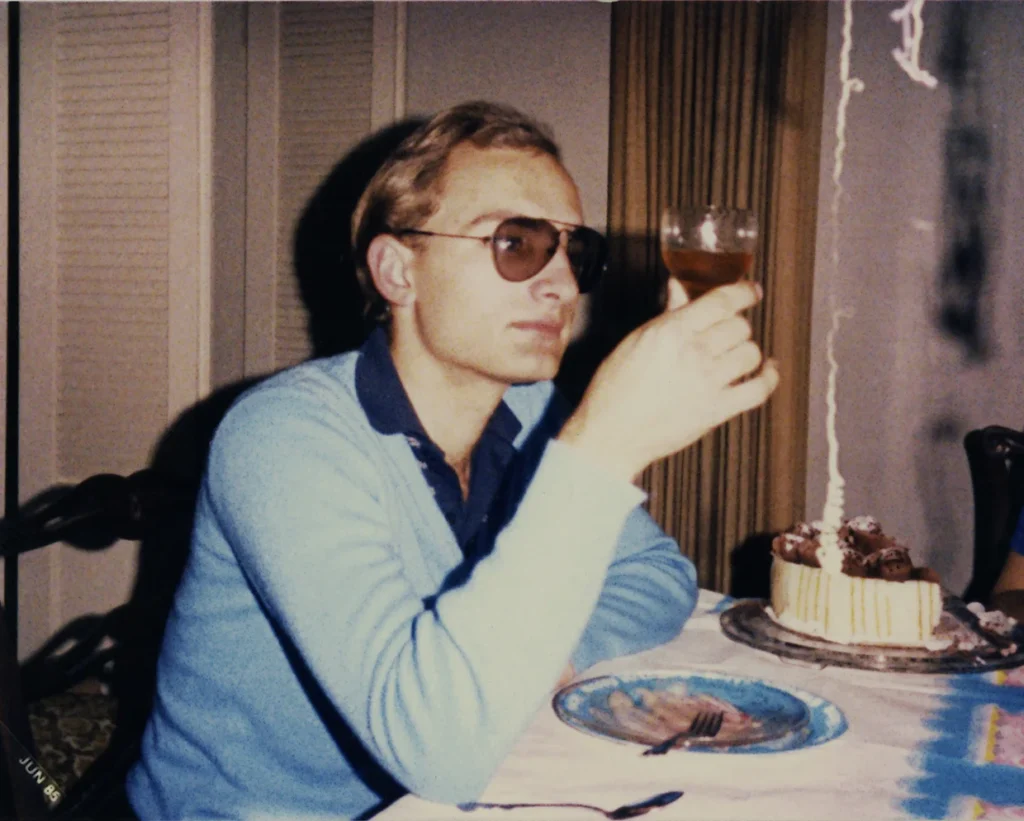
In the early 1980s, a young man calling himself Christopher Chichester moved into a guest house on Lorain Road in San Marino, California.
He introduced himself as the 13th Baronet, claiming descent from British royalty, and told acquaintances he intended to have an English castle shipped to the United States brick by brick.
He was enrolled at the University of Southern California as a film student and was often seen on campus carrying scripts.
Those who knew him in San Marino described him as witty, well-read, and entertaining, and he became a familiar figure at gatherings, including parties he hosted in the backyard of the Lorain Road property.
He also attended an Episcopal church, where he impressed a local family with stories of his background and, on at least one occasion, asked a twelve-year-old girl on a date, a request her mother firmly refused.
Although Chichester lived in the guest house, neighbors and friends noticed he moved freely through the main house on the property, which belonged to a woman known as Didi. Didi’s son, John, had grown up in that house.
As a child, John was shy and reserved, spending much of his free time with a close friend discussing science fiction, particularly Star Trek.
As a teenager and young adult, his interest in the genre expanded into a fascination with computers, and he became skilled with the technology as it grew more accessible during the decade. John continued living with his mother well into his twenties.
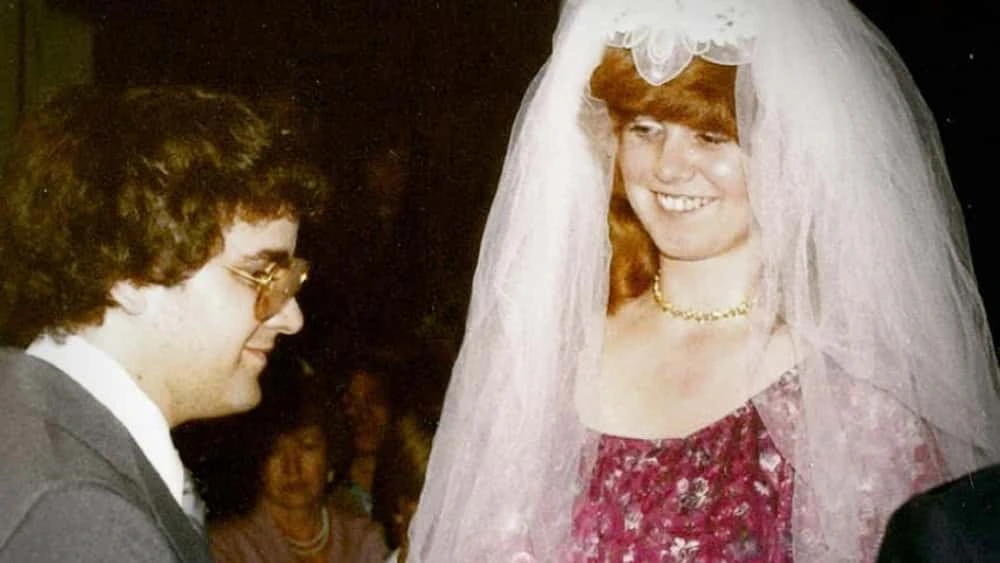
John eventually met a woman named Linda, who shared his enthusiasm for science fiction and fantasy. The two were physically an unusual match: John was short, while Linda stood six feet tall.
Friends who knew them both described the pairing as unlikely but genuine, noting that the couple seemed to complement one another despite their differences in personality, as John was quiet and Linda was outgoing.
They married on Halloween in 1983 and moved into the main house on Lorain Road, since the guest house was already occupied by Chichester, who paid rent and showed no intention of leaving.
A Couple Disappears
With their finances limited, John and Linda focused on building their careers, eventually saving enough to purchase a new truck, a milestone they were proud to share with friends.
They also began planning a trip to a science fiction convention in Phoenix with Linda’s friend Sue Kaufman.
In early 1985, however, just weeks before the planned trip, Linda told Sue that she and John were instead traveling to Connecticut, explaining that John had a job interview connected to the government. She indicated they expected to return within two weeks, in time for the Phoenix trip.
The couple did not return as planned. When Sue heard nothing after the two weeks had passed, she contacted Didi, who told her the couple was actually in Paris.
Around the same time, Sue learned that Linda had left her cats at a pet hotel, a detail that struck her as inconsistent with Linda’s devotion to the animals. Linda’s family grew concerned as well and filed a missing persons report with local authorities.
When San Marino police followed up on the report, Didi repeated the story that her son and daughter-in-law were away on a secret job assignment, information she said had come from her tenant in the guest house.
When an officer visited the guest house to ask what the tenant might know, Chichester answered the door naked and offered no further information about John and Linda’s whereabouts.
Not long afterward, postcards signed by John and Linda began arriving from Paris, addressed to friends including Sue. The postcards appeared to confirm Didi’s account and eased concerns that anything was wrong.
In July 1985, however, Didi contacted police again, this time distraught. Her tenant, the source of the story about her son’s secret assignment, had moved out of the guest house without notice, leaving her without a way to reach John. Didi did not hear from her son again.
In the years that followed, she lived alone in the house, increasingly isolated, and died a few years later.
A Discovery Beneath the Backyard
Life in San Marino continued, and the disappearance of John and Linda faded from public attention.
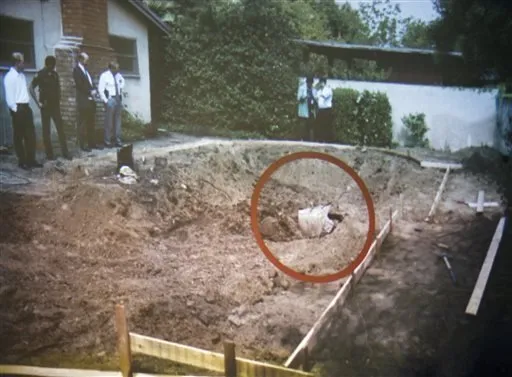
The Lorain Road property changed ownership, and in May 1994, nearly a decade after the couple vanished, the new owners began digging in the backyard to install a swimming pool.
During the excavation, workers uncovered a human skeleton, prompting the new owners to call the police.
Investigators connected the discovery to the earlier missing persons report filed for the same address. The remains were dressed in jeans and a plaid shirt, clothing consistent with what John had typically worn.
Examination of the skeleton revealed blows to the head and six stab wounds to the back, indicating a violent death rather than an accident. The case, dormant for nine years, immediately became an active homicide investigation.
Two people connected to the Lorain Road property in 1985 remained unaccounted for: Linda, John’s wife, and the former guest house tenant, Christopher Chichester.
Investigators searched the rest of the yard for additional remains but found none, leaving Linda’s fate unresolved.
Detectives began working to locate both Linda and Chichester, recognizing that either might hold answers about what had happened to John, or might be responsible for his death.
As detectives revisited the case, they interviewed people who had known Chichester during his time in San Marino.
Several described him in less favorable terms than before, recalling him as someone who took advantage of others’ hospitality. One acquaintance recalled that he had once borrowed a chainsaw and kept it for several months.
Another recounted a backyard party at which she noticed a section of the lawn appeared freshly dug, later years learning that this was near the location where John’s remains were eventually found.
When she asked Chichester about the disturbed soil at the time, he told her he was having plumbing problems.
Investigators also conducted a chemical test inside the guest house and detected four blood spots, though testing could not determine whether the blood was human or animal.
Separately, detectives traced the truck John and Linda had purchased before their disappearance to Connecticut, where records showed it had come into the possession of a man using the name Christopher Crowe, working on Wall Street.
Further investigation revealed that Crowe and Chichester were the same person, and that this individual was not British at all, but a German national who had adopted a series of different identities.
By the time detectives uncovered this pattern, the man had disappeared again, and the investigation stalled for lack of a location.
A Fugitive’s New Identities
For more than a decade, the trail on Chichester, or Crowe, went cold. In the summer of 2008, a separate incident in Boston drew national attention.
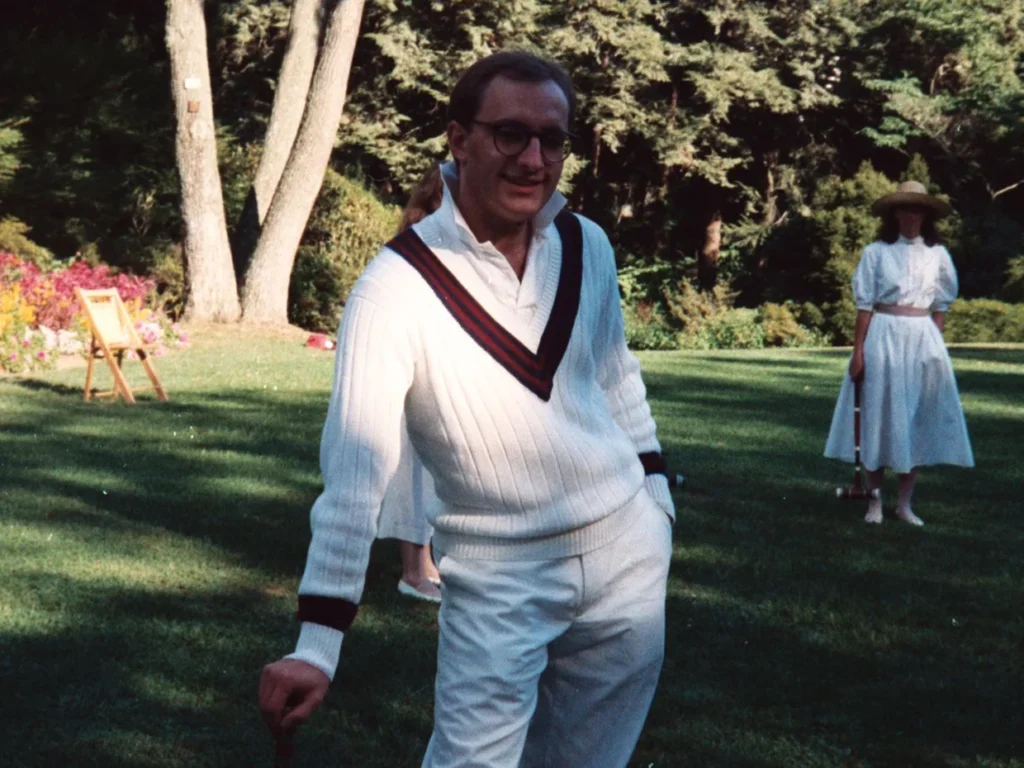
A man using the name Clark Rockefeller, who claimed ties to the well-known Rockefeller family, was involved in a bitter divorce and custody dispute with his wife, Sandra Boss, over their young daughter, nicknamed Snooks.
During a supervised visit, Rockefeller took the child and disappeared, prompting a nationwide search by the FBI.
Sandra Boss made a public appeal for her daughter’s safe return, while investigators worked to determine Rockefeller’s true identity, a task complicated by the fact that even his wife had been unable to verify basic details about his background.
When the FBI released a wanted poster featuring Rockefeller’s photograph, several people who had known Christopher Chichester in San Marino recognized him immediately.
Rockefeller was apprehended six days after taking his daughter, and his true identity was revealed to be Christian Karl Gerhartsreiter, a German national who had been living under a series of assumed names since arriving in the United States in 1978.
Following his arrest, he acknowledged in a television interview that he had used multiple aliases over the years, comparing the practice to a writer using a pen name.
When asked directly whether he had killed John and Linda, he stated that he had always been a pacifist and a Quaker who believed in nonviolence, and that he did not believe he had ever hurt anyone, though he did not offer a direct denial of the killing itself.
The publicity surrounding the Boston case prompted California investigators to reopen the John Sohus homicide investigation, and new witnesses came forward with information they had not previously shared.
Detectives also gained access to documents and computer hard drives connected to the Boston case, which showed that records of the defendant’s life effectively began around 1988, several years after John and Linda’s disappearance, suggesting an effort to erase his earlier history.
With new evidence and renewed public interest, prosecutors determined the case was ready to move forward, and Gerhartsreiter was extradited from Boston to California to face a murder charge.
A Case Built on Circumstantial Evidence

At trial, prosecutors acknowledged they lacked direct forensic proof, such as fingerprints or DNA, connecting the defendant to the killing. Instead, they built their case on a series of circumstantial details.
Witnesses testified about the blood spots found in the guest house, the borrowed chainsaw and the freshly disturbed patch of lawn the defendant had explained away as a plumbing issue, which investigators noted was located near where John’s remains were later found.
Prosecutors also presented evidence that John’s skull had been discovered wrapped in book bags from the University of Southern California and the University of Wisconsin-Milwaukee, both schools the defendant had attended, establishing a physical link between him and the remains.
A woman who had lived with the defendant in the late 1980s, when he went by the name Christopher Crowe, testified that his behavior changed dramatically after a detective called asking about the truck traced to his name.
According to her testimony, he became secretive and paranoid, telling her the call had actually come from people trying to harm his family, and suggested they marry and go into hiding.
He grew a beard and mustache, wore contact lenses, and altered his appearance, later adopting the name Clark Rockefeller for the first time simply to secure a restaurant reservation.
Sandra Boss also testified, describing how she met the defendant at a costume party while attending Harvard, where he introduced himself as a man raised in a wealthy New York family with ties to the Rockefellers.
She said they went through a wedding ceremony in 1995 at a Quaker meeting house in Nantucket, which she later learned had never been legally registered.
Boss testified that she controlled the couple’s finances, since her husband claimed to have no bank accounts of his own, and that he insisted he would never travel to California or Connecticut, going so far as to say he would never set foot in Connecticut.
She also noted that he stopped traveling by airplane once identification became a requirement.
The defense countered by emphasizing the absence of forensic evidence and by pointing to Linda as an alternative suspect, noting that she was physically larger than both her husband and the defendant and arguing she had a stronger motive due to reported frustration with living arrangements at the Lorain Road house.
The defense also highlighted testimony from handwriting experts confirming that Linda herself had written the postcards sent from Paris, suggesting she had survived whatever happened to John.
Prosecutors responded by showing that the defendant had a documented history of arranging for others to mail postcards on his behalf from locations he had never visited, including one sent years earlier from London while records showed he had been enrolled in an English class at USC rather than traveling abroad.
Verdict and Remembering John and Linda
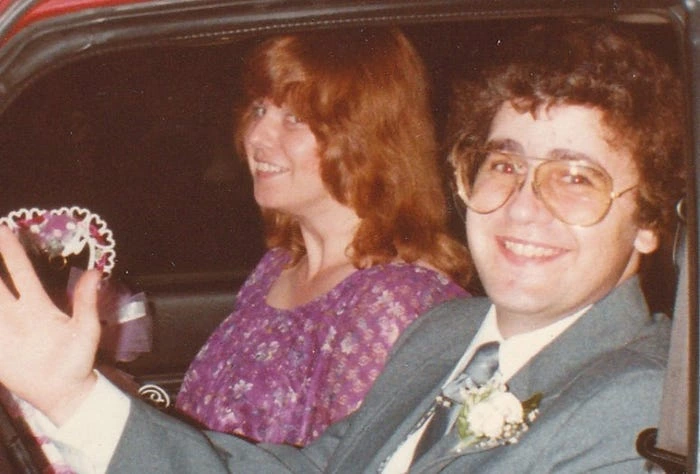
After hearing the evidence, the jury deliberated for only a few hours before finding Christian Karl Gerhartsreiter guilty of first-degree murder in the death of John Sohus. Linda Sohus was never located, and her remains have not been recovered.
John Sohus was remembered by those who knew him as a quiet, thoughtful young man whose early interests in science fiction shaped much of his life.
As a child, he shared a close friendship built around discussions of Star Trek and imaginative theories about space travel, and that early curiosity carried into a lasting fascination with computers as the technology became part of everyday life in the 1980s.
He remained close to his mother, Didi, living with her well into adulthood before eventually finding a partner who understood his interests.
Linda, tall and outgoing where John was reserved, shared his love of science fiction and fantasy, and friends who knew the couple described their bond as genuine despite their contrasting personalities.
Their marriage on Halloween in 1983 marked the beginning of a life they were still building together, from their new truck to their planned trip to a science fiction convention, before their disappearance cut that future short.