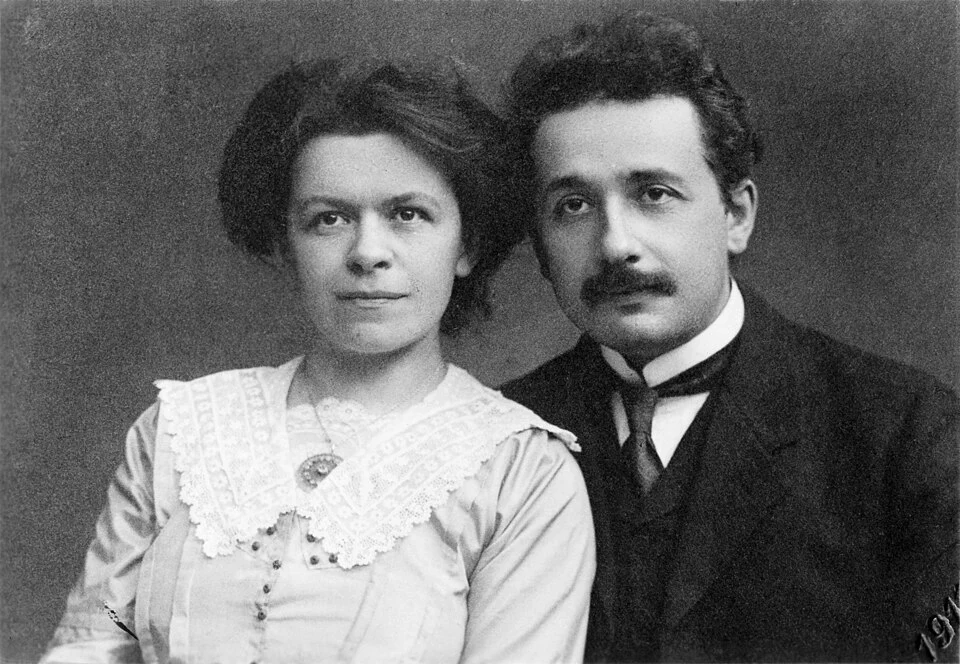
Mileva Einstein-Maric isn’t a name most people know but she played a big part in the early life of one of the world’s most famous scientists—Albert Einstein. She was smart, determined and way ahead of her time. Mileva studied math and physics when most women weren’t even allowed to join such classes.
Early Life and Education
Mileva Maric was born in 1875 in Titel, Austria-Hungary—today that’s part of Serbia. Her family was pretty well-off and valued education, especially for their daughter. That was rare in those days. As a teenager, Mileva attended an all-boys’ school in Zagreb which was a big deal back then. She was really good at math and physics, subjects that most girls didn’t even study.
After high school, she went to Switzerland for college. In 1896, Mileva enrolled at the University of Zurich but soon transferred to the Zurich Polytechnic School—what we now know as ETH Zurich. It was there that she met another student who shared her love for science: Albert Einstein.
The two quickly became close friends. They studied together, talked about ideas and spent long hours discussing physics. Their friendship soon turned into something more.
Falling in Love with Einstein
At first, Mileva was doing great in her classes. She even spent a semester in Heidelberg, Germany, to continue her studies. While she was away, she and Einstein wrote letters back and forth. In one letter, Einstein called her “Dollie” and told her how much he missed her and wanted her to come back.
When she returned to Zurich, their friendship turned romantic. They both loved science but not everyone loved their relationship. Einstein’s parents weren’t happy at all. They didn’t like that Mileva was older than him and from a different background. Still, the two stayed together and dreamed about building a life side by side.
But things didn’t go smoothly for Mileva. She failed her final exams in 1900 while Einstein graduated the same year. Determined to try again, she stayed in Zurich, worked in a lab and studied hard but sadly, she failed the exams once more. Around the same time, Mileva found out she was pregnant.
In early 1902, she gave birth to a daughter named Lieserl while living with her family. Nobody really knows what happened to the baby. Some say she was adopted while others believe she passed away from scarlet fever. The last mention of Lieserl appeared in a 1903 letter.
Marriage and Family Life
Mileva and Albert reunited in 1903 and decided to get married. They had a simple ceremony on January 6 in Bern, Switzerland. At that time, Einstein worked at the patent office there. The next year, their first son, Hans Albert, was born.
While Einstein was busy working on his famous theories, Mileva was managing the home and taking care of their son. It’s unclear how much she helped him with his scientific work but some historians believe she may have been involved in discussions or calculations. Einstein spent his free time studying physics and writing papers.
In 1905, he released a series of groundbreaking papers that changed the world of science. That was also when he introduced his most famous equation—E = mc². Mileva was by his side during those busy years but her name never appeared on any of the work.
Their family grew again in 1910 when Mileva gave birth to their second son, Eduard. The next year, the Einsteins moved to Prague where Albert got a job as a professor at the German University. They didn’t stay long, though. In 1912, they moved back to Zurich after Einstein was offered another teaching position at ETH.
But around that same time, things began to change. Einstein started writing letters to his cousin, Elsa Löwenthal. Their friendship slowly became romantic and soon Einstein was spending more time in Berlin—where Elsa lived—than at home.
Separation and Divorce
In 1914, Mileva and the children followed Albert to Berlin. However, life there didn’t go as she hoped. Einstein grew distant and the tension between them got worse. After just a few months, Mileva took the boys back to Switzerland.
Two years later, Einstein asked her for a divorce. Mileva was heartbroken but she agreed. Their divorce was finalized after World War I, in 1919. As part of the settlement, Einstein promised that if he ever won the Nobel Prize, the prize money would go to her.
That promise came true. In 1921, Albert Einstein won the Nobel Prize for Physics. True to his word, he gave Mileva the entire prize money.
Life After Einstein
After their divorce, life became difficult for Mileva. She ran a small boardinghouse for a while and gave private lessons to earn some money. She was a single mother trying to make things work on her own which wasn’t easy.
Then, tragedy struck again. In 1930, her younger son Eduard suffered a severe mental breakdown. Doctors later diagnosed him with schizophrenia. He spent most of his life in psychiatric hospitals which was incredibly painful for Mileva.
Her older son, Hans Albert, became an engineer and eventually moved to the United States in 1938. He later joined the faculty at the University of California in 1947. That must have made Mileva proud, even from afar.
In her later years, Mileva kept a low profile. She lived quietly in Zurich, far from the fame that followed her ex-husband around the world. Though her marriage ended, she never stopped caring for her children, especially Eduard. She passed away in 1948.