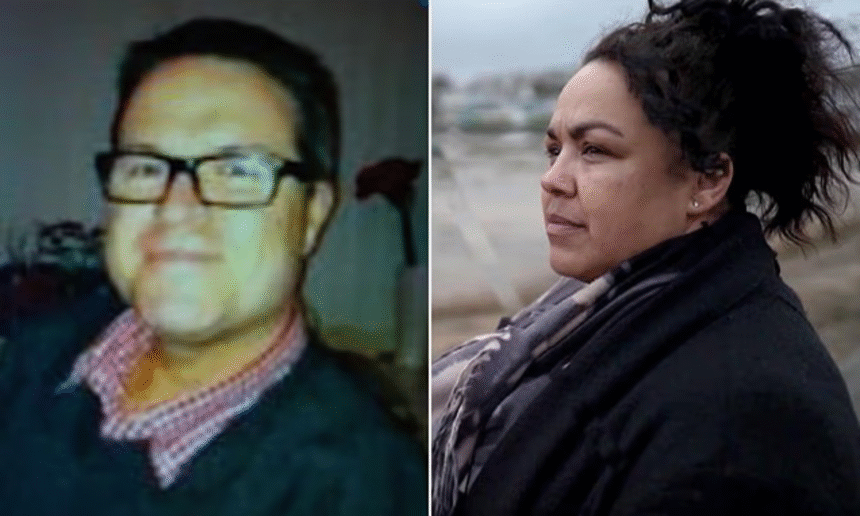
A group of women in North Wales have won more than half a million pounds in compensation after suffering years of pain from gynaecological surgeries performed by an NHS surgeon. The payouts follow claims that they were not properly informed about the risks of vaginal mesh implants or offered other treatment options.
The operations were carried out by Derek Klazinga while he worked for the Betsi Cadwaladr University Health Board between 2002 and 2016. During that time, he implanted vaginal mesh in several women. The mesh was used to support pelvic organs in cases of bladder problems or pelvic organ prolapse.
At the time, vaginal mesh was widely used. But in 2018, its use was paused across the UK because of serious safety concerns. It is now only used as a last resort. Many women across the country reported severe complications, including long-term pain and other life-changing problems.
According to an investigation by Welsh-language broadcaster S4C, 25 women have received compensation since 2015. Seven of them were paid a total of £600,000. The health board confirmed it has paid more than £5 million in compensation over the past decade for errors in gynaecological treatment, though it did not give a total amount for all 25 cases linked to this surgeon. It said it could not release that information due to data protection concerns.
One of the women who spoke publicly is Kerry Watson, 40, from Kinmel Bay in Conwy. She had surgery for bladder prolapse in 2014, when she was 29 years old. At the time, she hoped the operation would fix her health issues and allow her to get back to normal life with her young family.
Instead, she says she woke up the next day in extreme pain. “When I woke up the next morning, I had this awful pain in my back, on the left side,” she said. “The pain was off the scale. I’ve never felt anything like it.”
Ms Watson had two types of mesh implanted to support her organs. Soon after, she began suffering constant pain. Everyday tasks became difficult. Playing with her children was no longer simple. “I was leaking when I exerted myself or tried to play with the boys or pick them up – I’ve got three boys,” she said.
The pain did not go away. Years passed, but her condition did not improve. She now takes around 120 tablets a week to manage her symptoms. In 2024, she was diagnosed with post-traumatic stress disorder (PTSD) because of what she went through.
“I didn’t want to be here anymore. I couldn’t deal with the pain, I couldn’t deal with the thoughts I had,” she said. “I was nobody, just a bag of pain. Ten long years of that. Ten long years.”
For nearly a decade, she lived with the physical and emotional effects of the surgery. Then, in 2023, she came across a law firm’s website that mentioned legal cases against the Betsi Cadwaladr health board related to surgeries performed by Mr Klazinga. That moment changed everything for her.
She decided to bring her own legal claim against the board. During the case, a gynaecological expert reviewed her medical records. The expert told her that she may not have needed the surgery at all. According to the expert, simpler and less invasive treatments, such as injections or a removable silicone device called a pessary, could have helped her symptoms.
The health board denied that injections would have worked in her case. However, it admitted that other non-surgical treatments, like a pessary, should have been discussed with her. It also accepted that the process of getting her consent for the surgery fell below the standard expected of a reasonable and competent surgeon.
“I wasn’t told about the risks involved with mesh. I didn’t receive the correct information before the surgery,” Ms Watson said.
Her payout was based on the fact that she was not offered an alternative to the procedure known as tension-free vaginal tape obdurator (TVT-O) mesh surgery. The judgment also considered that she had not been fully informed about the possible risks of the operation.
At first, she was offered what she described as a low amount of compensation. She refused it. “I was initially offered a low amount, so I declined their first offer,” she said. “I ended up accepting £110,000 and then fees are taken off that.”
After paying her legal fees, she was left with £97,200. “Is that going to cover all those nights I’ll be up crying in pain? That doesn’t touch the sides, really,” she said.
Ms Watson was one of seven women who spoke to S4C’s TV programme Y Byd ar Bedwar, which means “The World on Four” in Welsh. The women shared their experiences publicly, describing years of chronic pain and the deep effect it had on their lives.
Several of them said they did not fully understand what the surgery involved or the risks connected to vaginal mesh. Some said they were not properly told about other treatment options. Many reported ongoing pain that has changed the way they live.
Solicitor Michael Strain, who represented one of the 25 women in a claim against the health board, described the situation as a “scandal.” He said it is highly unusual for so many claims to be linked to one clinician. He also questioned why patients were not informed that others had made similar complaints.
While the legal cases were being handled, Mr Klazinga’s professional future also came under attention. In 2021, he removed himself from the medical register before a planned fitness to practise hearing by the General Medical Council (GMC). Because he stepped down, the hearing did not take place.
In a statement, Mr Klazinga said he wanted to express sympathy to the women. “Firstly, I wish to express my sincerest sympathy that these ladies have had to endure such physical and psychological pain caused by, what we now know to be, defective medical products used in their treatments.
“These products were identified as potentially harmful and temporarily banned in 2018.
“This was followed in 2020 by a National Enquiry: The Independent Medicines and Medical Devices Safety Review, chaired by Baroness Julia Cumberlege.
“I ceased practising medicine ten years ago, more than two years before the ban.
“Before retiring in 2016, I always practised with the patient at the centre of my care, while abiding by the first principle of medicine: ‘First, do no harm’.
“I acted with the utmost professionalism and integrity.
“I was, of course, completely unaware of the defective nature of the products, which wasn’t subsequently exposed until two years after I retired.”
It is not known which company made the mesh he used. Some manufacturers in other cases have paid compensation for mesh complications without admitting liability.
The health board has admitted that in several cases, patients were not fully informed about other treatment options or about the possible risks and side effects of procedures involving TVT and TVT-O vaginal mesh before surgery took place.
Dr Clara Day, Executive Medical Director of the Betsi Cadwaladr University Health Board, also issued a statement. “Firstly, I want to sincerely apologise to all women who have suffered complications through the insertion of vaginal mesh after treatment within our Health Board.
“Across the UK, we know a number of claims have been settled and I want to acknowledge the stress and pain this has caused to a small proportion of women in our region who underwent those procedures.
“Since I became BCUHB’s Executive Medical Director in September last year, I have been made aware of some historic claims in relation to one clinician who left the Health Board in 2016.
“Via the legal system, we have acknowledged physical harm to some patients who underwent procedures and we have found record keeping and consent had not been completed to the required standard in a number of cases.
“In all cases we have followed the correct legal processes and sought to finalise those claims as quickly as possible, in the best interests of those patients – and within the rules and requirements covering such claims.
“Every claim has resulted in learning for us, which has been scrutinised by experts outside of our Health Board.”
The Betsi Cadwaladr University Health Board has been contacted for further comment.