On August 19, 2020, 25-year-old Sydney Sutherland set out for an afternoon run near her home in rural Jackson County, Arkansas. She did not return, setting off an urgent search across her small community.
The Afternoon Sydney Disappeared
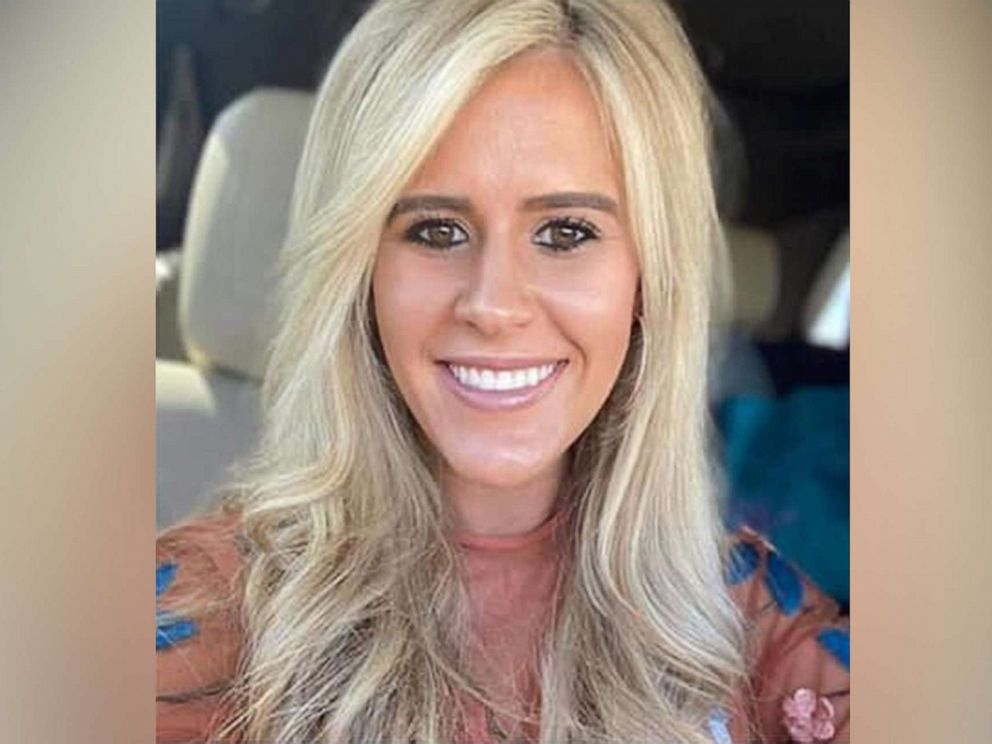
Sydney did not have work scheduled that day. She and her family had returned the day before from a vacation in Florida, one of her favorite places to visit. That morning, she spent about an hour working out with her personal trainer.
Afterward, she visited her mother, Maggy, at her home. Sydney and her mother were especially close, typically seeing each other at least every two days or speaking on the phone in between.
Before leaving that afternoon, Sydney told her mother she planned to go back to her own house, bake cookies or brownies, and then go for a run.
Maggy suggested she rest instead, since she had already exercised earlier that day, but Sydney went anyway, since running was something she did regularly and found relaxing.
Sydney lived with her boyfriend, Alex. That afternoon, Alex’s father had driven him to work, and Alex and Sydney were messaging each other through Snapchat. Around 2:00 p.m., Sydney left her house on County Road 41, a road that runs through farmland in rural Jackson County.
About a half mile from her home, the paved surface of the road turns to dirt, and the surrounding land is flat and largely open, used mainly for farming, with few trees or structures nearby and no surveillance cameras in the area.
Not long after Sydney left, she stopped responding to Alex’s messages. He did not think much of it at first, since he expected to see her when he returned from work at 5:00 p.m. By the time he arrived home, Sydney had been gone for nearly three hours.
Her purse and her keys were still inside the house, which concerned him, since the area was rural and she would not have gone far without them. Alex called Maggy to ask if Sydney was with her. She was not.
Both agreed that something had likely happened to her. Maggy then called Sydney’s father and brothers, telling them to come to the house as quickly as possible, and a missing person’s report was filed that evening.
A Community Mobilizes
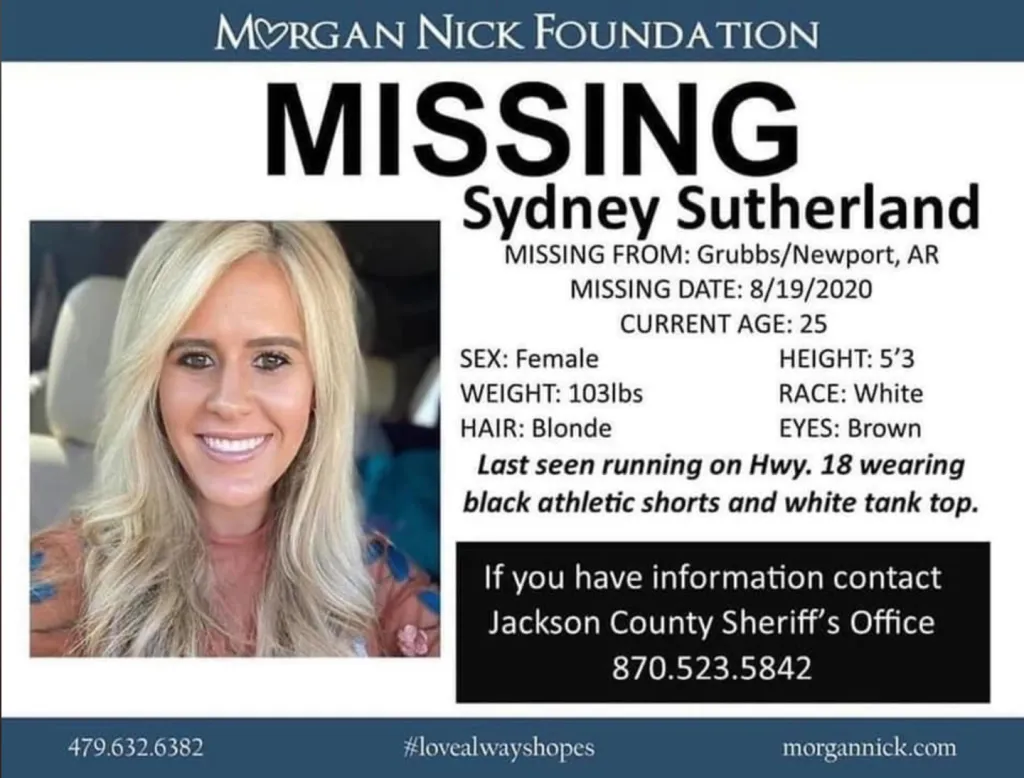
Within hours of the report, an all-hands search was underway, as Sydney’s family worked alongside law enforcement to locate her. Her loved ones tried several methods before authorities took over the effort.
They discovered that her cell phone was paired with her car through Bluetooth, so they drove around the surrounding area repeatedly calling her phone, hoping the connection would activate and reveal her location through the vehicle. This method did not succeed.
They also tried to access her laptop to trace her phone’s location, which likewise produced no results.
Law enforcement began a ground search starting at Sydney’s home and expanding outward along the route she typically ran, drawing in the Arkansas State Police, the FBI, the U.S. Marshals Service, and several local police departments in addition to the Jackson County Sheriff’s Office.
The effort made use of helicopters and search dogs and drew heavy involvement from the local community of Grubbs, Arkansas, whose population was just over 300 as of the 2020 census.
Jackson County Sheriff David Lucas, who led the investigation, later described the toll the case took on the area: “This whole thing has had a large impact on us.
A lot of people knew her. This is a small community,” he said. Because the area had no surveillance cameras, investigators considered it essential to have as many searchers as possible combing the ground by hand.
Family members created missing person flyers, and information about Sydney’s disappearance spread quickly online.
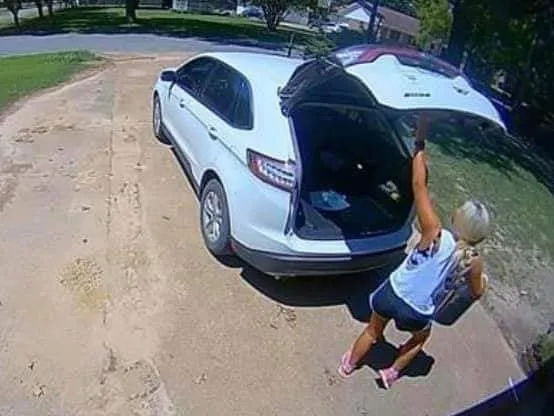
Her brother found footage from a Ring camera that showed what Sydney had been wearing when she left: a white tank top, black shorts, and pink shoes. This description, along with her photo, was shared widely throughout the search.
One concern among investigators was that County Road 41 crosses Highway 67, raising the possibility that Sydney could have been taken far from the immediate area.
Searchers worked through the night before pausing around 2 a.m. Thursday and resuming at about 7:30 a.m., when roughly 170 people turned out to help, according to family friends.
Around the same time, investigators began looking more closely at the people in Sydney’s life, questioning her family and Alex. Alex’s account of his whereabouts, supported by records from his workplace, was confirmed, and he was cleared as a suspect.
A Crucial Discovery
On the afternoon of August 20, authorities located Sydney’s phone about a quarter mile from her home, near where County Road 41 meets Highway 67. It was undamaged. An audiobook she had been listening to was paused.
This indicated two things: Sydney had nearly finished her run when she disappeared, and she had likely paused the audiobook to speak with someone. Investigators also worked to retrieve data from her Apple Watch, which she had been wearing during the run.
That same day, a UPS driver came forward after seeing news coverage of the search. She told investigators that she had seen Sydney running on County Road 41 around 2:30 p.m. and had slowed her vehicle to avoid raising dust as she passed.
When the driver returned along the same road after completing a delivery, Sydney was no longer there.
This account, combined with the fact that Sydney had never opened a Snapchat message sent to her at 2:41 p.m., allowed investigators to narrow the likely window of her disappearance to roughly eleven minutes.
The UPS driver’s account was confirmed through GPS records from her delivery truck, and she was ruled out as a suspect.
Investigators also learned that a local farmer, Quake Lewellyn, had told others he had seen Sydney that day as well. Lewellyn had taken part in the search efforts and was active in a community Facebook group related to the case.
His family farmed roughly 5,800 acres across four counties and had been named the Jackson County Farm Family of the Year in 2016.
When investigators first spoke with Lewellyn, he said that around 2:45 p.m., while driving to check wells and rice fields on the family’s land, he saw Sydney running on County Road 41. He said he did not stop and did not see her again when he drove back down the same road roughly 20 to 25 minutes later.
Lewellyn and Sydney had both attended Tuckerman High School, though Sheriff Lucas said the two were acquaintances who “didn’t seem to know each other particularly well.”
As investigators worked the case, rumors about what had happened spread through the community, which Lucas said complicated the investigation: “When the rumors start hitting, our phones start ringing. It hinders us quite a bit,” he said.
Maggy approached Lewellyn directly and asked him what he had seen. He repeated that he had only seen Sydney running, then hugged her and told her he hoped Sydney would be found. Maggy came away from the conversation believing he knew more than he had said.
The Truck, the Data, and a Confession
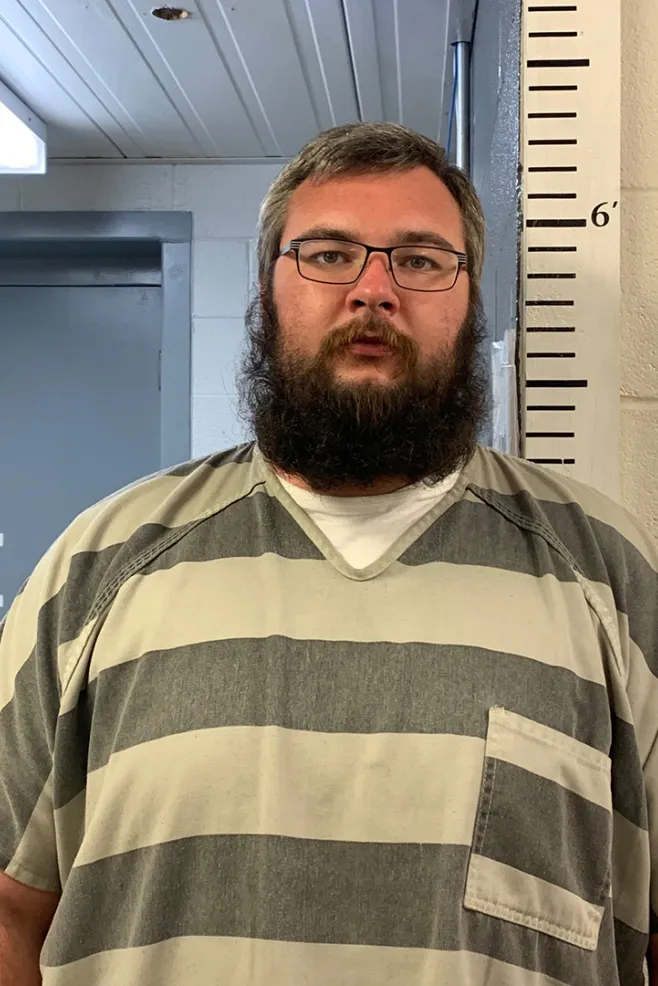
The following day, Lewellyn’s father contacted law enforcement and offered to bring his son in for a formal interview, believing it would clear his name. Investigators agreed. During the interview, Lewellyn initially repeated the account he had given earlier, then agreed to let investigators search his truck.
The search revealed a dent on the front of the hood consistent with striking a person, along with what appeared to be blood on the tailgate.
Lewellyn’s father, still convinced his son was innocent, offered his own phone to investigators and pointed them toward Life360, a family location-tracking application, believing the data would prove his son had nothing to do with Sydney’s disappearance.
Instead, the app placed Lewellyn about three yards from the location where Sydney’s phone was later found, during the window in which she disappeared. When investigators presented Lewellyn with this data, he disputed its accuracy.
A search team was sent to the location the data pointed to, near a rice field on farmland in rural Jackson County. There, they found Sydney’s body in a shallow grave, just yards from where Lewellyn’s phone had placed him.
She had been left partially clothed, and investigators determined that she had been sexually assaulted before her body was buried. The Arkansas State Medical Examiner’s Office determined that her death was caused by multiple blunt force injuries. Sydney had been missing for two days when her body was found.
After being confronted with the evidence, Lewellyn admitted to killing her. He said he had turned his truck around on the dirt road to get a closer look at her, and that dust kicked up from the road obscured his view as she crossed to the other side.
He said he then struck her with his truck. Believing she was dead and fearing the consequences, he said he placed her body on his tailgate and drove her to a rice field, where he dug a hole with a shovel he had in his truck.
He admitted to sexually assaulting her before burying her. Afterward, he returned home, had dinner with his wife, and, in his own words, tried to forget about what had happened.
Additional evidence supported the account investigators had pieced together. Lewellyn’s wife, who had filed for divorce by that point, reviewed footage from their home security system and helped detectives identify the dent on his truck, which had not been there earlier that day. Investigators also recovered Sydney’s Apple Watch near where her phone had been found.
Charges, a Plea, and a Sentence

Lewellyn was arrested the same day investigators recovered Sydney’s body. He was charged with capital murder, rape, kidnapping, and abuse of a corpse, charges that made him eligible for the death penalty.
Sydney’s family told prosecutors they wanted the case to proceed toward capital punishment, and prosecutors said they would pursue it if the case went before a jury.
Within weeks of his arrest, Lewellyn’s wife filed for divorce. Three stepchildren from her previous marriage, who were not biologically related to Lewellyn, had also been living in the household at the time.
Lewellyn initially pleaded not guilty. His defense later argued that he was not mentally competent to stand trial, but a court-ordered evaluation determined that he had been mentally fit at the time of the crime.
In September 2021, he changed his plea to guilty in order to avoid a possible death sentence and was sentenced to life in prison without the possibility of parole.
The proceedings were moved out of Jackson County to a courtroom in Newport after a judge ruled the case had drawn too much local publicity for a fair hearing there.
The courtroom was filled with Sydney’s supporters, many wearing pink, her favorite color. During the hearing, Maggy delivered a victim impact statement directly to Lewellyn: “She was not yours to take,” she said. “Satan is real. The hands you hugged me with are the same hands you killed her with.”
In October 2024, the Arkansas Court of Appeals upheld a lower court’s ruling allowing the sealed investigative file from the case to be released to a production company that produces true-crime specials for the A&E Network.
Lewellyn’s attorneys had appealed the release, but the appellate court dismissed the appeal, clearing the way for the file’s use in a television production about the case.
Remembering Sydney Sutherland
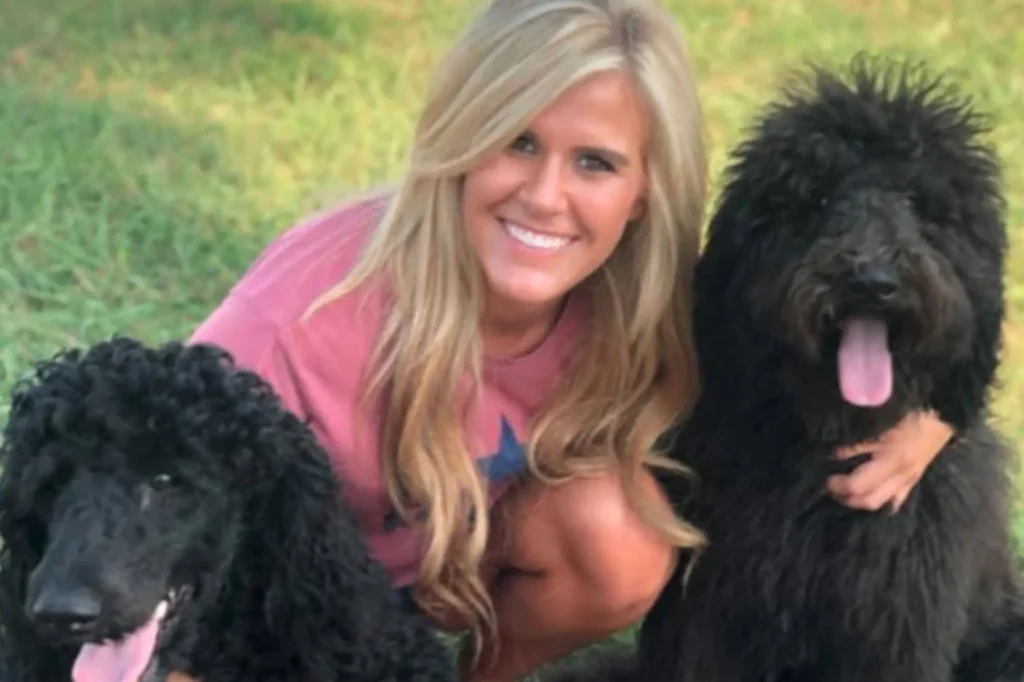
Sydney Claire Sutherland was born on September 18, 1995, in Jonesboro, Arkansas. She was the youngest of three children and the only daughter of Maggy and Dion Sutherland, with two older brothers, Tyler and Sam.
She was also the only girl among her extended family on both her mother’s and father’s sides, and relatives described her as the person who kept the family close together. She grew up in Tuckerman, Arkansas, a small town in Jackson County.
After graduating high school, Sydney pursued a career in nursing. She graduated from Arkansas State University-Newport in 2018 and began working as a licensed practical nurse before completing her registered nursing license earlier in 2020.
She worked as a registered nurse at Unity Health Harris Medical Center in Newport. Family members said she had always shown a natural instinct for caring for others, an instinct that shaped both her career and the relationships she built throughout her life.
Her senior class quote read, “The meaning of life is to find your gift. The purpose of life is to give it away,” a sentiment reflected in both her career and her personal relationships.
Sydney was especially close with her nieces, who called her “Aunt Sassy,” a nickname that matched her personality. She and Alex also shared their home with several dogs. Alex, who had envisioned building a future with Sydney, has said her death remains one of the most difficult things he has experienced.
In the years following her death, Sydney’s family and community created several lasting tributes in her memory. During the search, Maggy found a bead from a piece of Sydney’s jewelry, which she has continued to wear on her wrist as a reminder of her daughter.
Sydney’s brothers had pink crosses placed at two locations: the site where she was abducted and the cemetery where she was buried.
Many community members placed pink lights on their porches as an additional sign of remembrance, and the overpass near the location where Sydney disappeared was renamed the Sydney Sutherland Memorial Overpass.
Sydney’s family also established the Sydney Claire Sutherland Foundation. In August 2022, the foundation provided gift cards to teachers in the Jackson County School District to help offset classroom expenses, a cost many teachers otherwise cover out of pocket.
The foundation also helped establish the Sydney Sutherland Memorial Scholarship at Arkansas State University-Newport, worth $500 per semester, for health-profession students maintaining at least a 2.5 grade-point average.
To raise money for these initiatives, the family started the Miss Sassy pageant in 2021, honoring Sydney’s longtime interest in pageantry, along with an annual community run in which participants wearing pink complete the same route Sydney never had the chance to finish.
Arctic Microbes Wake Up in Waves as Permafrost Thaws

When Arctic ice melts and fades away, so too do the microbes that have been sleeping in it. But these little organisms don’t all wake up at once, or even all of them. It’s a complicated process, taking place over time, with some species of microbes becoming active, but not others.
And that’s important for how much carbon and greenhouse gases are released when permafrost thaws. Researchers have studied this process using soil samples from Svalbard, with some help from Alaskan sites, and their work has revealed some surprising details about the process.
Permafrost, Carbon, and the Microbial World
The ground that has been permanently frozen for at least two years is known as permafrost. This peculiar formation covers approximately 15 percent of the Northern Hemisphere land area, though older estimates often placed the figure near a quarter.
It contains roughly half or more of the organic carbon stored in the world’s soils in some assessments, with northern permafrost region soils holding an estimated 1,460–1,600 billion metric tons—nearly one-third of global soil carbon and about twice the amount currently in the atmosphere.
The carbon in permafrost consists of the organic matter that has been trapped in the ice. Due to the stable, cold temperatures, the decomposition process has been halted for centuries or even millennia, leaving the carbon trapped.
But as soon as the permafrost thaws, the water begins to enter the ground, and the temperature regime reaches a new level. Some of the dormant microorganisms come to life, and the process of decomposition, and therefore carbon emission, begins.
These emissions are in the form of greenhouse gases, primarily methane and carbon dioxide. Due to the high rate of Arctic warming, which is occurring at roughly four times the global average, there is significant concern regarding additional greenhouse gas emissions caused by the thawing permafrost.
A Warming Arctic
Researchers used to believe that a majority of the microorganisms that inhabit permafrost would become active in the process of thawing, contributing to the steady increase of greenhouse gas concentrations. However, a 2026 study has demonstrated otherwise.
According to the findings published in mSystems, around half of the bacterial species in Svalbard’s High Arctic remain completely inactive even after several months of thawing. Queen Mary University of London researchers and an international team made the discovery using soil samples from Svalbard, an archipelago located between Norway and the North Pole, collected near the Bayelva Permafrost Observatory.
The team used DNA stable isotope probing to identify which microorganisms had become active. The study revealed three categories of bacteria: those that became active almost immediately (within days), those that required weeks to react to the changing conditions, and the species that did not become active at all within 98 days of thawing.
According to senior author Dr. James Bradley, the study shows that “the thawing of soils in the Arctic doesn’t simply switch on microbial activity. We found that only part of the community responds, and that response develops over time.
This has important implications for how we predict carbon release in a warming Arctic.” Lead author Dr. Margaret Cramm has similarly remarked that “we found that some methane-consuming microbes only become active after longer periods of thaw. This suggests that the impact of Arctic soils on greenhouse gas fluxes may increase over time as thaw seasons lengthen.”
In addition to revealing general trends in microbial activity, the study also made a surprising discovery regarding the presence of predatory and epibiotic bacteria in the Arctic soil.
When the permafrost begins to thaw, these species feed on or grow attached to other microorganisms, transforming the relatively inactive bacterial community into a complex ecosystem where bacteria both compete and interact within food webs.
The study’s findings are also relevant to the understanding of how methane is processed within the Arctic ecosystem. The research found that methane-oxidizing bacteria became more active later in the thaw, suggesting that microbial activity in thawing permafrost will affect the rate that methane is converted and subsequently regulated in the atmosphere.
Significance of the Findings and Similar Research
The study’s findings are significant to the scientific community because they provide insight into the manner in which carbon is emitted from permafrost, which is crucial to understanding how the thawing process will impact the planet’s future climate.
Consequently, the release of carbon will not be uniform: some greenhouse gases will be emitted earlier than expected from responsive groups, while many others may not contribute substantially within the first months of thaw.
Other scientists studying the effects of permafrost thawing using soil samples from three different sites in Alaska reached similar conclusions. Their findings published in Frontiers in Microbiology in 2025 showed that the number of bacteria in the previously frozen soil increased after thawing with Beijerinckiaceae, Burkholderiaceae and Pseudomonadaceae among the most widespread responders shared across the three locations along with other families such as Clostridiaceae and Oxalobacteraceae.
This suggests that, in some cases, environmental change leads to the appearance of similar microbial communities regardless of local conditions. Meanwhile, it has been found that microbial diversity decreases after permafrost thawing, possibly due to the dominance of responsive taxa that drive post-thaw biogeochemistry and increased respiration.
According to scientists, existing predictive climate models do not fully take into account the fact that only a subset of microbial taxa are responsive to warming, and that this response can develop over time.
The findings of the study have been made public with the hopes of improving the understanding of climate change, as well as making more accurate predictions regarding future temperature changes.
Why Do Microbial Life Cycles Matter?
The microorganisms that live in the permafrost are the crucial link in the system of carbon recycling. This inconsistency in awakening times complicates the work of climatologists who attempt to make predictions regarding future emissions.
The long-term implications of this study’s findings are difficult to estimate due to the complexity of the system that has been observed. Nonetheless, the researchers have concluded that the current warming trend will lead to an increase in the contribution of the Arctic to greenhouse gas emissions.
According to Kimberley Miner, a climate scientist from NASA’s Jet Propulsion Laboratory, “Current models predict that we’ll see a pulse of carbon released from the permafrost to the atmosphere within the next hundred years, potentially sooner.” However, the impact that various species will make on the rate of warming depends on which particular gases are emitted and how soon after thawing they appear.
The study does not present immediately alarming uniform data, but rather provides the scientific community with information on how Arctic microorganisms respond to temperature changes. The complexity of this particular aspect of climate change demonstrates the importance of continuing research.
In particular, the findings highlight the relevance of further exploration of both the Svalbard and Alaskan regions.
The continued monitoring of these places will allow researchers to build upon the data already gathered, monitor the impact of thawing permafrost on different microbial communities and improve the accuracy of future predictions. The research conducted by the team involving Queen Mary University of London serves as the foundation for broader studies that will help humanity gain a better perspective on the future climate.
Sources
Thawing Arctic soil awakens only half of soil microbes, new study reveals
Consistent microorganisms respond during aerobic thaw of Alaskan permafrost soils
The microbial ecology of permafrost
Thawing Permafrost Could Leach Microbes, Chemicals Into Environment
Large-scale evidence for microbial response and associated carbon release after permafrost thaw