In March 2007, 19-year-old college student Tynesha Stewart disappeared while home in Houston, Texas, for spring break.
A Relationship Begins at Work

Tynesha Stewart met Timothy Shepherd in May 2005, when both were working at a pizza restaurant. She was 17 years old, and he was 25. Shepherd repeatedly asked her out, and she eventually agreed to give a date a try.
What began as a friendship between coworkers grew into an intimate relationship, and neither of them allowed the eight-year age difference to stand in the way.
The relationship became serious quickly. On certain nights of the week, Tynesha stayed at Shepherd’s apartment rather than going home. Her family had reservations. Several relatives wondered why a man his age was dating such a young girl and wanted to understand his motives.
Shepherd offered to visit the family at home and said he would smooth things over. He became a regular presence at her mother’s house, where he repaired the family’s television and computers.
It did not take long for him to win them over. Her mother embraced him as another son, and her sister and brother welcomed him as a brother.
In the fall of 2006, Tynesha earned a scholarship to Texas A&M University and moved away to attend. The campus is nearly two hours from her Houston home, but she was determined to keep the relationship alive.
About three months into her first semester, Shepherd resumed a relationship with a former girlfriend and ended things with Tynesha. The breakup took a heavy toll on her, and she cried as she told a friend she could not believe it had happened.
Shepherd soon decided he had made a mistake. He drove to Texas A&M to surprise her, and the two talked through their problems and began dating again.
The reunion did not return the relationship to what it had been. Friends noticed that the couple often did not see eye to eye, and the pair went back and forth, with Tynesha still visiting Shepherd.
Friends believed she was still in love with him. She had also changed since they first met. She had become more independent, was meeting new people, and was trying new things on her own, with her focus on moving forward in life.
When Tynesha returned to Houston for spring break in March 2007, she saw Shepherd briefly and spent most of her time with friends. She had plans to attend a Beyoncé concert with a group of girlfriends.
In a conversation beforehand, Shepherd asked whom she was going with and whether he would see her afterward. She told him the group planned to go out to eat once the show ended and that she wanted to spend time with her friends.
A Disappearance During Spring Break
By Sunday, March 18, 2007, Tynesha’s family had not heard from her in days. That day, her sister, Gayla Taylor, was returning home from church when their mother called to ask whether she had spoken with Tynesha.
Gayla had not heard from her since Thursday, and she immediately felt that something was wrong. Their mother said that no one had, and that Tynesha had never arrived at the Beyoncé concert she was supposed to attend.
Tynesha’s friends shared the family’s alarm, and one said she was terrified and could not understand why this was happening to them at such a great time in their lives.
Her relatives and friends began searching. They called hospitals and even the local jail, and they phoned every friend they could think of, but no one had heard from her.
Friends and relatives also gathered at a Houston church to hand out flyers, and a friend later recalled that police had initially been dismissive, assuming she was enjoying spring break. Gayla also called Shepherd and told him Tynesha was missing.
He asked what she meant by missing. Gayla said Tynesha was not answering her phone and asked when he had last spoken to her.
Shepherd said that Tynesha had come to his apartment on Thursday morning and left, and that he had not seen or spoken to her since. Gayla told him it was unlike Tynesha to vanish without checking in with anyone.
The family filed a missing person’s report on Monday, March 19. Once investigators learned that Shepherd was one of the last people to see Tynesha, a deputy contacted him, told him she had been reported missing, and asked him to give a statement. He agreed and came to the station.
Shepherd told detectives that he had picked Tynesha up around 3:00 a.m. on Thursday and driven her back to his apartment. On the way, she received a phone call from a man, a college friend named Mark Marx, with whom she had spent time earlier that night.
She told the caller she was busy and could not talk, which upset Shepherd. At the apartment, he asked why Marx was calling so early in the morning.
Tynesha said she did not want to discuss it and suggested they talk after they woke up. Shepherd said he suspected she was cheating on him, but he agreed to set the matter aside as she asked.
When they woke a few hours later, Shepherd said, he raised the phone call again, and Tynesha again refused to discuss it. She told him there was nothing to talk about and that she had come home to have fun.
He told detectives that Tynesha then stormed out of the apartment and walked away on her own, and that this was the last time he saw her. When detectives asked whether he was being honest and whether he knew where she was, he said he was being honest, that he had no idea where she was, and that he loved her.
Detectives questioned him for roughly 10 hours, and his account did not change. He also gave written consent for a search of his apartment, which turned up nothing connected to Tynesha’s disappearance. Because they had no strong suspicion that he had committed a crime, detectives returned his apartment key and continued the investigation.
Widening the Search

Investigators next turned to Marx. Ashley Walton, one of Tynesha’s closest friends, came to the station to speak with detectives. She said she had introduced Tynesha to Marx, a friend of her boyfriend. The two had dated for about a month.
They stayed on the phone constantly, and Tynesha told her roommates she was crazy about him. She was still dating Shepherd at the time, however.
Ashley said Marx knew about Shepherd and did not like having to share Tynesha with anyone. When asked why Tynesha had not ended things with Shepherd, Ashley said it was hard to do so because Tynesha loved him.
Detectives tracked down Marx and brought him in for questioning. Marx, who was also 19, was articulate and cooperative. Marx confirmed that he was dating Tynesha and knew she was also seeing Shepherd because she had told him, which he said he did not like.
He said he last saw her on Thursday, when she was at a friend’s house, and that he left her at the apartment around 3:00 a.m.
They talked about their relationship that night, he said, and Tynesha told him she was ready to leave Shepherd and be with him. She did not want to hurt Shepherd’s feelings and still loved him, but she was ready to move on.
Marx denied having anything to do with her disappearance and denied picking her up from Shepherd’s apartment.
He added that he loved Tynesha, that she was all he cared about, and that he would never do anything to hurt her. He said he had been at a party with friends on South Padre Island when she vanished. Detectives confirmed his alibi and released him.
Investigators knew that the first 24 to 48 hours after a disappearance are the most critical, and those hours had long passed.
With Shepherd and Marx no longer considered suspects, detectives asked whether a stranger had abducted Tynesha after she left Shepherd’s apartment on foot. The apartment was at the back of the complex, down a dark road lined with trees and woods.
The area was near Interstate 45, which has strip clubs along it and has become known for human trafficking.
Detectives checked for known sex offenders in the area, but no name stood out. Officers combed the surrounding neighborhood, considering the possibility that someone had picked her up in a car or grabbed her inside one of the apartments.
A woman who lived in the area then told police that she had heard gunshots from the tree line on the night Tynesha disappeared, followed by the sound of a car speeding away.
A K9 unit was sent to the area. The dog locked onto a scent, detected a faint smell of death, and led officers deeper into the woods, where they found the rotting remains of an animal.
Meanwhile, Gayla organized a search party of her own, calling family and friends. The next day, a larger group of volunteers joined, and they knocked on doors and spoke with neighbors who might have seen or heard something.
No one recalled seeing Tynesha, but several residents described Shepherd’s activity on the day after she disappeared. On Friday, they said, he had two grills going, and he continued barbecuing through the weekend.
Residents worried that he would burn the building down, and at one point the smoke grew so heavy that neighbors called 911.
After police and firefighters brought the fire under control, Shepherd told responders he was in charge of the main course for a church picnic of 150 to 200 people and had fallen behind, and the flames had gotten out of hand.
A firefighter who looked around his apartment reported seeing what he thought was rib meat in a bathtub filled with water. Neighbors also noticed an offensive smell and thick black smoke, and heard his bathtub faucet and garbage disposal running for long stretches.
One neighbor later saw him carrying a grill and smoker to a trash bin. Another resident said she had seen Shepherd pour bleach onto his patio and that the smell was so strong it burned her eyes.
Detectives then returned to Tynesha’s friends and family to learn more about Shepherd. No one denied that he loved her, but they said he had become possessive and domineering as she gained independence at college.
They said she wanted him to love her without abuse, control, or violence. They said he called and harassed her, and that he drove to Texas A&M and walked around the campus looking for her when she did not return his calls.
After he learned of her relationship with Marx, he sent her threatening text messages. Gayla also described an occasion when Shepherd did not want Tynesha to leave and strangled her.
Investigators had also noted bleach stains and signs of recent cleaning in the apartment. That was not enough to charge Shepherd with anything, although Tynesha’s family had become convinced he was involved.
An Activist Steps In

Gayla wanted Shepherd arrested and decided to ask Quanell X for help. Quanell X is a Houston activist for the African-American community who is known for helping men wanted by police turn themselves in peacefully, without anyone being harmed.
In a face-to-face meeting, Gayla told him her sister had been missing and that Shepherd was the last person to see her. She and her family said they believed something had happened to Tynesha and were terrified about where she was.
Quanell said he would do anything he could to help find her. He had already heard from Shepherd’s family, who asked him to protect Shepherd from overzealous police officers they feared would pin a false charge on him.
They insisted Shepherd had done nothing. Quanell told them that if Shepherd had done something, he would get the truth.
Quanell called Shepherd, who agreed to a private meeting at his apartment. Shepherd was extremely stressed and said he felt his place was wired, so the two talked in the bathroom. He also said he felt he was being set up.
Quanell replied that if Shepherd was innocent, he would fight for him, but if he was not, they needed to talk. Shepherd repeated that he and Tynesha had argued and that she had stormed out, and that was the last time he saw her.
Quanell sensed there was more to the story. He put his hands on Shepherd’s shoulders, asked him to look him in the eye, and asked whether he had done something to Tynesha.
Quanell then asked whether she was alive. Shepherd replied that he would be given the death penalty. When Quanell asked whether that meant she was dead, Shepherd said yes.
He said that when Tynesha refused to explain her relationship with Marx, he went into a rage and killed her. As she was walking out the door, he attacked her and strangled her to death. He said he then put her body in a dumpster.
Quanell relayed the statement to Investigator Sidney Miller of the Harris County Sheriff’s Office, who hoped to give the family some closure and learn what had actually happened.
At about 5:30 p.m. on Wednesday, March 21, 2007, six days after Tynesha disappeared, Miller and his partner drove north on a highway out of Houston, with Quanell and Shepherd in the back seat giving directions.
Following Shepherd’s instructions, they left the highway and pulled into an apartment complex. Shepherd directed them to a parking lot at the back and pointed out a dumpster. Miller and his partner looked inside and found it empty, with no obvious sign of human remains.
Miller called in a crime scene team, and before the officers had finished putting up yellow tape, Tynesha’s family arrived. They were hysterical and asked to speak with Quanell, wanting to know whether Tynesha was alive. He told them she was not, and they broke down.
The crime scene team found that Tynesha’s body was not in the dumpster, and neither was much of anything else. It appeared to have been emptied recently. Investigators believed the contents had been taken to a landfill.
Finding a body at a landfill in a city the size of Houston was unlikely, and a search would cost upward of half a million dollars. Tynesha’s family asked the sheriff not to waste the money, saying she would not be found.
Shepherd was arrested. Soon afterward, he asked for an attorney and declined to speak further.
Investigators needed more physical evidence to support a murder charge, so they sent crime scene investigators back to his apartment to look for traces too small to see easily, and they left nothing unchecked.
They found bone fragments in the garbage disposal, along with what was later identified as tooth enamel. Near the grill, they also found charred bone fragments and a dark, burnt piece with a crispy texture that looked like meat.
The crime lab determined that the charred remains were in too poor a condition to be identified, but the enamel came from one of Tynesha’s teeth. A grand jury later indicted Shepherd for Tynesha’s murder.
The Trial
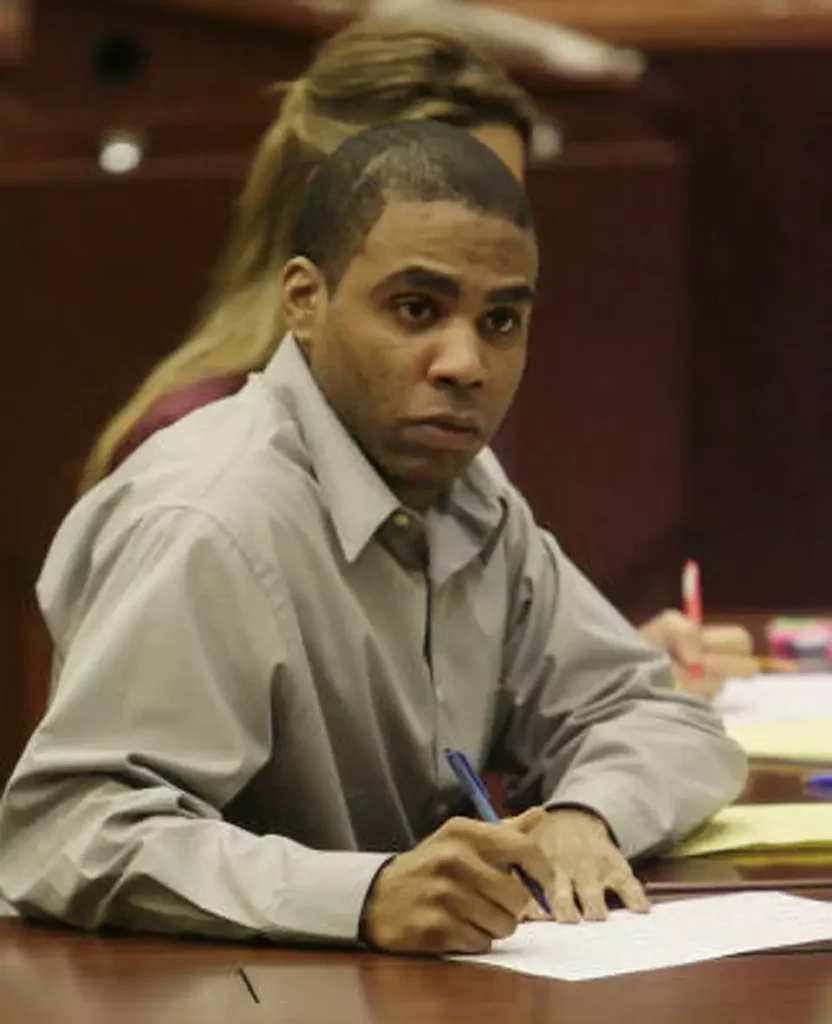
The State of Texas v. Timothy Shepherd began on September 29, 2008. In their opening statement, prosecutors told the jury they would prove beyond a reasonable doubt that Shepherd was responsible for Tynesha’s death.
They said he killed Tynesha in his Houston apartment during the morning hours of March 15, 2007, then dismembered her body and spent days cooking the remains over a grill.
They said his motive was that he could not stand to see her with another man and could no longer control her.
The case was led by prosecutor Marie Primm, and the defense, led by attorney Chip Lewis, sought to suppress Shepherd’s recorded confession on the grounds that he had asked for a lawyer first. The judge ruled that he had waived his rights, so the jury heard it.
The defense argued that the prosecution’s account was only a theory and that there was no evidence in the case. Without a body, the defense said, the state could not even prove that Tynesha was dead, let alone who was responsible.
They also told the jury that Shepherd loved Tynesha and would never do anything to hurt her. Because only fragments of Tynesha’s remains had been found, prosecutors had to rely on circumstantial evidence.
They presented the physical evidence from the apartment and argued that no living person would quietly allow someone to remove teeth and put them in a garbage disposal. They then called Quanell X to the stand.
Quanell, who had once served time for selling drugs and had since become known for advocating for minority rights, testified that Shepherd was confused and upset when they met and that after the two prayed, Shepherd decided to come clean.
He said Shepherd described what happened, including the places where he had thrown Tynesha’s body after mutilating it.
Prosecutors’ last witness was Shepherd’s cousin, Nicholas Shepherd. He said he had never seen Shepherd act violently but that Shepherd had a temper.
Nicholas testified that Shepherd told him he would harm Tynesha if it came down to it, and that if he ever had to kill someone, he would cut the person up, boil the remains, and throw them into a body of water.
After about four hours of deliberation, the jury returned a guilty verdict on the murder charge on October 9, 2008. The sentencing hearing followed, and Shepherd, then 28, took the stand in his own defense.
Under oath, he said the two were arguing about the man she was seeing at college when she grabbed a knife from a table and swung it at him, nicking two of his fingers.
He said he held her by the neck and then “snapped,” squeezing harder until he blacked out, and that when he came to she was dead. He also acknowledged going to a hardware store to buy a jigsaw.
His lawyer argued that he acted in sudden passion, which would have capped his sentence at 20 years, but the jury disagreed. His attorneys submitted photographs of his hands taken the night he was arrested, which showed a small cut.
Prosecutors then questioned him about his actions after her death. When one asked whether he had put the remains on the barbecue pit, Shepherd quickly corrected him and said he had put her in the smoker.
The jury upheld its guilty verdict and gave Shepherd the maximum sentence: 99 years in the institutional division of the Texas Department of Criminal Justice, plus a $10,000 fine.
Prosecutors noted that a 99-year sentence and a life sentence are essentially the same, and that either makes him eligible for parole in 30 years. A Wikipedia listing of inmates at the TDCJ’s Memorial Unit gives his parole-eligibility year as 2037.
His attorney said afterward that he expected Shepherd to appeal. At sentencing, Tynesha’s mother said she would forgive Shepherd, and her sister told him he was still a scared little boy.
The jury foreman issued a statement urging the public to pay more attention to the warning signs of domestic abuse in the relationship.
Remembering Tynesha Stewart

Tynesha Stewart is remembered by her family and friends as a young woman of intelligence, beauty, and determination. She was one of six children, raised in one of Houston’s toughest neighborhoods, and she lost her father at a very young age.
She grew up in Aldine, her father died when she was six, and in 2005 she was one of fifteen students chosen from hundreds of applicants for a scholarship for disadvantaged Houston-area students. At Texas A&M she was studying civil engineering.
She refused to let her surroundings decide her future. At school, she was a dedicated student who took her studies seriously and did very well. Her family saw from an early age that she was meant to stand out and accomplish a great deal.
She was blessed with natural beauty and an infectious smile. Many young men sought her attention, but she wanted more from love than the average suitor could offer and was drawn to someone who could challenge her. Her family says that all she really wanted was to be loved.
Those who knew her lost a daughter, a sister, and a friend. They remember a young woman with a future of limitless possibilities.
Tynesha’s case was revisited in a December 2023 episode of Prosecuting Evil with Kelly Siegler on Oxygen, with her sister and friends, the prosecutor, and Quanell X recounting the case.
It was also the subject of the Investigation Discovery series Murder in the Heartland, in an episode titled “Spring Breaking Up” that aired on April 10, 2024.
Chinese Researchers Develop a Laser-Powered Receiver That Could Keep Drones Flying Without Landing

Every drone needs to land and recharge, constraining its potential. Chinese researchers have developed a new method of aerial recharging. Their simple, lightweight receiver can absorb energy from a laser beam directed at it from the ground while the drone is in flight.
A Receiver That Works Like a Solar Panel, But for Lasers
The new technology is the work of researchers at the Civil Aviation University of China and Tsinghua University, who designed and built a lightweight receiver that could be attached to a drone wing and convert light from a green laser beam into electricity.
Reporting July 29 in the Cell Press journal Matter & Light, the researchers said the receiver converted 38.49% of the laser’s energy into electricity.
That’s an impressive number, beating the roughly 34% peak efficiency of perovskite–silicon tandem solar cells certified by the U.S. Department of Energy, though laser-beam efficiency isn’t directly comparable to solar-cell efficiency under sunlight.
The researchers named their invention a perovskite laser cell–thermoelectric tandem receiver, or PLC-TE. The name is a bit of a mouthful, but the basic idea is simple: the receiver is made of two layers of materials, each of which harvests some of the energy in the laser beam.
The first layer, a thin film of perovskite—a crystalline substance favored by solar-power researchers because it’s better at capturing light than silicon—captures some of the photons in the laser beam and converts them to electricity.
Sandwiched beneath the perovskite layer is a thermoelectric generator, which captures some of the heat generated by the perovskite and converts that to more electricity.
Heat Was the Problem Nobody Had Solved
Beaming laser light at a receiver sounds like an easy way to generate electricity, but researchers had previously encountered a major impediment: the receiver could overheat. This problem proved a major impediment to making laser recharging practical in the wild.
Jianhua Han, a senior author of the paper at the Civil Aviation University of China, said the problem with overheating came as a surprise to them.
“When we were testing the receiver with a fairly powerful laser, a thermal camera showed that the temperature was reaching up to 80 to 90 degrees C (176 to 194 F),” Han said. “This was a far more serious problem than we had imagined.” The other senior author, Hong Lin, is affiliated with Tsinghua University.
So, the researchers added antimony selenide nanocrystals—tiny bits of semiconductor material—between the two layers of the receiver to slow the transfer of heat away from the perovskite layer.
That allowed the perovskite to do its job without being impeded by excessive heat. At the same time, the heat that was transferred to the thermoelectric layer was enough to allow it to generate more electricity.
Meanwhile, the researchers etched some small channels into the wing of the drone to redirect some of the warm air that was flowing past the receiver.
“By exploiting the movement of the propeller, we were able to redirect some of the warm air that would have flowed away from the receiver to across the backside of the receiver,” Han said. “This too helped in cooling the receiver.”
Han said finding a solution to the heating problem involved a combination of materials and mechanical engineering. “It isn’t just a materials science problem,” he said. “It’s an engineering problem.”
Testing the Idea on a Real Wing
The researchers attached their PLC-TE receiver to the underside of a wing of a stationary drone and aimed a green laser beam at the receiver. The light from the laser beam was converted to electricity, which in turn powered the propeller of the drone, enabling it to hover in a lab setup.
This is not the first time a laser beam has been used to power a drone. Three years ago, a research team at Northwestern Polytechnical University in China demonstrated that a laser beam could be used to keep a small quadcopter drone in the air for extended periods.
However, that demonstration was also limited by the inefficiency of the receiver and issues with keeping the laser beam focused on the drone.
The demonstration by the team from the Civil Aviation University of China picks up where the work by the Northwestern Polytechnical University team left off, and goes from there. The researchers hope to eventually develop a practical technology for keeping a drone in the air.
There are still some significant challenges ahead for the technology. The receiver has only been tested on a stationary drone so far. The next challenge—getting the receiver to work on an actual drone while it is hovering or flying—will involve figuring out how to keep the laser beam focused on the drone.
“The receiver has only been tested in a lab so far,” said Han. “We need to test this technology outside, on a lightweight drone, while it is hovering.”
What Longer Drone Flights Could Mean
Most small drones are only able to stay in the air for up to about an hour or two before they have to land to recharge their batteries. That limits their ability to monitor a wildfire or a flooded neighborhood for more than a couple of hours before they have to return to the ground to recharge.
With the new technology, farmers could observe larger fields without interruption, said Han. “It would also enable forestry workers to monitor forest fires for longer periods of time to get a better idea of how fast a fire was spreading,” he said.
“And it would help disaster relief workers to conduct aerial inspections of flooded roads and buildings hit by wildfires without having to stop and recharge.”
Another application of drones capable of staying in the air longer is in logistics. Companies are also considering using drones for commercial delivery. “There are a lot of logistics companies that are eager to have aircraft that can keep flying for longer periods of time,” Han said.
Han summed up the potential impact of his team’s work with a brief phrase. “We’re hoping to one day be able to do refueling aircraft with light,” he said. But turning that concept into a reality will require many years of additional research and development.
The receiver that they’ve developed has to become more efficient and more durable so it can work outside the controlled environment of the lab. Additional research is needed to develop and commercialize a means of keeping a laser beam focused on a moving aircraft.
For now, the researchers have developed a novel receiver that can be attached to the wing of a drone and harvest both the light and the heat from a laser beam to generate electricity—enough electricity to power a propeller. Whether that will be a practical solution for making drones last longer in the field remains to be seen.
Sources
Live Science – “High-powered lasers can wirelessly charge drones mid-flight”
New Atlas – “Laser-powered drones fly longer via wireless OTA charging”
The National – “Lasers could recharge drones in mid-air to extend flying time”
UAS Vision – “High-Powered Lasers can Wirelessly Charge Drones Mid-Flight”
DroneXL – “China’s Laser Drone Charger Hits 38% Efficiency In The Lab”