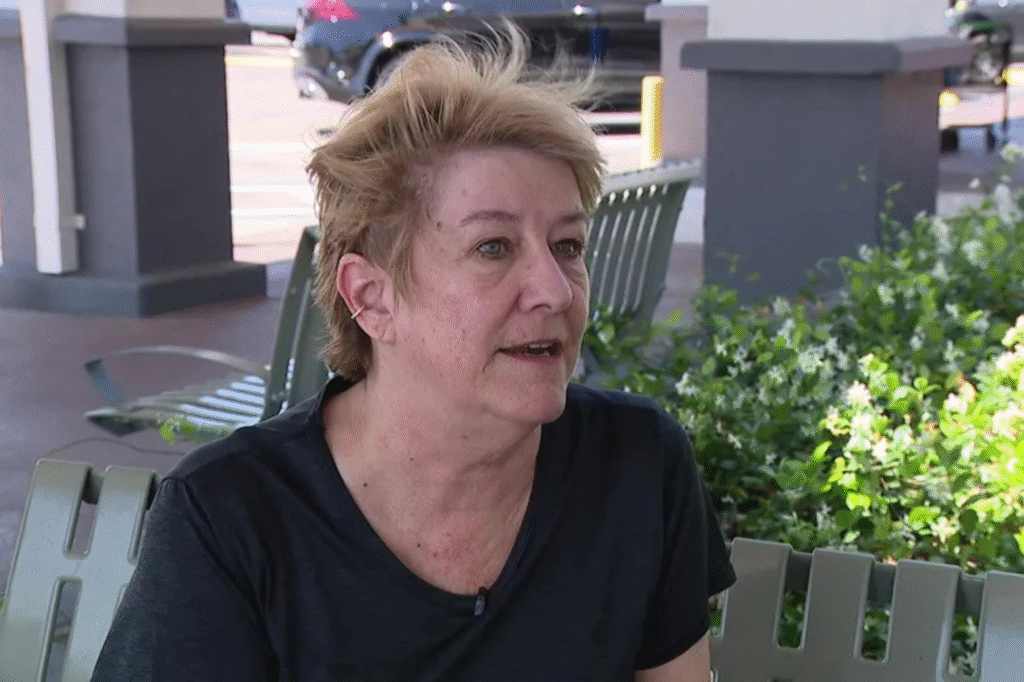
Dianne Ringstaff spent two and a half years building what she believed was a real friendship with actor Keanu Reeves. She talked with him by phone, saw him on video calls, and kept voice messages that sounded exactly like him. None of it was real.
The Tampa Bay woman eventually sent $160,000 to a scammer who used artificial intelligence to imitate the Hollywood star, and she only learned the truth when local investigators showed up at her front door.
It Started With a Word Game
Ringstaff was playing Words With Friends on her phone when a message arrived from someone claiming to be Keanu Reeves. Her first reaction was disbelief. “It can’t be,” she told Fox 13 News in Tampa Bay, recalling that moment.
Most romance scams begin on dating apps or social media, where strangers expect to meet new people, so a puzzle game was an unusual starting point. Instead of walking away, Ringstaff kept talking with the account, and the person eventually offered proof.
A video call showed a man who looked like the actor from Speed, The Matrix, and John Wick, even though the image was a little distant and grainy.
Phone calls followed, along with voice messages that matched the actor’s real voice closely enough to erase any remaining doubt. One recording captured the caller saying, “Good morning, my sunshine Diane.”
Between the video, the voice, and the steady attention, Ringstaff let her guard down. Researchers who study these scams say that combination is exactly what makes modern impersonation so much harder to catch than older versions of the same con.
A photo can be questioned. A moving face and a familiar-sounding voice are much easier to believe, especially when they arrive alongside months of gentle, consistent conversation.
A Friendship That Turned Into a Financial Rescue
For a long stretch, nothing about the relationship involved money. That changed when the man posing as Reeves described a legal crisis.
He said a former manager was suing him and that the FBI had planted drugs in his home, freezing his assets during the investigation that followed. To resolve it, he told Ringstaff he urgently needed tens of thousands of dollars in Bitcoin and other cryptocurrency.
She didn’t hand over money blindly. She pushed back and asked a fair question: why didn’t he simply use a bank account? Whatever answer he gave was persuasive enough to keep her sending funds anyway.
Her circumstances at the time made her more receptive than she might otherwise have been. She had recently lost her boyfriend, and in the summer of 2022, her dog died as well, leaving her isolated during a painful stretch of her life.
Believing she was helping a friend in genuine trouble, she took out a home equity loan and sold her car to raise cash.
Confidence schemes built around a manufactured emergency tend to follow a familiar shape, according to the Commodity Futures Trading Commission: trust develops gradually, then a sudden crisis appears that can only be solved through a wire transfer or cryptocurrency, methods that are difficult to trace and nearly impossible to reverse once the money is gone.
The Truth Arrives at Her Door
The full scope of the deception only became clear once investigators got involved. Officers from the Marion County Sheriff’s Office visited Ringstaff’s home with troubling news.
She had not only been a victim herself; her own bank account had been used to move stolen money belonging to other people the same scammer had targeted.
Over two and a half years, the fraudster had gathered enough personal information from Ringstaff to route other victims’ losses through her name without her realizing it. “I just broke down and cried,” she said, describing the moment the extent of it sank in.
Rather than stay silent, Ringstaff chose to talk with reporters, hoping her story might stop someone else from falling for the same trap. “I just hope that nobody is as stupid and naive as I was,” she said, looking back on the years she spent trusting a stranger.
Keanu Reeves had no connection to any part of the scheme and has not been accused of any wrongdoing; his identity was simply borrowed, without his knowledge or consent, to make the deception believable.
Cases like this one likely represent only a fraction of what is actually happening, since researchers estimate that as few as one in ten romance scam victims ever file a report. The setback was not only financial.
Rebuilding a home equity cushion and replacing a car take time, and Ringstaff was left doing both while still processing how thoroughly the friendship she trusted had been fabricated.
A Growing Pattern Behind the Headlines
Ringstaff’s experience fits into a trend federal regulators have watched grow for years.
The Federal Trade Commission recorded $1.14 billion in reported romance scam losses across the United States in 2023, spread across more than 64,000 individual complaints, giving these scams the highest median loss of any imposter scam category the agency tracks, at $2,000 per person.
Cybersecurity strategist Paul Keener, who studies fraud patterns for GuidePoint Security, points to artificial intelligence as the reason these schemes have become so much more convincing recently.
“AI is making the conversation sound very real and very familiar,” he said, describing how the technology has closed the gap between a real conversation and a fabricated one.
Older adults remain frequent targets, partly because scammers assume, often correctly, that people who have worked for decades are more likely to hold savings, retirement funds, or home equity worth pursuing.
Building a convincing fake version of a public figure once required real technical skill and expensive equipment.
Cybersecurity firm McAfee reports that deepfake-related fraud cases jumped by roughly 3,000 percent in 2024 alone, a surge tied directly to how cheap and accessible the underlying tools have become; a short video clip and a few seconds of audio, both easy to find online for any celebrity, are now enough raw material to build a passable imitation.
Regulators have started responding: the Federal Communications Commission banned the use of AI-generated voices in robocalls in 2024, and the FTC introduced rules that specifically prohibit impersonating real people to commit fraud.
The problem reaches well beyond celebrity impersonation, too.
The FBI issued a comparable warning in 2025 after malicious actors used AI-generated voice messages to pose as senior United States government officials, a sign that the same technology used against Ringstaff is being aimed at far more than Hollywood names.
Security researchers point to a few consistent warning signs across cases like this one: a relationship that moves unusually fast, a partner who always has a reason to avoid meeting face to face, and requests for money that repeat and grow larger over time.
Recognizing that pattern early remains the most reliable protection anyone has against it.