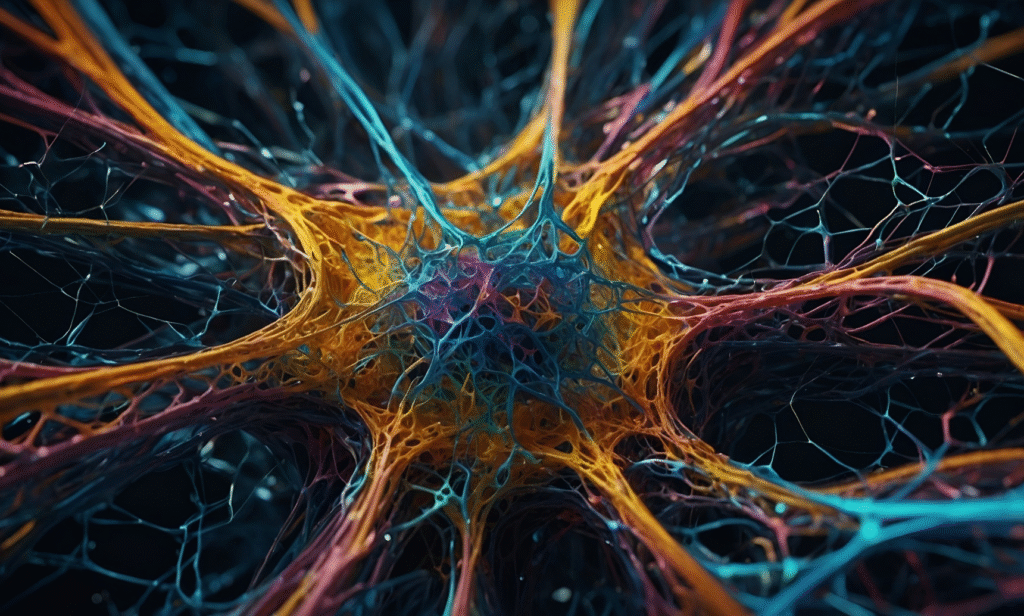
When researchers sent mini, human brain cells to the International Space Station (ISS), they expected the cells to struggle in the harsh conditions of space. Instead, the unexpected happened. The brain cells not only survived in microgravity—they matured and grew faster than the cells that remained on Earth.
The finding has sparked new research into how the brain responds to the environment of space, and raised hopes among scientists for better treatments for brain illnesses on Earth.
The Pioneering Experiment
The study was a collaboration between researchers at Scripps Research and The New York Stem Cell Foundation, funded by the National Stem Cell Foundation and Space Tango. The scientists created small, 3D clusters of brain cells, also called “organoids.”
The organoids were built from induced pluripotent stem cells (iPSCs) taken from a patient with Parkinson’s disease and a patient with primary progressive multiple sclerosis.They were directed to grow into two specific cell types: dopamine neurons, which are lost in Parkinson’s disease, and cortical neurons, which are damaged in multiple sclerosis.
The research team also created organoids from healthy, non-symptomatic donors for comparison. Some of the organoids included microglia, a major cell type in the brain’s immune system, so the team could see whether spaceflight affected inflammation.
“The fact that these cells survived in space was a big surprise,” said Dr. Jeanne Loring, professor emeritus at Scripps Research and co-senior author of the study. “This lays the groundwork for future experiments in space, in which we can include other parts of the brain that are relevant to neurodegenerative disease.
“The organoids were placed in small, sealed cryovials along with about one milliliter of a special nutrient liquid, allowing them to survive without needing to be fed for several weeks. The cryovials were loaded into a temperature-controlled incubator and sent to the ISS aboard a SpaceX resupply mission.
For 30 days, the organoids floated around in microgravity, while a control set stayed on the ground in a lab at NASA’s Kennedy Space Center under identical temperature conditions. When the spacebound organoids returned to Earth, the team began their analysis.
The Surprising Discovery
When scientists studied the organoids that had spent a month in space, they found that these cells had advanced closer to becoming fully grown, more specialized neurons than those left on Earth.
“We discovered that in both organoids, the gene expression profile was characteristic of an older developmental age of the brain than the ones that were on the ground. In microgravity, they develop faster, but it’s important to note that these are not adult neurons, so this doesn’t tell us anything about aging,” said Dr. Loring.
Analyzing the cells’ RNA revealed more active genes associated with brain maturity and fewer associated with cell division, confirming that the orbit-bound cells specialized at an accelerated rate across both test groups. Additionally, these cells showed less inflammation and fewer stress-related active genes than the control group—the exact opposite of what scientists anticipated.
Why Scientists Think This Happened
While there is no official explanation yet for this accelerated maturation, Dr. Loring has a working theory based on how these cells normally behave inside the human body.
On Earth, liquid cultures rely on convection—fluid movement caused by gravity—to circulate nutrients and oxygen and carry away waste. Because there is no convection in microgravity, the organoids in space were far more isolated from that flow than cells grown in a traditional lab dish.
Loring believes this stillness may actually mimic the brain’s internal environment more closely. “In space, these organoids are more like the brain because they’re not getting flushed with a whole bunch of culture medium or oxygen,” she said. “They’re very independent; they form something like a brainlet, a microcosm of the brain.
“The research team also checked whether radiation aboard the ISS could explain the changes. Radiation logs showed the organoids absorbed a cumulative dose of roughly 12 milligrays over the 30-day mission—a low level broadly comparable to what astronauts absorb over the same period.
Because the exposure was so modest, researchers concluded that microgravity, rather than radiation, was the primary driver of these developmental shifts.
What This Means for the Future
For those planning trips to the Moon, Mars, and beyond, studying how microgravity affects neural tissue helps scientists understand the long-term effects spaceflight may have on astronauts.
For people on Earth, accelerating brain cell maturation in orbit could allow scientists to grow specialized neurons far more quickly for future cell-replacement therapies.
“Microgravity creates unique conditions that alter how cells grow, divide, and communicate,” wrote Davide Marotta, the study’s lead author, who worked on this research while at the New York Stem Cell Foundation and is now Program Director for In-Space Biomanufacturing at the ISS National Laboratory. He noted that this accelerated development could let researchers study complex conditions in a condensed timeframe compared with ground-based models.
Since the original experiment—the first to send disease-specific brain organoids to space—the research team has sent four more sets of organoids to the ISS, repeating the original conditions while testing new variables.
“The next thing we plan to do is to study the part of the brain that is most affected by Alzheimer’s disease. We also want to know whether there are differences in the way neurons connect with each other in space,” said Dr. Loring.
“With these kinds of studies, you can’t rely on earlier work to predict what the result would be, because there is no earlier work. We’re on the ground floor, so to speak; in the sky, but on the ground floor.”
Sources
Effects of microgravity on human iPSC-derived neural organoids on the International Space Station
Space Study Reveals Accelerated Growth of Human Brain Cells
Neural Organoids in Space: Unlocking the Mysteries of the Brain in Microgravity