Emma Fillipoff, 26, disappeared from Victoria, British Columbia, on November 28, 2012, following weeks of unsettling changes in her behavior. Despite an extensive search, she has never been located, and her case remains unsolved.
Settling Into a New City
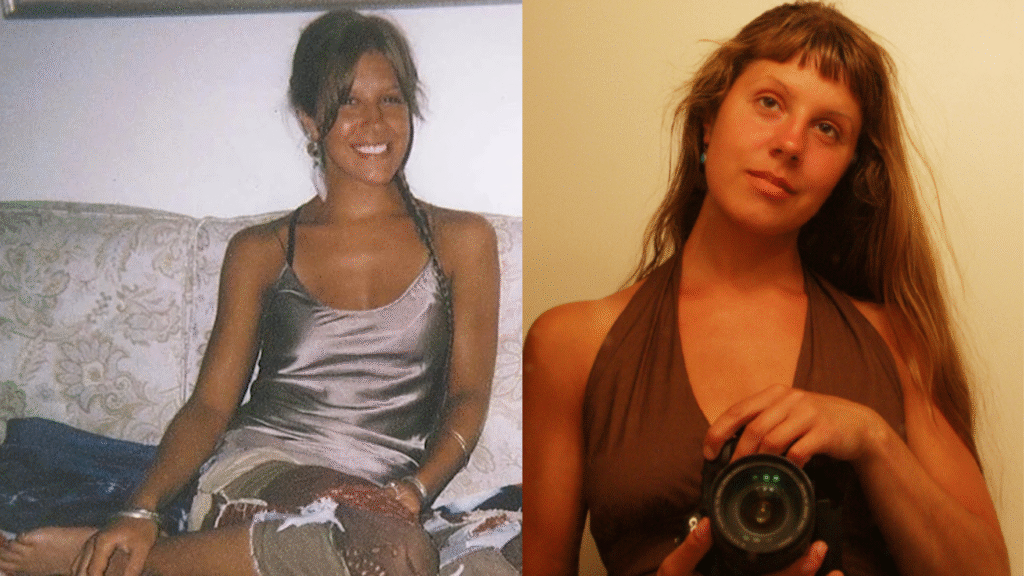
In the fall of 2011, Emma moved to Victoria, on the southern end of Vancouver Island. The city suited her love of the outdoors, and she spent much of her free time with local artists and street performers. She stayed with a friend when she first arrived and soon found work as a barista at a local cafe.
During the winter of 2011, a friend and roommate of Emma’s noticed she had begun arranging objects — feathers, rocks, and food — in an obsessive way.
On one occasion, the friend woke to find Emma outside in the middle of the night in what appeared to be a euphoric state. Concerned, the friend reached out to Emma’s father, who offered to fly her home. Emma declined and was upset that he had been contacted at all.
In the months that followed, her living situation grew less settled. She spent time at a local hotel, cleaning rooms in exchange for a place to stay, and at other points slept on friends’ boats in the harbor or reportedly in the woods nearby.
Starting in February 2012, she began staying periodically at Sandy Merriman House, a women’s shelter in Victoria, moving in and out of the shelter over the following months.
That spring, she also took a seasonal position at Red Fish Blue Fish, a seafood restaurant in the city’s Inner Harbour. The job ended in late October, and her employer expected her to return the following February for the new season.
Throughout this period, Emma stayed in touch with her family mainly through email. She did not own a cell phone, occasionally borrowing one or calling collect from a payphone.
Her messages were consistently upbeat and written in a light, poetic style, with little mention of her job, her address, or the people around her.
Her family avoided asking too many questions, aware that pressing her for details might cause her to pull away from contact altogether.
Behavior Begins to Change

By the summer of 2012, friends in Victoria began noticing further changes. Emma gave up alcohol, cigarettes, coffee, and sugar. She also started eating less while drinking unusually large amounts of water and grew noticeably thin.
Once known as sociable, she became increasingly fearful, paranoid, and withdrawn.
She spoke of ambitious plans to travel — sailing to Mexico, moving to California or Costa Rica, or returning to Ontario to surprise her family — while at the same time canceling outings with friends and avoiding anywhere beyond the pier or the shelter.
She also grew wary of men and stopped staying in shelters that housed both sexes.
Around this time, three separate friends reported that Emma had told them she felt harassed by someone she had met years earlier while attending culinary school in Campbell River. She never gave a name or further detail.
That same summer, Emma bought a van, intending to live and travel in it. The plan brought more stress than relief. The vehicle needed to be towed on several occasions, and she struggled to find an affordable mechanic to repair it.
A couple of weeks before she disappeared, a friend saw her standing outside the shelter, cold and wet, staring blankly at nearby birds. Shelter staff had also grown concerned.
They noted that she had been moving furniture outside because she said it was making noise, kept the curtains drawn at all times, and had begun giving away her belongings.
Staff contacted police to request a mental health check, but officers did not come out, asking instead to be called back if the behavior continued. Privacy laws prevented staff from contacting Emma’s family directly, and no further call was made to police.
At a friend’s suggestion, Emma visited the local YMCA several days before her disappearance to get a membership, in hopes of having somewhere else to spend her time.
Surveillance footage from that visit showed her entering and leaving the building four times within fourteen minutes, pausing each time to look out the window beforehand.
The next day, she arranged to have her van towed from a nearby town; the driver described her as upbeat and said she spoke of moving back to Ontario.
A Week of Back-and-Forth Calls

On Friday, November 23, Emma called her mother, Shelley, in tears and asked to come home. Shelley agreed to book her a flight right away.
The next day, Emma called again, distraught, and asked her mother to cancel the ticket, saying she wanted to work through things on her own. Shelley did as she asked.
On Sunday, Emma called once more, again in distress, saying she had changed her mind and needed her mother to come to Victoria to help her move.
Shelley booked a flight out. On Monday, Emma called and asked her mother not to come after all. That same day, her van had to be towed again, this time to the parking lot of a local hotel.
On Tuesday, Shelley called the number Emma had been phoning from, hoping to learn her daughter’s address without asking directly.
The call was answered by staff at Sandy Merriman House, which is how Shelley first learned that Emma had been staying at a women’s shelter for months. That same day, the hotel placed a notice on Emma’s van stating that it needed to be moved or it would be towed.
That evening, Emma called again and asked her mother to come. Shelley booked a flight to Victoria for the following day, the day Emma disappeared.
The Final Day

At 4:30 a.m. on November 28, Emma called her mother one last time, told her not to come, and hung up shortly after. Shelley boarded her flight to Victoria regardless.
At 7 a.m., Emma went to the hotel where her van was parked and saw the notice left the day before. Upset, she asked staff for one more day, and they agreed.
A little over an hour later, she visited a 7-Eleven and used her debit card to purchase a $200 prepaid Visa card. Store footage showed her repeatedly glancing out the door, as though watching for someone.
Around 10 a.m., a man named Julien, whom Emma had known since her time in Ontario, reported seeing her while riding a bus. He got off to check on her, and she indicated with a shake of her head that she did not need help.
His account of exactly when this happened has varied, sometimes placing it a day earlier. In the early afternoon, another friend spotted Emma near a soup kitchen; she told him she was not feeling well and could not talk.
She was also reportedly seen at the public library, a place she visited often. Around 1 p.m., a separate witness saw her walking along the street, appearing distant and unfocused.
Two others who saw her that afternoon were concerned enough to call 911, though it is not known whether officers responded. Another person reported seeing her walking with an older man, and someone else believed they saw her near a different shelter, called Rock Bay.
Between 4 and 6 p.m., a witness saw Emma twice: once leaving a shopping mall, and again about 45 minutes later, crossing in front of their car.
At 5:54 p.m., she returned to the same 7-Eleven and purchased a prepaid cell phone, once again watching the entrance as she had earlier that morning. The phone was never activated.
Around 6 p.m., Emma went back to the shelter. A staff member told her that her mother was on her way. How the staff learned this has never been explained; Shelley had spoken with them by phone the day before but had not mentioned she was traveling to Victoria.
Emma became upset and left before anyone could speak with her further; a fellow resident tried to catch up with her but could not.
About ten minutes later, she got into a taxi and asked to be taken to the airport. When the driver quoted a fare of roughly $60, she said she could not afford it, despite having the $200 prepaid card as well as access to between $2,000 and $3,000 in her bank account through her debit card.
She asked to be dropped off where she had been picked up instead, then asked to sit in the taxi for a while, appearing startled by noise from the dispatch radio. When she finally got out, she paid the fare with her debit card.
Minutes later, an acquaintance named Dennis Quay saw her standing barefoot on a street corner, looking disoriented and repeatedly glancing around.
When he asked if she was looking for something, she asked him to walk with her, but she soon grew uncomfortable with his questions and continued on alone. Concerned, he called 911 at 7 p.m. Police located Emma seventeen minutes later, still walking barefoot.
She answered their questions mostly with nods, headshakes, or single words. After speaking with her for 45 minutes, officers concluded she did not appear to be a danger to herself or others and let her continue on her way. No confirmed sighting of Emma has been reported since.
The Search for Answers
A few hours later, Shelley arrived at the shelter and learned that Emma had never returned to claim her bed for the night. By midnight, shelter staff and police agreed that Emma should be classified as a missing person.
Shelley checked into a hotel across the street and watched the shelter from her window through the night, but Emma never appeared.
The following day, police located Emma’s van. Inside, they found her passport, journals, laptop, and camera.
On December 2, a woman came forward saying she had encountered Emma in the Inner Harbour area, where Emma had asked her to remember the name “Emma Fillipoff” and repeat it several times. The woman said the encounter took place before she was aware that Emma was missing.
Three days later, the prepaid debit card Emma had purchased on the morning of her disappearance was used at a gas station.
Police had flagged the card and were notified when it was used, and they stated it had been found near the Juan de Fuca Recreation Centre and the Galloping Goose Trail, an area that would have taken several hours to walk from where Emma was last seen, though no witnesses reported seeing her walking in that direction that night.
The man who used the card, a recovering alcoholic, was questioned and later polygraphed by police, who cleared him as a suspect. Well over a year afterward, he began calling Shelley directly, telling her he could no longer recall where he had actually found it.
With police permission, Shelley retrieved Emma’s laptop from the belongings recovered from the van.
A friend of Emma’s helped access the password-protected device, and Shelley used the names, phone numbers, and email addresses stored on it to locate people who had known her daughter in Victoria. She also met others while distributing missing-person posters around the city.
Julien, who had known Emma before her move west, later relocated to Victoria himself and joined the group searching for her.
He approached Shelley at the public library, where she often sat working at a computer near the entrance in hopes of spotting Emma, and explained that he recognized her from photographs online.
Investigators later found that Julien had sent messages to Emma’s parents in the months before her disappearance, as well as a message to Emma afterward offering to build her a cabin in the woods.
He became a person of interest, was questioned and polygraphed, and was subsequently ruled out by police.
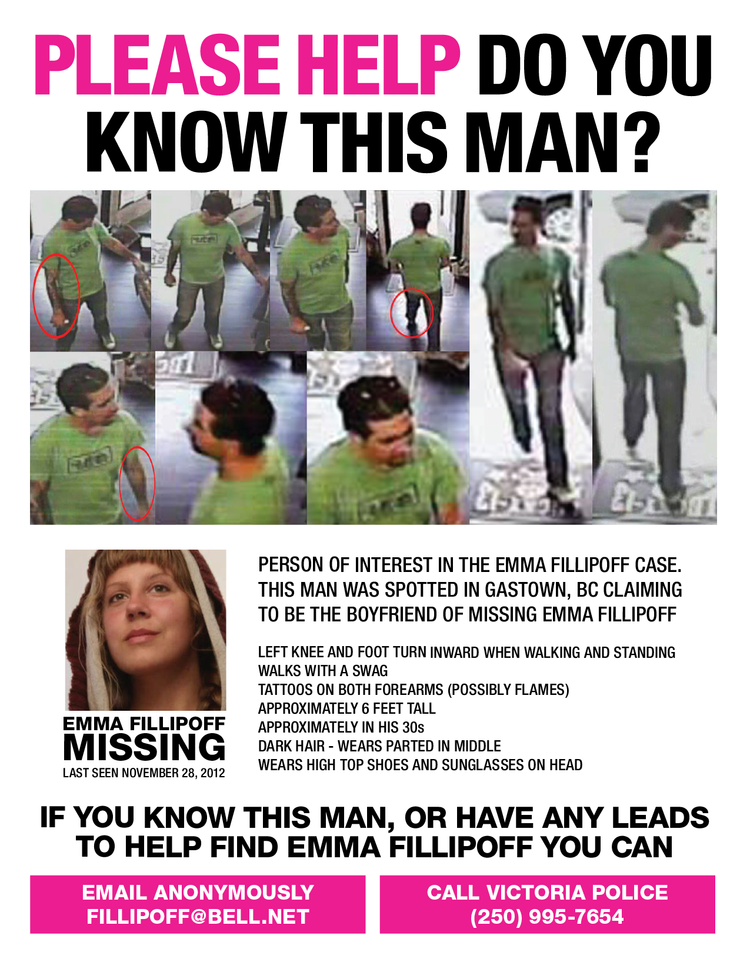
In 2014, a man entered a shop in downtown Vancouver, tore down one of Emma’s missing-person posters, and told staff that Emma was his girlfriend and did not wish to be contacted.
Store employees, unsettled by his behavior, called police. Surveillance footage captured his tattoos and a noticeable limp, but he has never been identified.
Divers searched the harbor while search teams combed nearby trails, parks, and even some of the smaller islands, but nothing further was found beyond the prepaid card.
Shelley also tried to obtain details of the conversation Emma had with the two responding officers on the night she disappeared, filing a freedom of information request that was denied; their identities have never been released.
Over the years, Shelley received numerous reported sightings of Emma, none of which could be confirmed. She also encountered people falsely claiming to know Emma’s whereabouts.
One person claimed to know Emma’s location and asked to meet Shelley at a specific address. Police drove past the house but did not approach it, and the contact then changed the meeting location, demanding half of a $25,000 reward Shelley had offered before revealing anything further.
Shelley declined, having kept police informed throughout. Another claimed Emma was working at a strip club in the United States and demanded $40,000 for information.
Shelley asked for proof, either a photograph or the answer to a personal question only Emma would know, and hired a private investigator, who arranged for police surveillance at the club over two nights.
The tip proved false, and the messages were ultimately traced to senders in Australia. The ordeal cost Shelley over a thousand dollars, and investigators later learned it was not the first time the same individuals had attempted this kind of scam.
Remembering Emma

Before she became known to the public as a missing person, Emma Fillipoff was known to those close to her as an intelligent, creative, and independent young woman.
Born and raised in Perth, Ontario, she was one of four children. Her parents’ divorce, which took place before her move west, affected her deeply, though she rarely discussed it, even with those closest to her.
Emma pursued a wide range of interests throughout her life. She traveled to China to teach English and earned diplomas in both photojournalism and culinary arts. She trained as a chef at North Island College and later worked at a pub in Campbell River, British Columbia.
A congenital knee condition eventually forced her to leave that job, and she returned to Ontario for a time before deciding to move west once more.
It was during this period in Perth that she met Julien at a music festival. The two spent time together, and their relationship briefly turned romantic before Emma lost interest. In the fall of 2011, without telling Julien of her plans, she chose Victoria as her next destination.
Those who knew Emma remembered her as free-spirited, adventurous, and kind, with a particular fondness for caring for the elderly, children, and animals.
She was also fiercely private, rarely sharing details of her daily life even with those she was closest to, a trait that had defined her since childhood and remained constant through her final months in Victoria.