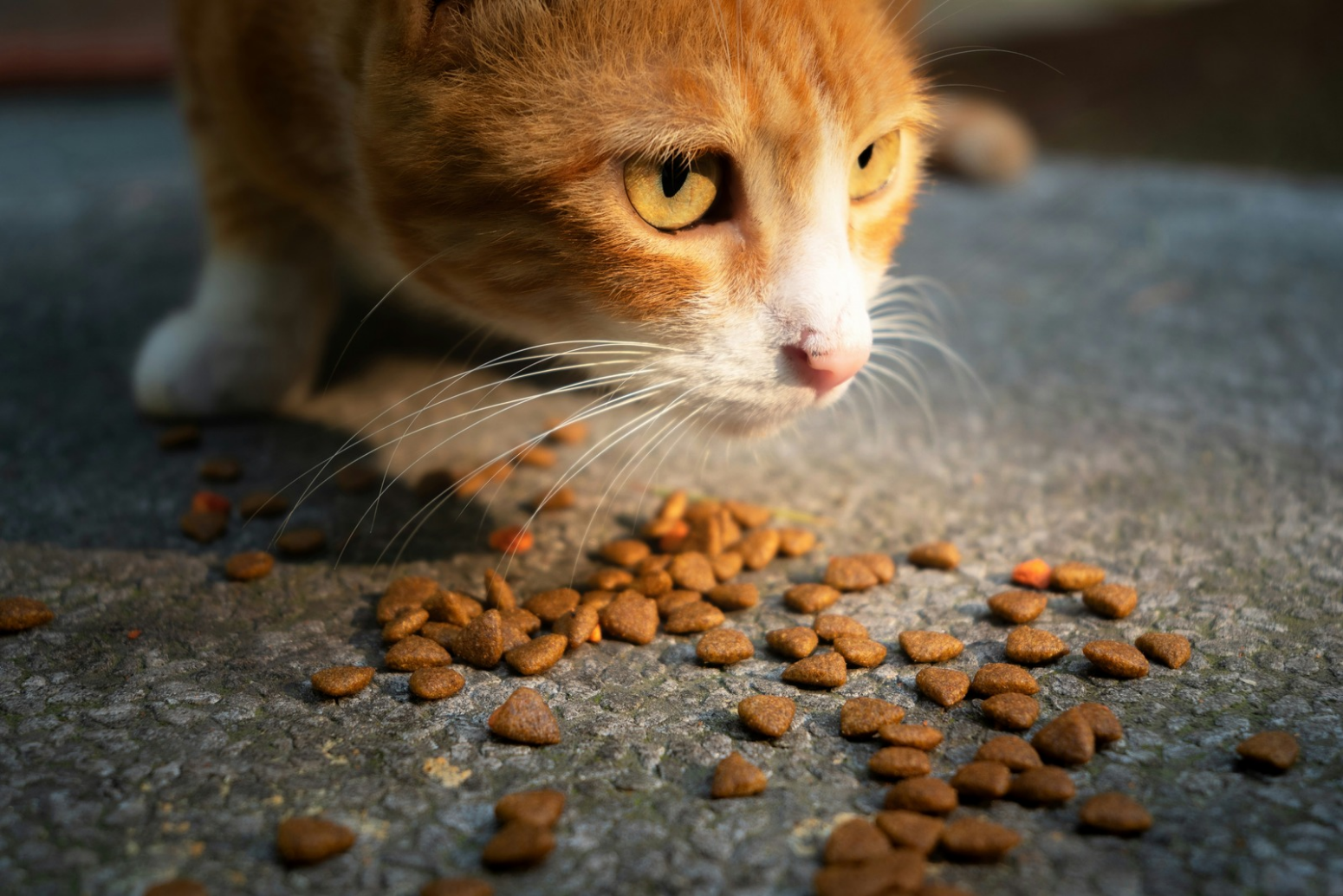
In many kitchens, the scene is familiar: dinner goes down, a cat leans in, takes a few bites, then steps back as if the meal suddenly became unimportant.
Minutes later, the same cat may return and ask for food again. It looks like pickiness. It can look like a tiny portion was enough. Newer research points somewhere else entirely: the nose.
What the Iwate Study Tested
In a paper published in Physiology & Behavior, Masao Miyazaki and colleagues at Iwate University asked a simple question with big consequences: can smell, by itself, tell a cat to stop eating?
To find out, they worked with 12 healthy cats in tightly controlled feeding trials. Each cat went without food for 16 hours, so motivation should have been high. Then the cats were offered a 0.7 ounce portion.
Across ten baseline sessions, most cats did not finish.
On average they ate only about one third. Only four cats finished a full serving, and each of those cats did it just once. In other words, an internal stop signal kicked in early, well before any realistic stomach limit.
Next came the repetition test.
The cats received the same food again and again in short cycles. Intake slid downward with each repeat, even though the cats had been fasted and the food was nutritionally adequate.
Then the researchers changed the menu. When a different food appeared, the cats ate more.
Here is the twist: the boost happened even when the new option was not a top favorite. That rebound suggests variety mattered more than preference.
The Nose Flips the Switch
The team’s explanation relies on a basic brain pattern called habituation. When an odor stays the same, the nervous system treats it as old news and reduces its response.
For a cat, a food smell that becomes background can lose its pull fast, and eating slows or stops. When a new odor shows up, dishabituation occurs: attention returns, and so does feeding.
Human appetite research has described a similar effect, often called sensory specific satiety, where repeated exposure to the same food cues lowers desire before true fullness.
Miyazaki’s group went further and ran a smell only experiment to isolate the driver. The cats were served the same food as before, but a second, hidden food source released a different odor nearby.
The cats could not see or taste that hidden item. All that changed was the air. Even so, the cats ate more when the surrounding smell was novel. That is strong evidence that taste, texture, and nutrient profile were not required to restart interest.
They also tested what happens between meals.
If the room carried the same food odor during the break, cats ate less later. If a different odor was present during the break, the usual decline was softer and intake stayed higher.
Smell seems to prime appetite in advance, not only during the first bite.
Chemical analysis backed up the idea that “different” truly means different. The researchers measured volatile compounds, the tiny molecules that create odor.
Each food had its own signature, so switching products changed the scent landscape in a way a cat’s nose could detect.
What This Means at Home
This work helps explain why cats often eat in small installments. Other studies of older cats, for example, report averages around six to seven meals per day.
A pattern of short meals fits an animal that can lose motivation as a smell becomes overly familiar, then regain it after a sensory reset.
For caretakers and veterinarians, the takeaway is practical: when a cat pauses mid meal but still seems hungry, consider smell variety before assuming stubbornness.
Mix up the food you give them so they don’t get bored.
Try giving tiny meals more often and always wash the bowl so old yucky smells don’t stick around. Zapping the food for a few seconds makes it smell way better, just check that it’s lukewarm, not hot!
The study was careful but not final.
It tracked a small group for short periods, using a limited set of diets. The authors note that longer studies could test more food formats and include cats with different ages, body conditions, and sterilization status over time too.
At the same time, appetite change can be medical, so sudden or lasting refusal to eat should prompt a professional check.
Miyazaki summarized the central point neatly: sensory novelty, especially olfactory novelty, can reactivate feeding motivation in cats.