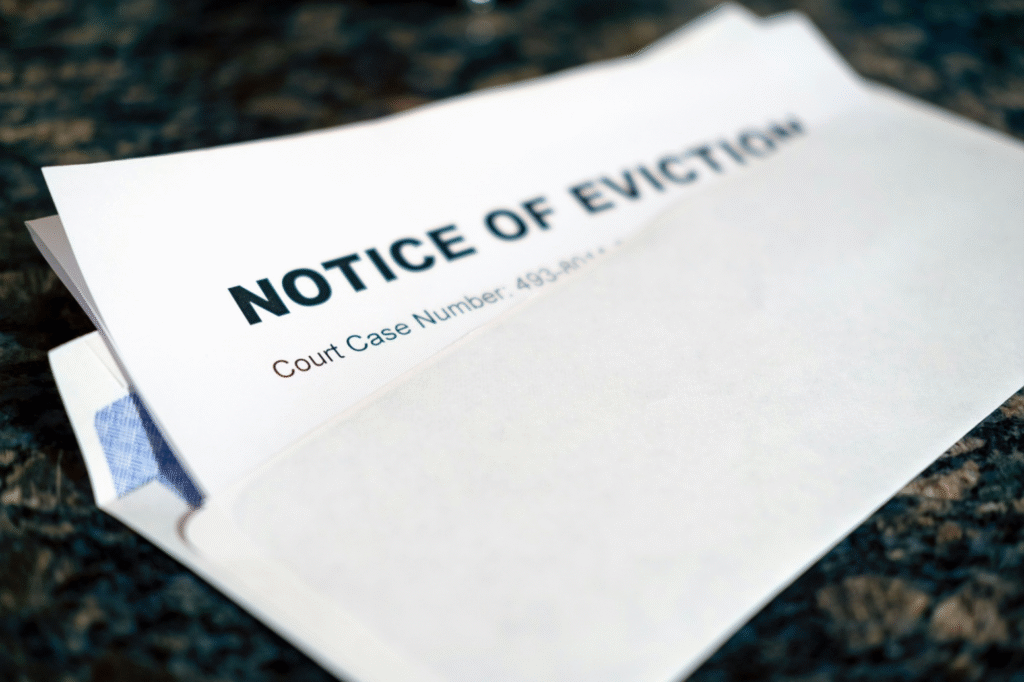
A New York couple did something most parents never imagine doing: they sued their own son to make him leave home. Michael Rotondo, then 30, had lived with his parents in Camillus, New York, for eight years. By the spring of 2018, that living arrangement had turned into a court case that drew attention from news outlets across the country.
A Home Built on an Unwritten Deal
Michael Rotondo moved back in with his parents, Christina and Mark Rotondo, about eight years before the lawsuit began. He had briefly lived on his own and held a job in Syracuse, but after losing that job, he returned to his childhood home.
According to a legal filing cited by CNY Central and referenced in his own motion to dismiss the case, Rotondo said he had never been asked to pay rent, cover household expenses, or help with chores during his time there. He described this as an informal understanding between him and his parents, not a broken promise.
That understanding started to fall apart in the fall of 2017. Around October, the family began having informal talks about Michael moving out on his own, according to NPR. Those conversations didn’t lead anywhere, and by the start of 2018, his parents decided that talking alone wasn’t going to work.
Warnings the Family Wrote With Their Own Hands
On February 2, 2018, Christina and Mark Rotondo sent their son the first of what would eventually be five written notices. The note gave him 14 days to leave the house and warned that he would not be allowed to return once he did.
Part of that message read: “You have 14 days to vacate. You will not be allowed to return,” according to CNN. When the deadline passed without Michael moving out, his parents hired a lawyer, Anthony Adorante, and sent a second notice on February 13. This one gave him 30 days, pushing the new deadline to March 15.
The notices weren’t only about leaving, though. His parents also offered him $1,100 to help him get settled somewhere else, along with practical advice about finding work and managing his own household.
One note pointed out that jobs were available even for someone with a spotty work history, and encouraged him to apply for one. Another addressed a more everyday problem: Michael’s car, which needed repairs and was parked on jack stands in the driveway. His parents offered to help fix it or asked him to move it off the ramps.
March 15 came and went, and Michael still hadn’t left. His parents realized that letters and financial offers weren’t going to solve the problem on their own.
From the Kitchen Table to the Courthouse
In April 2018, Christina and Mark Rotondo went to their local town court to ask about evicting their son through the usual process. They learned that because Michael was a family member rather than a tenant, the case couldn’t be handled at that level. It would need to go before a New York State Supreme Court justice instead.
On May 7, the couple filed their case with the Onondaga County Supreme Court, just outside Syracuse. Their attorney told Syracuse that the family had run out of ways to convince their son to leave on his own.
Michael responded by filing his own motion, asking the court to dismiss the case. He argued that under New York law, a resident like him was owed six months’ notice, not two weeks, and pointed to a 2006 case, Kosa v. Legg, to support his position.
He also maintained that he hadn’t caused problems for his parents and had never been asked to contribute financially or with chores.
Thirty Minutes in Front of a Judge
The case reached New York State Supreme Court Justice Donald Greenwood on May 22, 2018. Representing himself, Michael spent roughly half an hour arguing his side directly with the judge, at one point asking for six months to find a new place and later suggesting he could be out within three months.
Greenwood wasn’t persuaded. He told Rotondo, “I want you out of that household,” according to ABC News. The judge ruled that Christina and Mark Rotondo, as the homeowners, had the right to decide who could live there, and he set a move-out deadline of noon on Friday, June 1.
Michael called the ruling “This is outrageous,” as reported by ABC7 New York, and said afterward that he planned to appeal. Speaking to reporters outside the courthouse, he said he wasn’t sure where he would go next.
Greenwood also asked New York’s Adult Protective Services to check on the wellbeing of Christina and Mark Rotondo. Throughout the proceedings and afterward, Michael’s parents said very little to the press, letting their notices and their attorney speak for them.
The Final Move and the Aftermath
Michael Rotondo met his deadline, though not with much room to spare. He drove away from the Camillus house about four hours before the noon cutoff on June 1, then came back briefly to collect a few more belongings before leaving again with roughly two and a half hours left on the clock.
His car needed a jump start before he could go. As he pulled away from the house for the last time, he gave a short honk of the horn toward the reporters and onlookers gathered outside, according to NPR’s follow-up report. Speaking to reporters that day, he said, “I love my parents,” even as he made clear he still disagreed with how things had played out.
The case picked up international attention while it was working its way through court, partly because it was such an unusual use of the legal system for a family dispute.
Separately, Rotondo was also pursuing an unrelated wrongful-termination lawsuit against his former employer, Best Buy, according to reporting cited by NPR, stemming from his claim that he had been let go for declining to work Saturdays.
That case wasn’t connected to the eviction proceedings, but it added another layer to a spring that had already put Michael Rotondo’s personal and legal life in the public eye.
In the end, the case came down to a simple legal question with an unusually personal backdrop: whether parents who own their home get to decide who lives in it. The court’s answer was yes, and by the start of June 2018, Michael Rotondo had moved out of the house he’d called home for nearly a decade.
Sources
NPR – Judge Backs N.Y. Parents