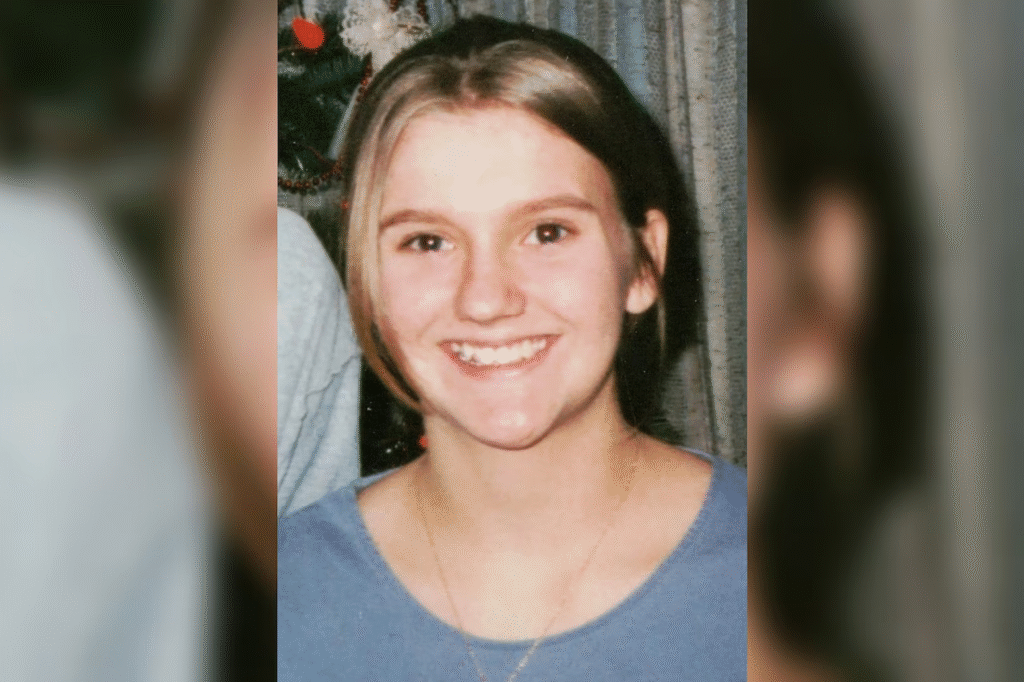
On the morning of Saturday, September 21, 1996, a disagreement broke out within Danielle’s family. Danielle, who had a younger sister named Stephanie, was upset with her parents and wanted some time and space to herself.
In Montana at that time, residents could obtain a driver’s license at 15, and Danielle had one. Around 11 a.m., she got into her Chevrolet pickup truck and drove to Cameron Bridge, a fishing access area along the Gallatin River, a few miles up a rural highway from Belgrade, a small town in the Gallatin Valley, not far from Bozeman. The area was peaceful, and she knew it well.
Danielle did not return home. As the hours passed, her mother grew deeply concerned. She drove to Cameron Bridge with a friend, and the two women walked through the area calling Danielle’s name. Receiving no answer, they telephoned the Gallatin County Sheriff’s Office and reported her missing.
Deputies began assembling a search party. After Danielle’s pickup truck was located, a sheriff’s posse searched the surrounding wilderness, and volunteers spread out along the river and through the trees.
Their voices carried across the water and into the woods as they called her name, hoping only that she would come home, but no one answered. The search was called off between 7:30 and 8:00 p.m., when darkness made it too difficult to continue.
Not everyone stopped. Family friends came out after dark, among them two brothers who refused to give up even though the official search had ended.
Carrying flashlights, they followed a path toward the river and crossed the bridge. In the dense, muddy woods, they found Danielle’s body. At about 9:30 p.m., a dispatcher reported that she had been found.
Rumors and a Disputed Explanation
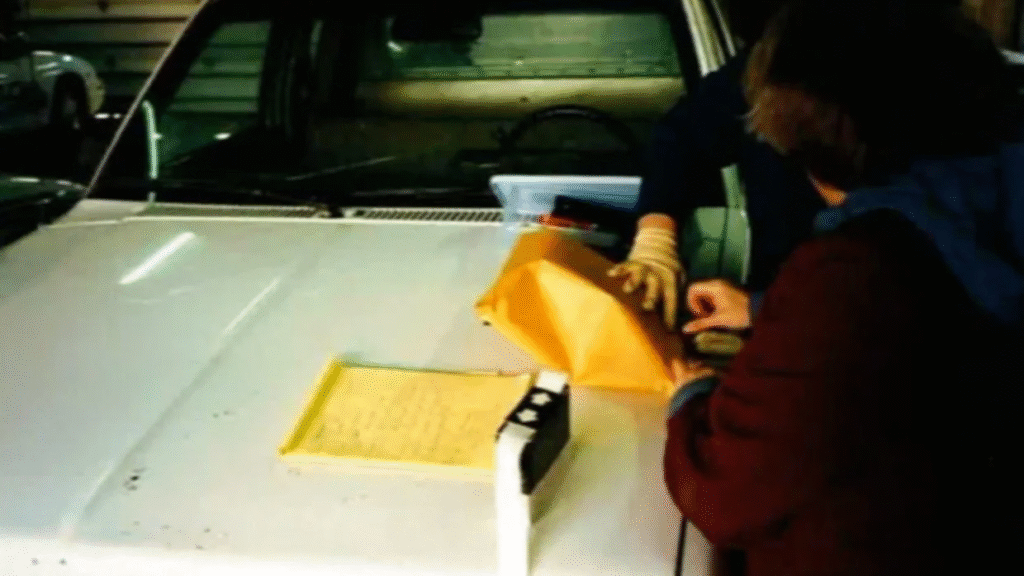
Stephanie Houchins, now Mollet, was 12 years old and in the house when her father returned and told her mother what had happened. Her mother, who expected the search to resume at first light, said that Danielle would be found. Her father told her that Danielle had already been found, and that she was gone.
In the first hours after the discovery, no one was certain what had happened. Keith Farquhar, then a young deputy with the sheriff’s office, was among the first deputies to respond and the second officer to return to the scene after the body was found.
Danielle was lying face down in a shallow pool of water. In his view, nothing at the location explained how a teenager so experienced in the mountains could have ended up there.
In a small town, news and speculation travel quickly, and word of the death spread within hours. It came as a shock to those who knew Danielle, and the details emerged in stages. The first account many people heard was that someone had drowned.
Soon rumors suggested a murder, and residents began to ask whether a killer was at large. For a time, the community moved between concern for the family and worry about its own safety, and a classmate of Stephanie’s remembers the rumor mill at Belgrade High School as ruthless, with the uncertainty alone causing fear.
Stephanie returned to school on Monday, hoping that showing strength would make things easier for her parents.
Two days after the discovery, authorities released partial findings from the autopsy. They did not say that Danielle had been murdered. Her manner of death was listed as undetermined, and the family was told that she had drowned, that the death could have been an accident, and that she might simply have tripped and fallen.
Sheriff Bill Slaughter told the media that her body showed no cuts or bruises and that there were no signs of foul play. The family could not accept this explanation. They were experienced outdoors people, and even at 12, Stephanie found it absurd.
Within the sheriff’s office, the explanation was also questioned. Farquhar had been assigned to work with detectives on the case, and he spoke with Danielle’s doctor.
The doctor told him that nothing about her physical condition would have kept her from rolling over in a few inches of water and mud to breathe, had she merely fallen.
When Farquhar tried to report this to other investigators, he says the sheriff ridiculed him and asked what a doctor knew. Slaughter denies the account.
He describes Farquhar as a disgruntled employee and says his department never ignored evidence. About three months after Danielle’s death, on December 31, 1996, Farquhar, disillusioned, resigned.
Years passed. Danielle’s family tried to accept that her death might have been an accident. They lived with a wound that nothing explained, and they had to find a way to heal without answers or resolution.
A Case Reopened
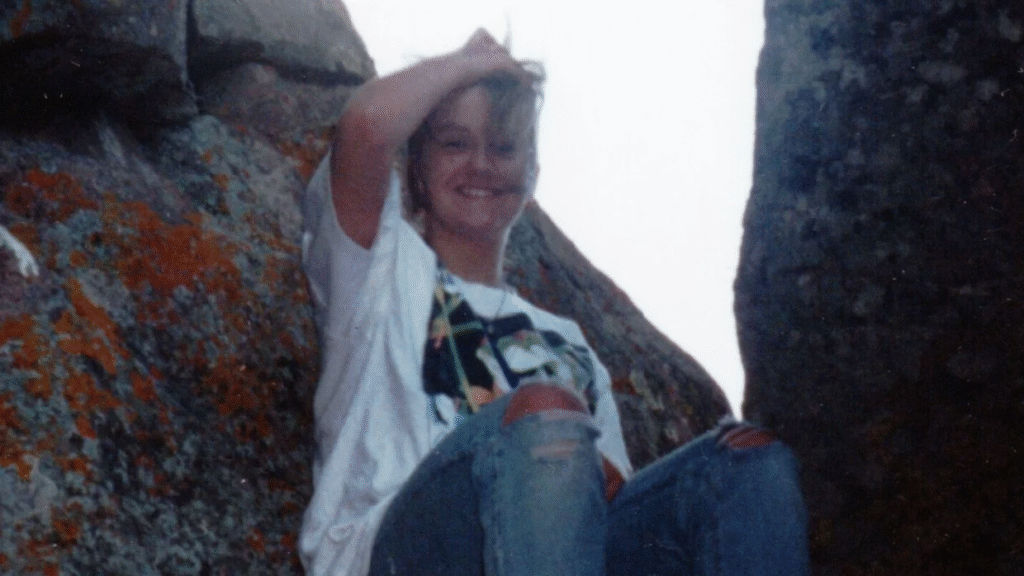
In the years that followed, Stephanie thought about her sister every day. In 2019, the sheriff’s office reopened the case, and Detective Sergeant Matt Boxmeyer took an interest in it.
He learned that her family had received little information in 1996, which he described as not uncommon, since investigators generally do not discuss open cases with relatives.
Boxmeyer also found that evidence had been submitted several times over the years to the Montana State Crime Lab. Each attempt ended without a usable DNA profile, so he was effectively starting from scratch.
Stephanie, meanwhile, increased the pressure. She had been calling the sheriff’s department, trying to find someone willing to speak with her about her sister’s case.
Boxmeyer and his supervisors decided that the family deserved answers. They told the family that Danielle’s death was not an accident, and Boxmeyer said he believed it was a homicide.
Stephanie then demanded to read the autopsy report and view the crime scene photographs. The records showed that Danielle had not drowned in water alone. She had inhaled both water and mud, and her head had been held down in mud that reached her lungs and stomach.
There was bruising beneath the skin on the back of her neck, which indicated that someone had pressed her head down with force. The report also documented cuts and bruises on her body, injuries to her vaginal area, and semen in her underwear.
Evidence indicated that she had fought and scratched. When Stephanie asked whether this meant her sister had been raped, officials told her that they believed she had been.
She remembered being unable to breathe at that moment and feeling physically ill. She was also angry at those who had misled her family and left her sister’s case uninvestigated for so many years.
In 2021, Dan Springer became sheriff. He had been a rookie deputy when Danielle’s body was found, five days into the job. As the new head of the department, he said, he could handle the case as he saw fit, and he felt the time had come to get answers. He contacted Stephanie and promised that his office would find one.
Springer looked outside his department and approached Tom Elfmont. Elfmont had served as a soldier in Vietnam and then spent 27 years with the Los Angeles Police Department, working the streets before retiring as a captain. He had since moved to Bozeman, Montana.
Elfmont describes himself as persistent and unwilling to give up. His career had been driven by a wish to put bad people in jail. After meeting with Springer in March 2023, he agreed to work the case, saying that Danielle was a great kid and that the manner of her death still bothered him.
He told Stephanie, “I will solve this case.” She searched for information about him online, learned that he had a reputation for never retiring, and decided to trust him. By mid-2023, he was working on the case full time, reexamining all of the evidence every day.
A Breakthrough in the Evidence
With a committed investigator in place, the case turned to the physical evidence. Elfmont reviewed everything in the case file, including the list of potential suspects from the original investigation and the clothing Danielle was wearing when she was found, which had been tested before. He made DNA testing his priority.
At his request, the Montana State Crime Lab retested the semen on Danielle’s underwear using its newest technology. The result was a partial DNA profile, which contained only some of the genetic information normally needed for a full comparison, and it matched no one named in the case file.
A search of CODIS, the federal repository of DNA samples from convicted felons, produced no match either. In August 2023, Springer changed the official manner of death from undetermined to homicide.
Elfmont then turned to genetic genealogy. Because relatives share portions of their DNA, a profile compared against a genealogy database can reveal distant cousins, and from those cousins a researcher can build a family tree that leads back to an unknown person.
He worked with CeCe Moore, an investigative genealogist who has helped solve more than 325 cases since she began working with law enforcement in 2018. Moore builds family trees from DNA using information from popular genealogy websites.
For this approach, however, she needed a different and more complete type of DNA profile, and the semen sample did not contain enough DNA to provide one. Other biological evidence would have to be retested with more advanced technology.
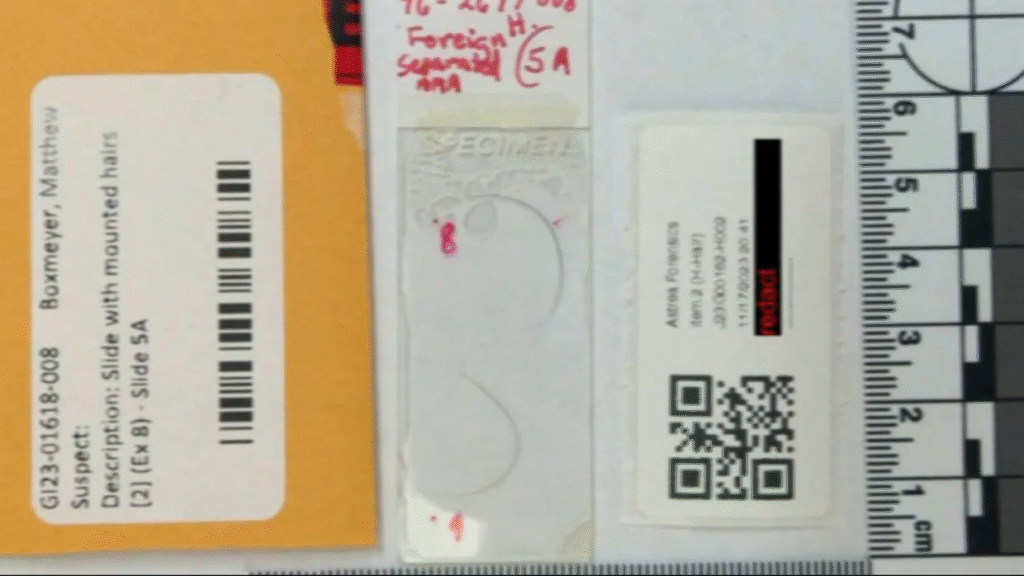
Elfmont had four male hairs that had been found on Danielle and preserved for 27 years. The hairs had never produced usable DNA because they were rootless, meaning they had no skin cells attached.
He asked around and was connected with Astria Forensics, a private California laboratory known for extracting DNA from material once considered unusable. The first two hairs it tested produced nothing.
The remaining two were then examined, and the last one yielded a usable profile, the critical breakthrough the investigation needed.
A judge gave Elfmont permission to compare the enhanced profile with samples in popular genealogy databases, where people voluntarily submit their DNA to learn about their ancestry and find relatives.
By spring 2024, Moore was at work, looking for patterns, overlaps and, eventually, common ancestors. She identified the great-grandparents on both sides of the unknown man’s family tree. A single marriage proved decisive.
The couple had many children, including three sons, and every member of the family lived in New Hampshire. Moore felt that she was close, but the link to Montana remained unexplained.
She searched birth indexes, marriage certificates and the sons’ social media accounts. On the youngest son’s Facebook page, he had posted that he moved to Bozeman, Montana, on July 1, 1996, less than three months before Danielle’s death.
On May 1, 2024, Moore called the detectives and told them she believed she had identified Danielle’s killer. Elfmont then telephoned Stephanie to tell her that the man was alive and that investigators would build a case against him.
Stephanie had spent years hoping that someone would be held responsible for her sister’s death, and she said the news confirmed that everything she had put into her fight was worth it.
A Suspect Is Named
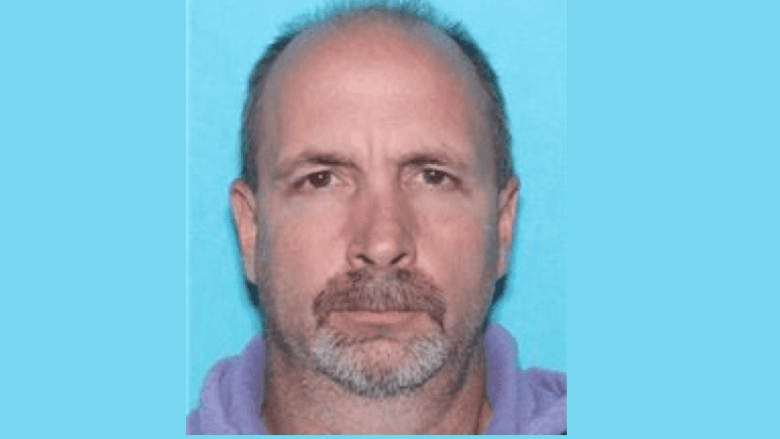
Elfmont soon learned more about the man Moore had named. He was Paul Hutchinson, who had a wife, a daughter and a son. He lived in Dillon, Montana, about 140 miles from Bozeman, and had worked for 22 years as a fisheries biologist for the Bureau of Land Management.
In September 1996, he was 27. A Marine Corps veteran, he had come to Montana State University, about 13 miles from where Danielle’s body was found, as a graduate student who later earned a master’s degree in fisheries biology, and his work-study job with the Fish and Wildlife Service placed him on the waterways around Belgrade.
Hutchinson had no criminal record and, by all accounts, had lived quietly since 1996. He was a bow hunter, rifle hunter, fisherman and trapper, and he was well known in local hunting and fishing circles as a respected source of information.
He often posted on message boards about hunting trips across the country, and he seemed to be constantly hunting, regularly sharing where he was headed or where he had just returned from.
A school friend of Stephanie’s, an experienced hunter and former Yellowstone guide who now edits hunting and fishing coverage for a gear website, had known him since the early 2000s and regarded him as a trusted mentor.
She described him as calm, quiet and under the radar, and said she would have invited him to a hunting camp without a second thought. She had gone on fishing trips alone with him in remote places.
She has always trusted her instincts about people, particularly men, and had never sensed danger from him. Investigators and Stephanie both say the two had no prior connection, and investigators describe the attack as a crime of opportunity.
Elfmont knew he could not make an arrest without Hutchinson’s DNA, and he was working out how to obtain it. In the meantime, Montana law allowed him to speak with Hutchinson, provided the conversation took place in a public area from which Hutchinson was free to leave.
On July 23, 2024, Elfmont and Sergeant Court Depweg of the Newport Beach, California, Police Department, who specializes in using DNA technology to solve homicides, interviewed Hutchinson for nearly two hours, with a body camera recording.
The sheriff’s office says the interview took place that evening at his home in Dillon, where he invited the detectives inside.
Elfmont has said the detectives first approached Hutchinson outside his Bureau of Land Management office and offered an explanation intended to avoid raising his suspicion: they were speaking with fisheries experts about matters affecting rivers in southwest Montana.
Investigators noted that Hutchinson sweated profusely, scratched his face and chewed on his hand. The detectives, who had not yet mentioned Danielle, showed him photographs of four women who had died: one in a river in Idaho, two in the Yellowstone region, and Danielle.
Depweg told Hutchinson that Danielle was killed in September 1996 and found near the Gallatin River, and asked whether he had ever fished there.
Hutchinson said he had trapped on the Gallatin. Asked about the Cameron Bridge access, he said he had probably been there, and when the detective named Jackrabbit Lane, the street leading to the remote site, he said yes, he knew it.
Elfmont said Hutchinson became visibly distressed, sitting back in his chair as far from the table as he could. Asked whether he remembered seeing Danielle or someone who looked like her, he said he did not know, explaining that he had visited many fishing access sites over the years.
He denied knowing anything about her death, even after the detectives told him they had the suspect’s DNA. Asked whether it was possible he had been there when she was killed, he answered no. The detectives never asked him directly whether he had killed her.
Elfmont said there was no need, because Hutchinson knew that the detectives knew. As the interview ended, Hutchinson asked whether they had anything else to ask him. They said no.
Stephanie had been preparing for a court battle that she expected to last three to five years, and she had pictured herself in the courtroom every day, facing him. Less than 12 hours after the interview, Elfmont telephoned her to say that Hutchinson was dead.
At about 4:15 a.m. on July 24, Hutchinson had called the Beaverhead County Sheriff’s Office, said he needed assistance and hung up. Officers found him dead. He had died by suicide outside Dillon at age 55. Stephanie told Elfmont she did not know how she felt about it.
Days later, DNA collected from Hutchinson after his death was compared with evidence from Danielle’s body, including the semen on her underwear. It matched, with odds of 10.7 trillion to 1. Springer described the match as “100% confirmation.”
At an August 8, 2024, news conference held by the sheriff’s office, Stephanie expressed her family’s gratitude to Elfmont for overcoming every roadblock and thanked Springer for being a man of his word.
She then criticized the sheriff’s office of 1996. “The sheriff lied to my parents, boldface lied and betrayed the trust of shocked and grieving parents,” she said, adding that institutions had failed her sister, her family and the community.
She also said the Montana State Crime Lab had misfiled key evidence and could no longer locate other items, including Danielle’s watch. Springer, asked about the accusation, said that the reports speak for themselves.
If the family was told that Danielle had no injuries, he said, it was not the truth, because the reports showed marks on her body. Slaughter, now retired, acknowledged withholding some information from the family but said he never lied to them.
He said it is common for investigators to hold back key details to protect an investigation, and that his office had been examining potential suspects, including people close to Danielle. Slaughter also says detectives treated the case as a homicide and told the parents so, which Stephanie disputes.
Stephanie’s school friend, who had regarded Hutchinson as a mentor, learned what had happened while watching the news conference. Weeks later, Stephanie went to the scene of the crime and finally saw the exact spot where her sister’s body was found.
She said she thought about her sister’s last moments there. She also returned to the banks of the Gallatin River to scatter the last of Danielle’s ashes. Half had been scattered years earlier on top of Sacagawea Peak, the tallest mountain in the Bridger Range.
The sheriff’s office says it is examining Hutchinson’s life for connections to other cold cases and will share the locations of his hunting trips across the country with other agencies.
Stephanie is working to change how Montana funds and supervises law enforcement so that cases like her sister’s do not fall by the wayside.
Remembering Danielle
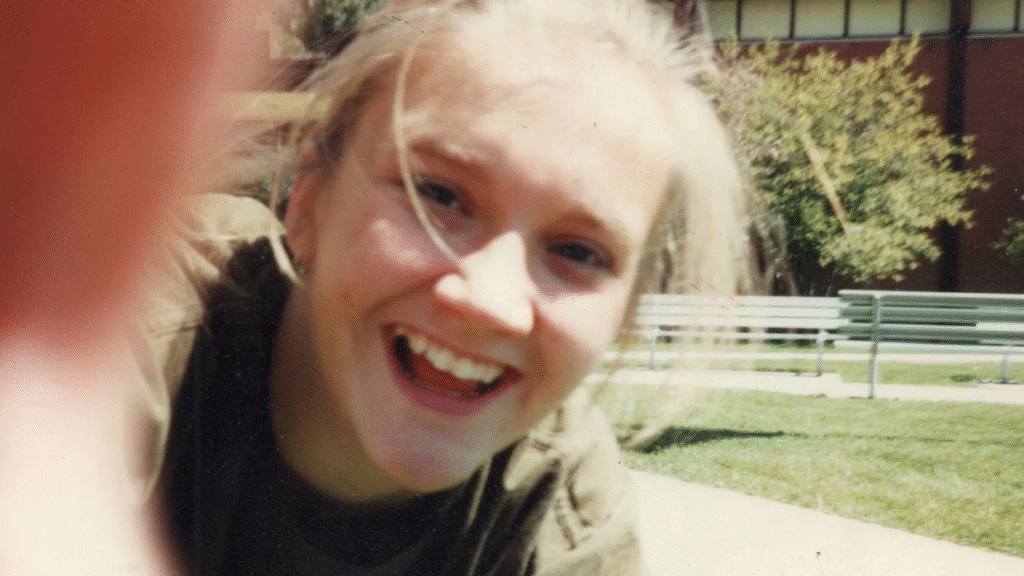
Danielle was the kind of older sister whom a younger sibling looks up to, and Stephanie did. She grew up in the Montana wilderness, where her family spent much of its time outdoors.
Stephanie describes the landscape as a nature playground, and Danielle was a classic Montana girl who could fish, hike and ski.
A classmate of Stephanie’s remembers her as the cool older sister of a friend, and recalls that both sisters were down-to-earth and friendly. She was a strong student who loved science and was fascinated by how the world worked.
She was also witty and funny, and she was willing to make jokes at her own expense. Everyone who knew her loved her. Stephanie remembers her as strong and brave, and as everything she looked up to. For Stephanie, the case has always been about Danielle.
Danielle took great pride in her driver’s license. Her family keeps it, along with the items she had in her pocket that day.
For years, Stephanie said, she felt that she was screaming into an echo chamber, pleading for people to believe her sister mattered. Today, Danielle matters to everyone again.
Titan’s Rivers Run on Methane, and the Riverbed Is Solid Ice

Saturn’s largest moon has rain, rivers, lakes and seas, just like Earth. However, what makes Titan different is that there is no liquid water on its surface. Instead, liquid methane and ethane take on that role, while water ice — frozen solid in Titan’s extreme cold — plays the part that rock plays on Earth.
Saturn’s moon Titan is the only place in the solar system, apart from Earth, where liquid has been confirmed on the surface, along with a weather cycle that creates it.
Chemistry on Titan and How It Causes the Weather
On Earth, methane and ethane are gases common in natural gas and used as fuels. However, Titan is one of the coldest places in the solar system, with an average temperature of -179°C (or -290°F). At that temperature, methane and ethane are liquid.
“Titan’s hydrological cycle is similar to that of Earth,” NASA’s Jet Propulsion Lab (JPL) explained. “Evaporation, cloud formation, precipitation, and liquid runoff fill low-lying areas. The only difference is that instead of water, Titan’s cycle runs on methane and ethane.”
Titan’s atmosphere is denser than Earth’s and composed mostly of nitrogen, with a haze of organic molecules that makes it impossible for ordinary visible light to penetrate down to the surface. That’s why radar was the main instrument used to map the surface.
Titan’s seas are concentrated around the north pole, the largest one called Kraken Mare. It is about 400,000 square kilometers in size, just a little bigger than the Caspian Sea, the largest lake on Earth.
The name “Kraken” was given to Titan’s biggest sea because of its connection to the mythological sea creature. Titan’s second-largest sea is Ligeia Mare, which stretches across roughly 126,000 square kilometers — a bit more than the combined area of Lake Huron and Lake Michigan on Earth.
The depth of this sea reaches approximately 170 meters, according to Cassini radar measurements. A 400-kilometer-long river system known as Vid Flumina flows into Ligeia Mare, with the river cutting canyons roughly a kilometer wide and several hundred meters deep into the water-ice bedrock. It resembles river valleys found on Earth.
Meanwhile, Ontario Lacus is a smaller lake located farther south, made up mostly of ethane along with methane and dissolved nitrogen. Despite the fact that Titan has lakes and seas, they cover only a small percentage of the moon’s surface. This makes Titan much drier than Earth.
Huygens Lands on a Riverbed
On January 14, 2005, the European Space Agency’s Huygens probe detached from NASA’s Cassini spacecraft and landed safely near the “Adiri” region. The landing was unique because it was the first, and so far only, landing on a body in the outer solar system.
It took about two and a half hours for Huygens to descend to the surface of Titan through the dense atmosphere. As it descended, Huygens captured photos of tributaries resembling Earth’s river deltas, flowing into a larger, darker, flatter region — early evidence that liquid had once flowed on Titan.
After landing, the probe photographed sediment in the shape of rounded pebbles, made of water ice. The pebbles measured roughly 10 to 15 centimeters across and sat on ground resembling damp sand. In a retrospective marking the 10th anniversary of the landing, NASA noted that the streambed was likely shaped by flash floods.
Researchers suggested the cobbles found there could have broken off the water-ice bedrock and rolled down slopes into the valley below. Earl Maize, the Cassini program manager at NASA’s Jet Propulsion Laboratory, described the achievement this way: “A mission of this ambitious scale represents a triumph in international collaboration.”
Huygens continued transmitting information for just over an hour until its battery ran out, giving scientists their first direct look at Titan’s surface. Before the probe descended, scientists knew very little about what lay beneath Titan’s haze.
Cassini’s Radar Revealed Deeper Lakes and Buried Rivers
Cassini itself never landed on Titan. Instead, it orbited the moon and used radar to peer through the dense atmosphere, revealing details about the surface below.
In April 2017, during one of its closest passes, Cassini measured several small lakes in Titan’s north and found them to be much deeper than expected — in some cases over 100 meters (300 feet) below the surrounding terrain.
This was the first time scientists had confirmed the depth of Titan’s lakes and gathered evidence about their composition. Marco Mastrogiuseppe, a Cassini radar scientist then at Caltech and one of the study’s authors, noted that the more researchers study Titan, the more mysterious it becomes.
According to Nature Astronomy, the journal where the research was published, a related team led by planetary scientist Shannon MacKenzie of the Johns Hopkins Applied Physics Laboratory examined what they called “transient lakes” using Cassini data.
Their paper, also published in Nature Astronomy, linked the appearance of these transient lakes to Titan’s seasonal weather patterns. Because Titan takes nearly three decades to orbit the Sun, its seasons are much longer than Earth’s, and these long seasonal cycles affect evaporation rates and rainfall patterns much as they do on Earth.
Cornell’s Jonathan Lunine, who took part in the analysis, pointed to another notable finding: the lakes studied all shared the same composition, suggesting they are connected underground, with methane traveling from the lakes to the seas via subsurface pathways rather than surface rivers alone.
In other words, much like groundwater on Earth, methane appears to move beneath Titan’s surface, linking separate bodies of liquid together — in addition to moving across the surface in rivers, seas, and lakes.
A Hidden Ocean, a Geology Debate, and the Idea for a Rotorcraft
Water on Titan isn’t limited to its lakes, rivers, and seas. Using data from multiple Cassini flybys, scientists have found signs that Titan likely has a liquid ocean beneath its icy crust. Earlier evidence — including electrical signals detected by Huygens during its 2005 descent — suggested this layer sits roughly 55 to 80 kilometers below the surface.
In 2024, Sander Goossens, a researcher at NASA’s Goddard Space Flight Center, led a re-analysis of Cassini’s gravity data and concluded that the ocean is likely less dense than salty seawater, probably consisting of water mixed with ammonia. As Goossens and his colleagues put it, “liquid water is one of the prerequisites for the emergence of life.”
However, a study published in the journal Nature in December 2025 reached a different conclusion. Reanalyzing the same Cassini gravity data with improved techniques, researchers found that Titan dissipates far more tidal energy into heat than a world with a liquid ocean would be expected to.
They concluded that Titan most likely has a thick layer of high-pressure ice — parts of which may be slushy and close to their melting point — rather than a global subsurface ocean. The debate over Titan’s interior continues, and it may eventually be settled by a future lander mission.
Dragonfly, the rotorcraft designed to explore Titan, may help resolve whether an internal ocean exists. Its journey will not be short. NASA’s eight-rotor rotorcraft is scheduled to launch no earlier than July 2028 on a SpaceX Falcon Heavy rocket and is expected to arrive at Titan in 2034.
Dragonfly will travel between dozens of sites, including the Selk impact crater and Titan’s dune fields, sampling the surface for clues about the moon’s chemical evolution.
Elizabeth “Zibi” Turtle, the principal investigator of the Dragonfly mission at the Johns Hopkins Applied Physics Laboratory, has said that scientists have many reasons to study Titan. As she put it, Dragonfly “isn’t a mission to detect life — it’s a mission to investigate the chemistry that came before biology” here on Earth.
What the rotorcraft will discover is uncertain, but one thing is clear: researchers will keep learning about a world with liquid hydrocarbons and a hydrologic cycle remarkably similar to Earth’s own.
Sources
NASA JPL – Cassini Reveals Surprises with Titan’s Lakes
NASA JPL – 10 Years Since the Titan Landing
Cornell Chronicle – Cassini’s Last Titan Flyby Reveals Deep Methane Lakes
Wikipedia – Lakes and Rivers of Titan
Sci.News – Coastlines of Titan’s Largest Seas
Sci.News – Cassini Observations Suggest Underground Ocean on Titan
Nature – Titan’s Strong Tidal Dissipation Precludes a Subsurface Ocean
Johns Hopkins APL – Dragonfly Mission
ExecutiveGov – Dragonfly Enters Integration and Testing Phase