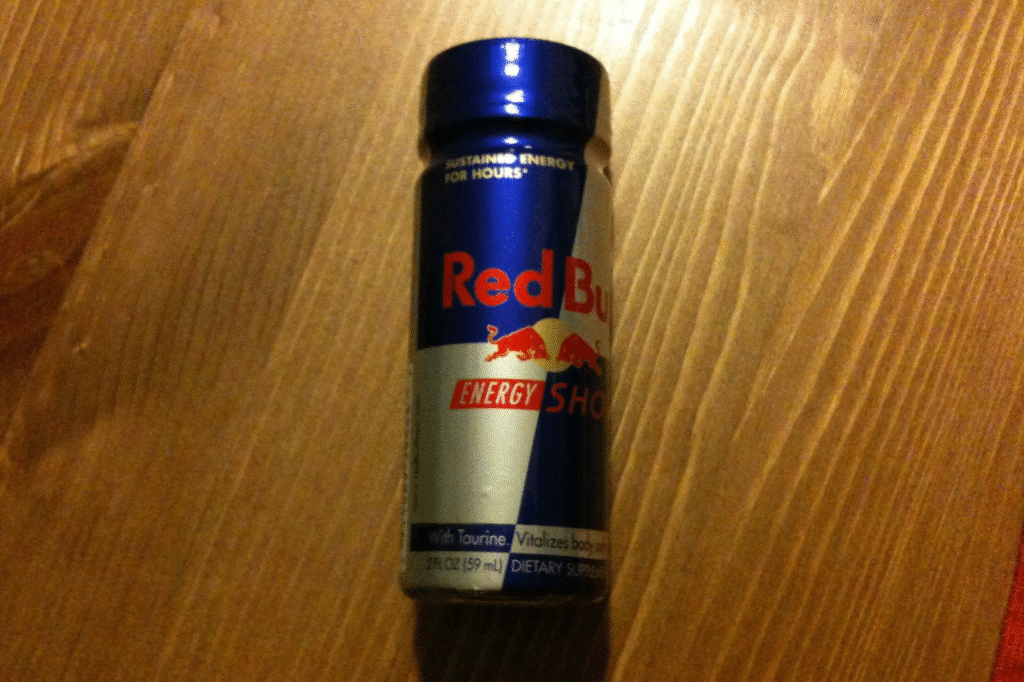
Here’s a lawsuit that you probably never expected to see: a man suing Red Bull for failure to provide wings. Benjamin Careathers filed the lawsuit in January 2013 after consuming the product since 2002 with no wings to show for his trouble.
He argued that the company’s marketing went beyond non-binding hyperbole and into the realm of deceptive advertising, and that the court should rule on the matter.
How the Lawsuit Started
Careathers filed his complaint on January 16, 2013 in the United States District Court for the Southern District of New York.
He stated that he had been buying and drinking Red Bull for approximately ten years, hoping to get the benefits advertised in the marketing materials, but that he found that he did not get much benefit beyond the stimulation provided by the caffeine.
His complaint named Red Bull North America as the defendant and requested that the court open the case to other consumers who had been misled into purchasing the product.
Less than a year later, on December 20, 2013, Judge Katherine Polk Failla ordered the consolidation of Careathers’ case with a similar one filed in the Central District of California by David Wolf and Miguel Almaraz.
Both lawsuits contained similar language, and the court combined them for easier processing, with Careathers’ complaint serving as the lead case. From that point, both sets of plaintiffs worked in tandem with the court, and Red Bull found itself responding to two similar class-action lawsuits instead of one.
What the Complaint Actually Said
The issue that formed the crux of the complaint was Red Bull’s advertising slogan, “Red Bull gives you wings,” as well as claims of increased focus, reaction, and general performance.
The plaintiff did not argue that the drink literally caused the consumer to grow wings. He was arguing that the marketing implied that Red Bull was exponentially superior to an ordinary caffeinated beverage, and that this claim was not substantiated by evidence.
The complaint showed just how widespread the advertising campaign was, noting that it appeared on television, on the internet, on social media, through athlete endorsements, in printed materials, and at the company’s Flugtag events, where amateur competitors launched homemade flying machines into a pool.
The complaint even showed that the company had spent more than $2 billion on marketing in the U.S. over the years, including $364 million in 2009 alone.
The can of Red Bull also showed that, per 8.4 fluid ounces, the drink only had 80 milligrams of caffeine, compared to the 95 milligrams of caffeine in an 8 fluid ounce cup of coffee, according to the U.S. Department of Agriculture.
Careathers argued that consumers who paid for Red Bull were paying for less caffeine than they could get in a cup of coffee for significantly less money. His complaint even went as far as arguing that the advertising went beyond “puffery” and actually contained deceptive information.
Red Bull’s Response and the Settlement
Red Bull, of course, did not take the complaint lightly. A spokesperson for the company stated that Red Bull settled the litigation to avoid the costs and distractions of prolonged litigation, while maintaining that the advertising used in its campaigns was truthful and not deceptive.
The company also noted that it made no concessions and had no intention of removing the phrase “Red Bull Gives You Wings” from its marketing materials.
Both sides reached an agreement by August 2014, and Red Bull established a $13 million settlement fund with no admissions of wrongdoing. The court’s documentation of the agreement specified that the terms did not constitute an admission of liability on the part of Red Bull or any wrongdoing on the part of the plaintiffs.
The agreement itself was, in essence, a means of closing the case without either side having to concede any fault. Under the terms of the agreement, any consumer in the U.S. who had purchased Red Bull between January 1, 2002, and October 3, 2014, could file a claim for $10 in cash or $15 worth of Red Bull products, with no receipt required.
Judge Failla approved the settlement in principle on September 3, 2014, and set a deadline for claims of March 2, 2015, with a final fairness hearing scheduled for May 1, 2015.
Court’s Final Judgment
Not everyone was happy with the settlement, however. There were eleven objecting class members before the fairness hearing, and thirty additional class members opted out of the settlement entirely.
Attorney Theodore Frank, representing the Center for Class Action Fairness, argued that the $4.75 million requested for attorneys’ fees was based on an inflated $18.5 million valuation of unspecified changes to Red Bull’s labeling.
Judge Failla agreed that the number was too high and reduced the requested fee to approximately $3.4 million.
Class member Dave Mager filed his objections with the court, which are described in the record as “several objections to the settlement.”
He argued that the settlement did not account for the number of Red Bulls purchased and that class members should be given more time to cash any checks issued to them. He also requested that any remaining funds from the settlement go back to the class members rather than to charity.
Another objecting class member, Jonathan Corbett, made light of the situation in his objection to the settlement, noting that he never expected Red Bull to literally give him wings.
Despite the objections, Judge Failla approved the settlement as modified and signed the Final Judgment and Order of Dismissal eleven days later, on May 12, 2015. The court also awarded Careathers, Wolf, and Almaraz $5,000 each as incentive payments for serving as “the face of the settlement in the media and on the internet” throughout the litigation.
What Happened After the Settlement?
The number of claims filed by consumers far exceeded the individual payout amounts, so the $10 cash option shrank down to about $4.25 per person, while those who requested product instead received a four-pack of Red Bull. About 60 percent of claimants chose cash over product, and the rest chose product.
Consumers began receiving checks and product vouchers throughout 2015, and many reported having received payment by early 2016. Another, smaller round of checks for up to $2.01 each was issued beginning in October 2016, most likely from the remaining funds from the settlement.
Mager continued to fight the settlement, filing an appeal with the U.S. Court of Appeals for the Second Circuit in June 2015. He objected to the fairness of the terms of the settlement.
Frank’s Center for Class Action Fairness took the opposite view and did not pursue an appeal after the court reduced the requested attorney’s fees.
Sources
American Bar Association, Litigation News
Hamilton Lincoln Law Institute (formerly Center for Class Action Fairness/CEI)