On September 11, 2001, thousands vanished in the World Trade Center attacks. Among them was Dr. Sneha Philip, a 31-year-old physician whose disappearance has never been fully explained.
A Day of Ordinary Errands
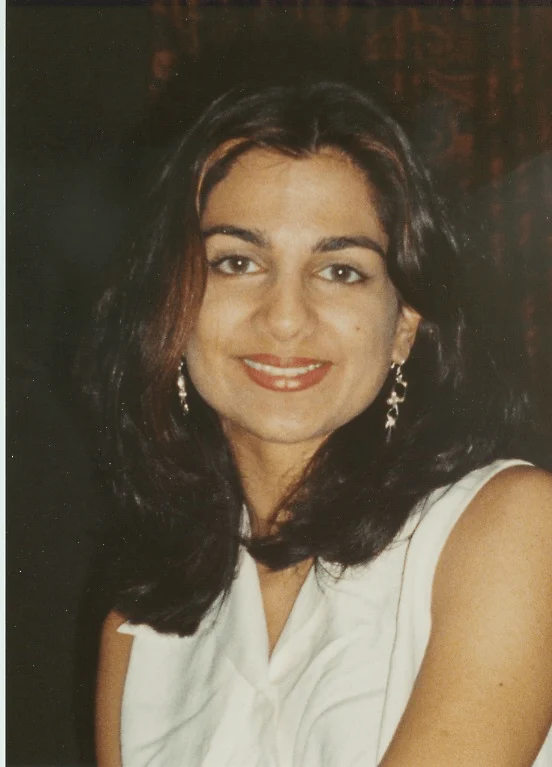
On September 10, 2001, Sneha had the day off. Her cousin, Anu, was expected to visit that week, so she spent part of the morning tidying the apartment she shared with her husband, Ron, on Rector Place in Lower Manhattan.
Before Ron left for work, the couple ate breakfast together, and he hugged her goodbye, telling her he would see her that evening.
Later in the day, Sneha spoke with her mother by phone for nearly two hours. During the call, she mentioned wanting to visit the Windows on the World restaurant, located near the top of the North Tower of the World Trade Center.
A close friend was planning to hold a wedding event there the following spring, and Sneha wanted to see the venue in advance.
At 5:18 p.m., a security camera outside the couple’s apartment building captured Sneha leaving. She walked to a nearby dry cleaner to drop off clothing, then continued a few blocks to a store called Century 21.
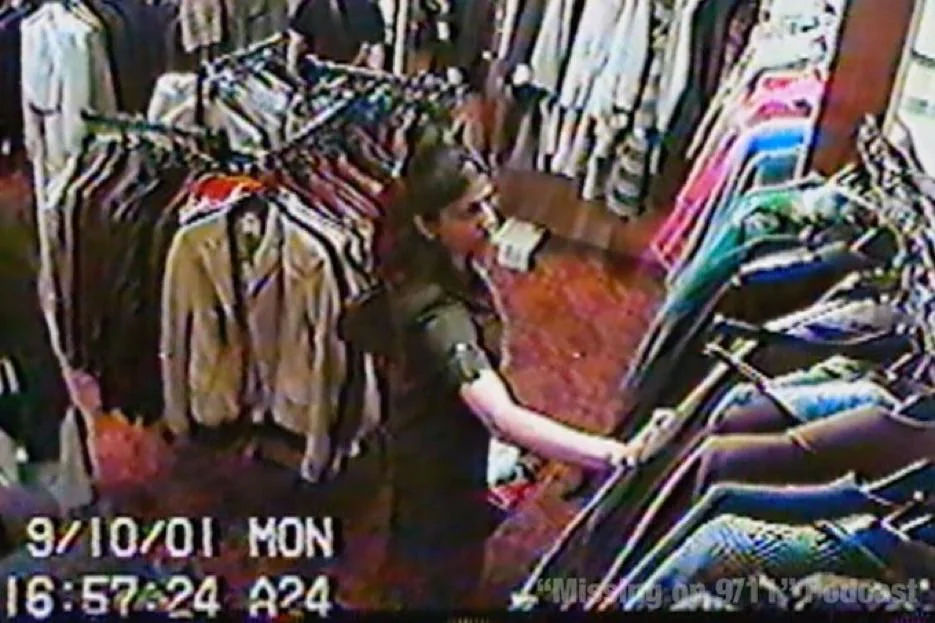
Footage from inside showed her browsing alone, still wearing the same brown dress she had worn that morning. At around 6 p.m., she used Ron’s American Express card to buy a dress, a pair of pantyhose, lingerie, and bed linens, spending a total of 550 dollars.
A little over an hour later, at 7:18 p.m., she visited another nearby store and bought three pairs of shoes.
That purchase marked the last confirmed sighting of Sneha. No further footage, transactions, or witness accounts placed her anywhere after she left the shoe store that evening.
When Ron returned to the apartment at 11 p.m., Sneha was not there. Her absence was not entirely out of character; she occasionally spent the night at a friend’s or relative’s home, though she typically called ahead to let Ron know.
That night, no call came. Ron was mildly concerned but assumed she had lost track of time and fallen asleep elsewhere. He made a mental note to ask her, when she returned, to call ahead next time.
September 11 Unfolds
Ron’s alarm went off at 6:30 a.m. He noticed Sneha still had not returned, but needed to get to work, so he left the apartment.
By the time he stepped out of a morning meeting shortly before 9 a.m., he learned that American Airlines Flight 11 had struck the North Tower of the World Trade Center, just a few blocks from their building.
At that point, many people on the ground and watching the news still believed the crash had been an accident.
At 9:03 a.m., three minutes after Ron left his meeting, five hijackers aboard United Airlines Flight 175 struck the South Tower. It was now clear that New York City was under attack. The South Tower collapsed at 9:59 a.m., and the North Tower followed at 10:28 a.m.
By the end of the day, the coordinated attacks had killed nearly 3,000 people, including 41 Indian nationals who had been living or working in the city.
In Lower Manhattan, the streets fell into chaos. People ran north away from the towers as smoke rose from the impact zones, and debris rained down onto the pavement below. Inside the towers, some chose to jump from the upper floors rather than face the flames.
Firefighters and police officers moved toward the burning buildings as 911 dispatch lines were overwhelmed with calls from people trapped inside.
Ron urgently needed to find his wife. Cell phones were not yet common in 2001, and Sneha did not own one. Even if she had, service would have been unreliable, since one of the city’s major cell towers sat atop the World Trade Center and phone networks across the city were overloaded.
Ron repeatedly called the couple’s apartment landline, but no one answered. He called Sneha’s family, who had no idea where she was either. He then ran outside his hospital in the Bronx and managed to hitch a ride on an ambulance heading downtown.
The trip, ordinarily a short ride, took six hours as he moved through streets crowded with fleeing residents, emergency vehicles, and journalists.
After talking his way past a police line, Ron reached the couple’s building on Rector Place but could not get inside, since the electronically operated doors had lost power in the outage. Unable to do anything more that night, he went to a friend’s apartment in the West Village to sleep.
A Home Left Untouched
The next day, Ron was able to get into the apartment. Ash and dust from the collapsed towers had drifted in through an open window, coating the floors and furniture.
Searching the dust for footprints, the only evidence that anyone had been inside, he found nothing but his own and those of the couple’s two kittens, Figure and Kali. There was no sign that Sneha had returned.
When Ron called Sneha’s mother for an update, she recalled her daughter’s comment about wanting to visit Windows on the World, and a sense of dread began to set in.
Sneha’s family, together with Ron, filed a missing person’s report, but the case was one of thousands the New York Police Department needed to process in the days following the attacks, making individual attention difficult to secure.
Family members papered the city with flyers, posting them near subway stations, hospitals, and busy intersections in the hope that someone might recognize her.
Ron tried to draw press coverage as well, but because there was no confirmation that Sneha had been at Ground Zero, most reporters showed little interest.
In an effort to create urgency, Ron asked Sneha’s brother, John, to speak with reporters using an account that tied Sneha directly to the World Trade Center.
John told journalists he had spoken with Sneha by phone that morning, and that she had said she could not leave the building because she was helping another person trapped inside. The account was not true.
In the days that followed, however, it succeeded in putting Sneha’s photograph in newspapers and on television broadcasts across the city.
The Investigation Widens

Because Sneha’s family believed she had been inside the World Trade Center, investigators initially concentrated their search on the wreckage at Ground Zero. As they examined her final movements more closely, John’s account did not hold up.
Phone records confirmed that Sneha had spoken with her mother for nearly two hours that afternoon, meaning she had still been alive and away from the towers well after the time John claimed to have spoken with her.
Surveillance footage from around the neighborhood further established that she had spent that evening running personal errands rather than at the Trade Center.
A clerk at Century 21 later contacted Ron after recognizing Sneha’s face on one of his flyers. She remembered Sneha as a regular customer and recalled seeing her in the store that day.
She also mentioned something unusual: Sneha had been with another young Indian woman that evening. When investigators reviewed the surveillance footage again, they could not identify any second woman in frame with Sneha at any point.
Investigators also canvassed the surrounding blocks and reviewed additional surveillance footage from nearby businesses but no further sighting of Sneha that night ever surfaced.
With the initial account discredited, and thousands of other cases still demanding attention, police were unable to devote extensive resources to Sneha’s case specifically.
Ron, unwilling to let the search end there, grew frustrated with the pace of the official investigation and reached out to Ken Gallant, a private investigator and former FBI agent, to keep looking.
Gallant’s investigation turned up two significant details. The first involved a phone call placed from the apartment’s landline to Ron’s cellphone at around 4 a.m. on September 11.
Ron did not remember making the call and could only guess that he might have briefly woken to check voicemail messages. The second discovery came from surveillance footage outside the couple’s apartment building.
At 8:43 a.m., just minutes before American Airlines Flight 11 struck the North Tower at 8:46 a.m., a figure entered the building and stood in front of the elevator. After roughly ninety seconds, the figure turned and walked back out.
Glare from the morning sun made the person difficult to identify with certainty, but Ron believed the figure’s build and clothing matched Sneha’s.
Notably, the figure was not carrying any shopping bags, and the bags Sneha had purchased the previous evening were never found.
Investigators weighed several explanations: that she had left the bags at a friend’s home and returned to the apartment for something else, or that she had come back to the building, heard the commotion outside, and stepped out to see what was happening moments before the second plane struck.
Others suggested the surveillance timestamp itself might simply have been inaccurate, given the age of the recording equipment.
None of these explanations accounted for why no friend ever came forward to confirm that Sneha had stayed with them that night, or why the shopping bags were never located.
Two Competing Theories
As the investigation continued, two very different explanations emerged.
The New York Police Department concluded that Sneha had used the confusion of September 11 to walk away from her own life. Investigators pointed to several difficulties she had faced in the months before the attacks.
She had lost her position at Cabrini Medical Center in Lower Manhattan, with her termination attributed to tardiness and alcohol-related issues. After being let go, she went out drinking with former coworkers, an evening that ended with her spending the night in police custody.
Sneha had filed a criminal complaint alleging that a fellow intern groped her at the bar, but the prosecutor investigating the claim found no supporting evidence and instead charged her with filing a false report.
She was offered the chance to have the charge dropped if she withdrew her complaint, but she declined. She was arraigned on the morning of September 10 and pleaded not guilty.
A police report from that day described an argument between Sneha and Ron outside the courthouse, though both Ron and Sneha’s family have denied that it occurred.
Sneha had gone on to find a second position at St. Vincent’s Hospital on Staten Island, but was later suspended after missing required meetings with a substance abuse counselor.
Police reports also indicated she had spent nights at bars around the city, at times leaving in the company of other women; one report claimed her brother once found her with his girlfriend, an account he has denied.
The department connected this theory directly to the elevator footage from that morning, reasoning that Sneha had returned to the building, become aware of the unfolding disaster outside, and in that moment chosen to walk away from the difficulties in her life rather than go back upstairs.
Ron rejected any suggestion that these details pointed to infidelity or instability, saying an unconventional lifestyle was not evidence of anything more serious.
Sneha’s family and Ken Gallant strongly disagreed with the department’s conclusion. Gallant’s review of Sneha’s personal computer turned up no indication that she had been planning to leave her life behind.
She had left behind her glasses, passport, driver’s license, and every credit card except Ron’s American Express, which she had used at Century 21. That card was never used again, despite Ron keeping the account open in the hope that a future charge might lead him to her.
Sneha also maintained a close relationship with her mother, who said her daughter had seemed entirely normal during their final phone call and had not mentioned any problems.
Some in this camp raised the possibility that Sneha had been harmed by someone else; no DNA evidence ever linked her to Ground Zero, and the diamond earrings and wedding necklace she wore daily were never recovered.
A small number of people also directed suspicion toward Ron, citing the disputed courthouse argument and the unexplained early morning phone call.
Investigators, however, ruled him out early in the case, noting that his monthlong search, the flyers he distributed, and his decision to hire a private investigator were inconsistent with any involvement in her disappearance.
Resolution and Remembrance
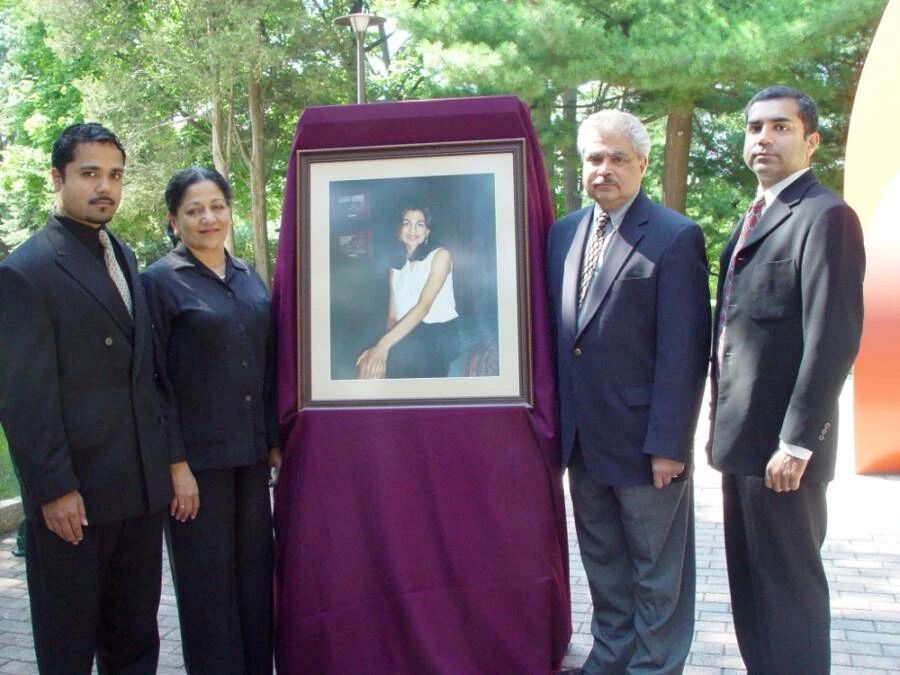
In 2003, the NYPD formally closed its investigation, concluding that Sneha had run away during the September 11 attacks. Her family rejected this conclusion and petitioned the New York County Surrogate’s Court to have her officially recognized as a victim of the attacks.
On January 31, 2008, a divided panel of the Appellate Court ruled in the family’s favor, determining that Sneha had died while trying to help others caught in the attacks.
The ruling overturned an earlier decision from the Surrogate’s Court and criticized the NYPD’s report on the case. That year, Sneha’s name was added to the National September 11 Memorial in Lower Manhattan, inscribed on the South Pool at Panel S-66.
No trace of Sneha, no remains, no clothing, no piece of jewelry, was ever recovered from Ground Zero.
Her parents preserved her childhood room exactly as she had left it, adding only photographs and her academic diplomas over the years. Ron remarried in 2010, with the blessing of Sneha’s parents, and has remained close to them since.
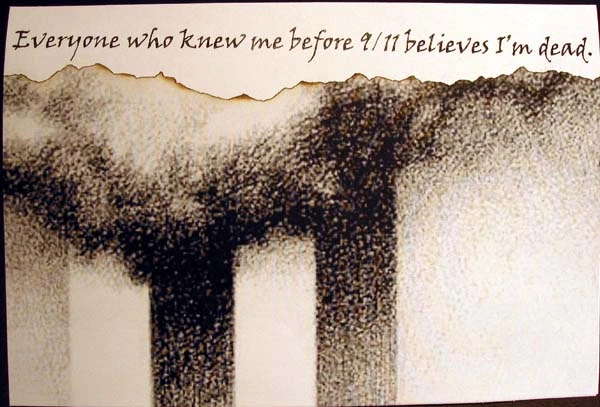
In 2012, an anonymous submission appeared on PostSecret, an online project where people mail in personal secrets on homemade postcards.
The postcard featured a pencil sketch of the Twin Towers in flames, with a single handwritten line above the smoke: “Everyone who knew me before 9/11 believes I’m dead.”
Its author was never identified, and no connection to Sneha’s case was ever confirmed, but the submission drew renewed public attention to her story.
Before she became known for her disappearance, Sneha Philip was known simply as a daughter, a sister, and a wife. She was born on October 7, 1969, in the South Indian state of Kerala, the youngest child in a Christian family with two older, protective brothers.
While she was still young, her family moved to the United States and settled in Upstate New York.
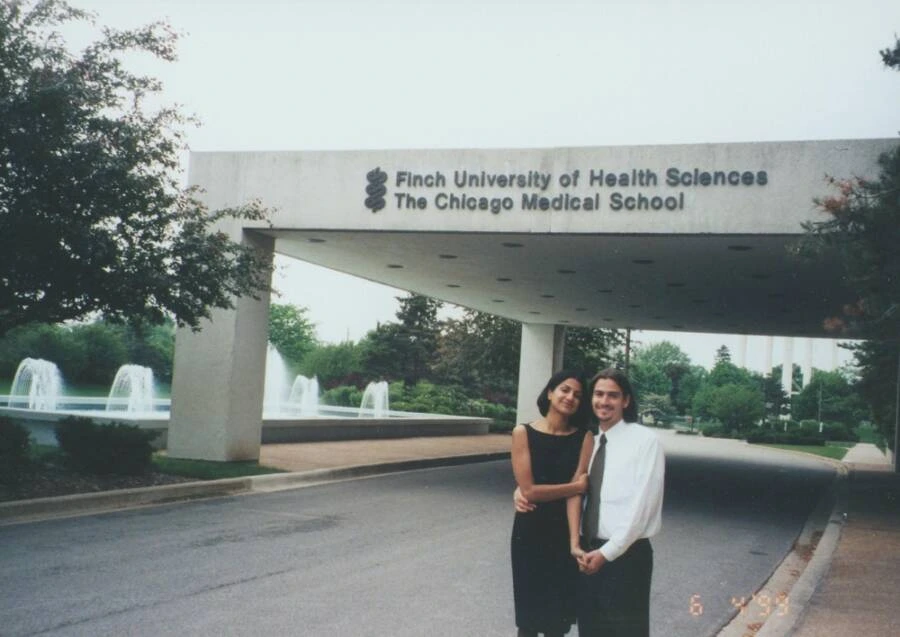
A bright and academically driven student, she attended Johns Hopkins University before enrolling in medical school in Chicago in 1995, determined to pursue medicine just as her father had.
There she met Ron Lieberman, a fellow student from Los Angeles a year behind her. The two began spending time together outside of class, and what started as friendship gradually grew into a relationship.
They became so certain of their future together that Sneha took a year off so they could graduate at the same time, in 1999. The following year, both were accepted into residency programs in New York City.
They married in 2000, in a ceremony that reflected both of their backgrounds, Sneha dressed in a white wedding gown adorned with traditional Indian gold jewelry. For a year, the couple built a life together in Lower Manhattan, before September 11, 2001, changed everything.