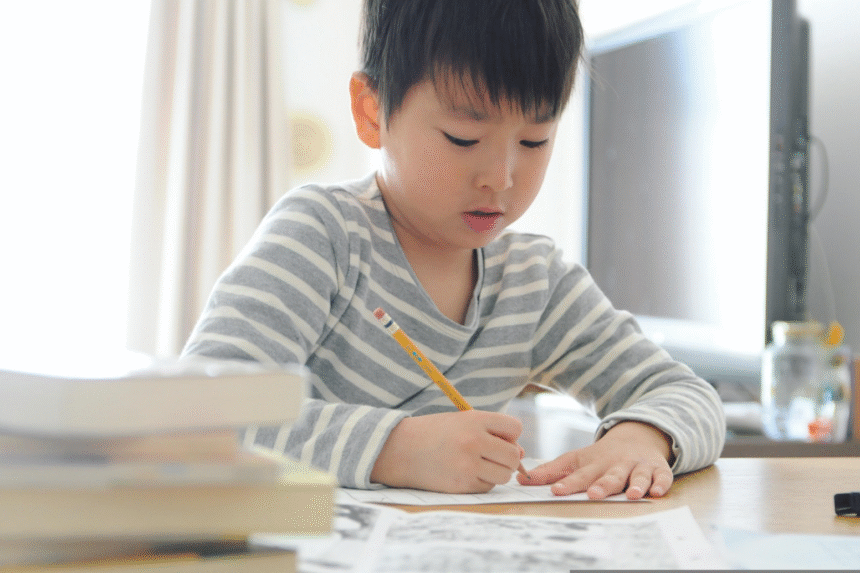
Most people picture preschool as story time, blocks, and the alphabet on a bright rug. Science is usually saved for later grades, and vegetables are more likely to show up at lunch than in a lesson plan.
In a group of North Carolina classrooms, though, the garden bed is part of the curriculum. Kids plant seeds, watch leaves pop up, and talk about spinach and tomatoes the same way they talk about shapes and colors.
Inside the “More PEAS Please!” Program
That approach comes from a program called More PEAS Please!, short for Preschool Education in Applied Sciences.
It was created by researchers at North Carolina State University and East Carolina University, with one bet: young children learn science better when they can handle real things, especially food.
Instead of only hearing new words, children touch, smell, look closely, and sometimes taste what they are studying.
The activities are planned, but still fun. Teachers help kids plant seeds, water them, and watch how they grow over time.
They invite kids to ask “What do you think will happen?” and then check their ideas against what they observe.
Even cooking becomes a mini lab. When broccoli steams, the water shifts color, the smell changes, and the vegetable softens. Those are easy-to-see clues about heat, liquids, and physical change, delivered without a lecture.
The Study Behind the Buzz
In the 2023–2024 school year, a research team led by Virginia Stage tested the program in Head Start centers, which serve children from low-income families.
Head Start classrooms often face a double challenge: students may enter with fewer early academic experiences, and many have had limited exposure to a wide range of fruits and vegetables.
The researchers wanted to know if one set of lessons could support both learning and healthy food familiarity.
Seven centers took part, with 272 preschoolers total. Four centers used the More PEAS Please! lessons across the full school year.
Three centers continued with their usual science instruction. At the start, children in both groups had similar science knowledge and similar vocabulary levels, which matters because it makes later comparisons more fair.
By the end of the year, the difference was clear.
Children in the food-based program showed faster growth in science understanding and stronger gains in vocabulary than children who received standard science lessons.
The study, published in the Journal of Nutrition Education and Behavior, adds to a growing body of early childhood research showing that hands-on learning is not just more fun; it can be more effective.
Little Scientists at Work
One reason the program seems to land is that it treats preschoolers like capable thinkers. In one classroom snapshot shared by the researchers, a teacher named Imani noticed that two plants were growing differently.
Instead of giving an answer, she set up the moment as a question. Children suggested moving plants to spots with different sunlight, watched what happened, and saw the weaker plant improve.
The point was not perfect gardening. It was practicing cause and effect, and learning that you can test an idea.
Another teacher, Faith, used food and garden talk to build basic reasoning skills. During a lesson on living versus nonliving things, children discussed simple criteria: does it grow, does it need air, can it make more of itself?
Rather than memorizing labels, they learned how to justify a choice with evidence. That kind of back-and-forth is also language practice, because students need words to explain what they see.
Beyond “Eat Your Vegetables”
The nutrition side of the program is intentionally low-pressure. Researchers, including Jocelyn Dixon, argue that “success” is not only measured by whether a child eats spinach on day one.
Progress can look like being willing to touch it, smell it, or describe its texture. That sensory exploration builds familiarity, which can reduce hesitation later.
It also keeps the classroom tone positive, because children are invited to investigate, not pushed to perform.
Teachers initially worried about time and workload, according to the study team. After training and a year of use, many reported higher engagement and more interest in science.
Some even started designing their own related activities, a sign that the model was realistic enough to live in a busy classroom.
The research is not the final word. It took place in one region of one state and lasted one school year, so broader studies in different locations and over longer periods would help confirm how well the approach travels.
Still, the core lesson is hard to ignore: for young children, a tomato plant can be a textbook, a language prompt, and a science experiment all at once.
When food becomes part of the lesson, science stops feeling abstract, and preschoolers have more ways to understand it.
Stage’s team also leaned on teacher feedback, since classroom realities decide what actually works.